21 Chestnut Brown Hair Color Ideas For Women
Chestnut brown hair spans a rich spectrum, from honey-warmed light shades to deep, moody tones that complement virtually every skin tone and eye color. You can choose from techniques like balayage, babylights, color melts, and all-over color to customize dimension, depth, and warmth.
Pair your shade with sulfate-free products and regular gloss treatments to keep the tone vibrant and reflective. The ideas ahead cover everything you need to find your perfect chestnut match.
Classic Chestnut Brown All-Over Color
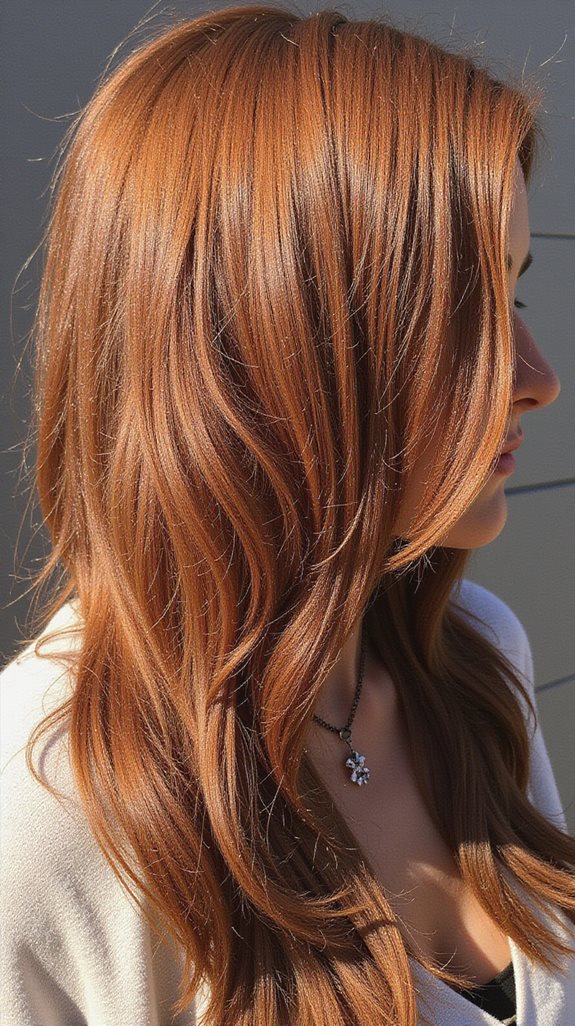
Classic chestnut brown is a rich, warm shade that seamlessly blends red and brown undertones for a deeply dimensional, universally flattering result. It works beautifully across all skin tones, making it one of the most enduring choices in modern hair coloring.
Applied as a single, uniform tone from root to tip, it delivers consistent, polished results without the need for highlights or lowlights.
Maintaining chestnut brown color requires sulfate-free shampoos and color-depositing conditioners to preserve warmth and prevent fading.
Glossing treatments every four to six weeks keep the shade vibrant and luminous.
Root touch-ups every six to eight weeks ensure a seamless, sophisticated finish with minimal upkeep.
Chestnut Brown Balayage for Sun-Kissed Dimension
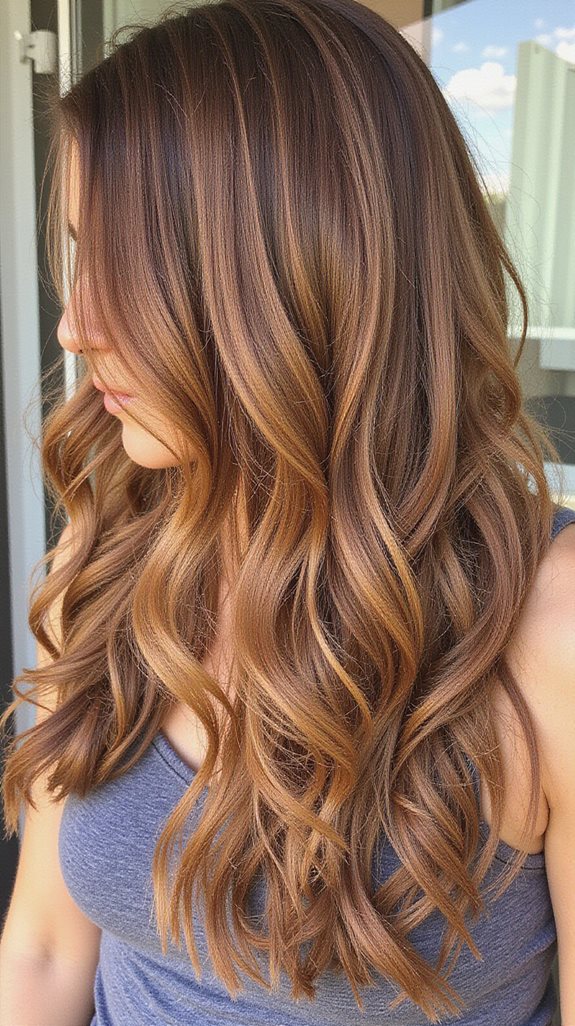
Chestnut brown balayage is a freehand painting technique that deposits lighter, warm-toned pieces throughout the mid-lengths and ends, mimicking the natural sun-lightened effect seen after months outdoors.
Unlike traditional highlights, this method eliminates harsh lines by blending seamlessly into the base color, creating depth that moves naturally with the hair. The result is a graduated, multidimensional finish built from chestnut, caramel, and copper tones applied strategically at the surface strands.
The technique concentrates color intensity toward the ends, producing a sun-kissed dimension that looks effortlessly natural. Regrowth blends rather than contrasts, making this a low-maintenance option that typically requires a refresh every 12 to 16 weeks.
This makes chestnut brown balayage a cost-effective choice for anyone seeking rich, dimensional color without frequent salon visits.
Dark Chestnut Brown for a Rich, Moody Look
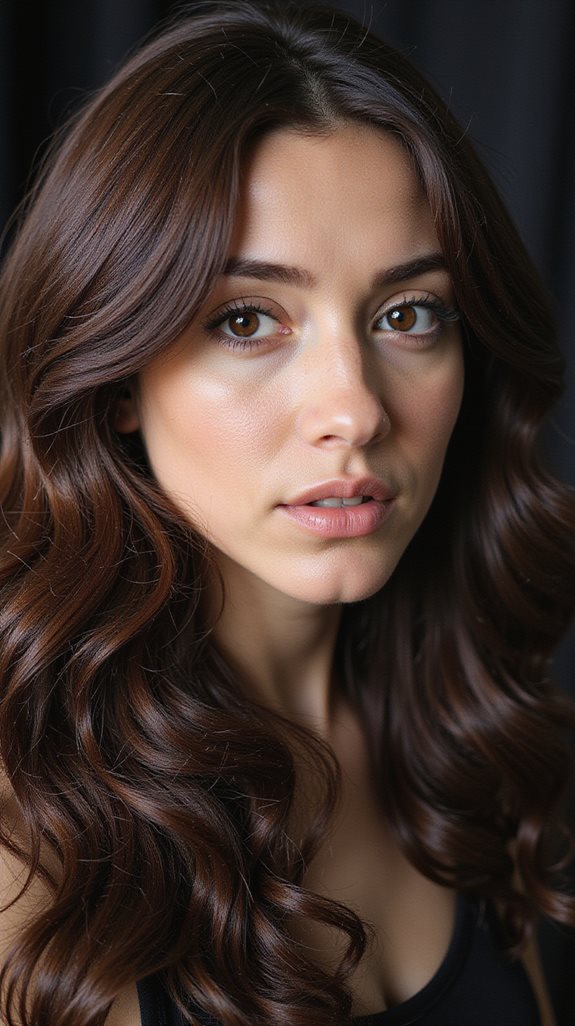
Dark chestnut brown is a deeply rich hair color that blends cool ash and warm red-brown tones for a moody, sophisticated look. It sits at a level 3 or 4 base, creating dimension that shifts beautifully under different lighting conditions.
A gloss treatment applied by your colorist will amplify shine and lock in that signature depth.
This shade works exceptionally well on medium to thick hair textures, requiring minimal highlighting to achieve its full effect.
A color-depositing conditioner used every two weeks helps prevent fading and maintains the richness between salon visits.
Light Chestnut Brown for a Softer, Warmer Vibe
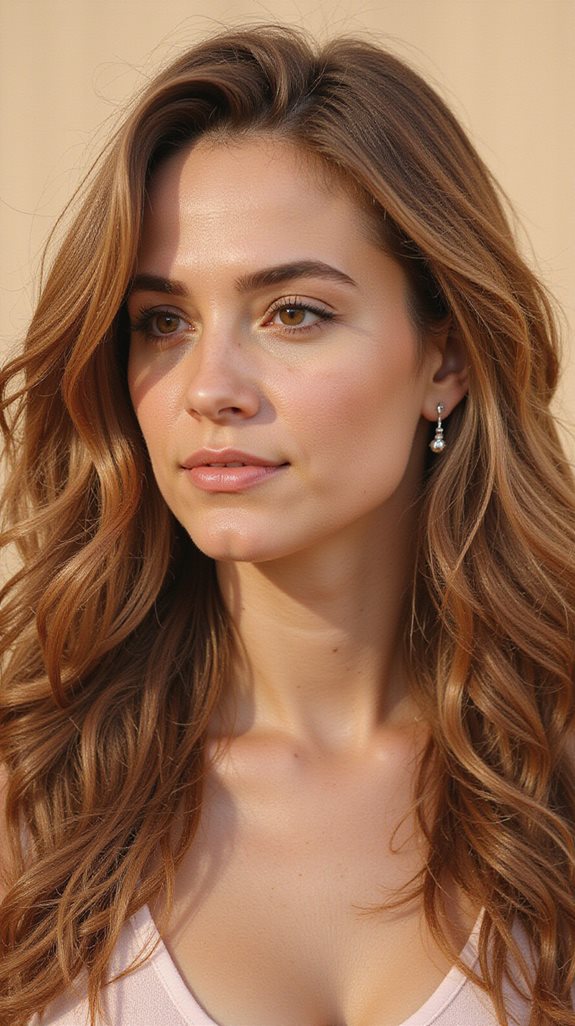
Light chestnut brown sits at a level 5 or 6 base, where warm golden undertones soften darker shades into something luminous and approachable. This tone works exceptionally well on fair to medium complexions, amplifying natural warmth without overwhelming your features.
Soft chestnut hairstyles pair naturally with face-framing highlights at levels 7 or 8, creating dimension that mimics sun-kissed movement through the hair.
To maintain vibrancy, use a sulfate-free, color-safe shampoo and apply a weekly toning gloss to neutralize unwanted brassiness. This shade transitions beautifully through seasons, staying relevant without requiring frequent reformulation.
For a color that reads effortless yet intentional, light chestnut brown delivers precisely that result.
Chestnut Brown Highlights on Dark Hair
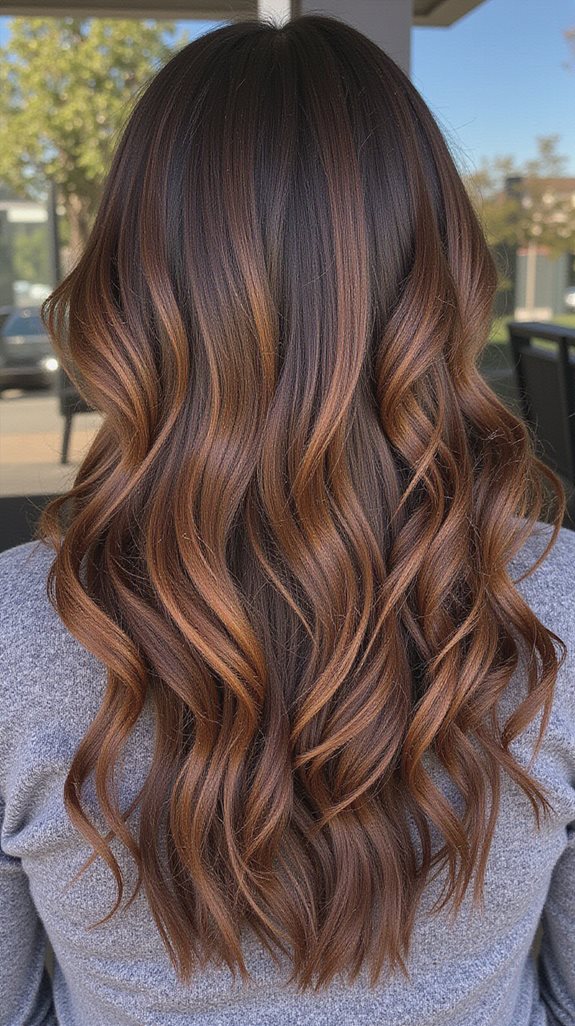
Strategic placement around the face, crown, and mid-lengths maximizes light reflection and depth. The contrast between chestnut and dark hair produces a rich, multi-tonal result that mimics natural sun-kissed color.
Maintaining chestnut highlights on dark hair requires consistent care to prevent brassiness and preserve warmth.
Sulfate-free shampoo and weekly toning masks help sustain color vibrancy between salon appointments. UV-protective products and regular toning treatments are essential for keeping the highlights looking fresh and true to tone.
Red-Tinted Chestnut Brown for Extra Warmth
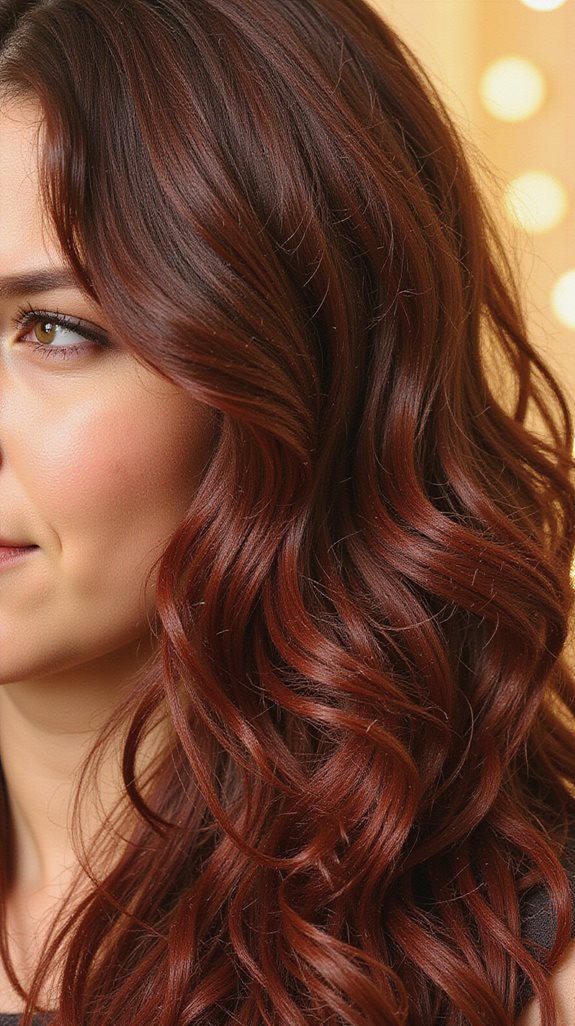
Red-tinted chestnut brown combines copper, auburn, and mahogany pigments to create a warm, multidimensional base that reads richer than standard chestnut alone. This color works by layering red undertones into chestnut’s natural depth, amplifying warmth without crossing into full auburn territory.
Olive, warm beige, and golden skin tones are particularly well-suited to this balance.
Playful highlights in lighter copper or sienna shades can be added to create ribbons of contrast that catch light dynamically. A stylist should apply these accents using a balayage or foiling technique focused around the face and mid-lengths.
This strategic placement maximizes luminosity where light naturally falls, keeping the result cohesive yet visually striking.
Chestnut Brown Ombre From Root to Tip
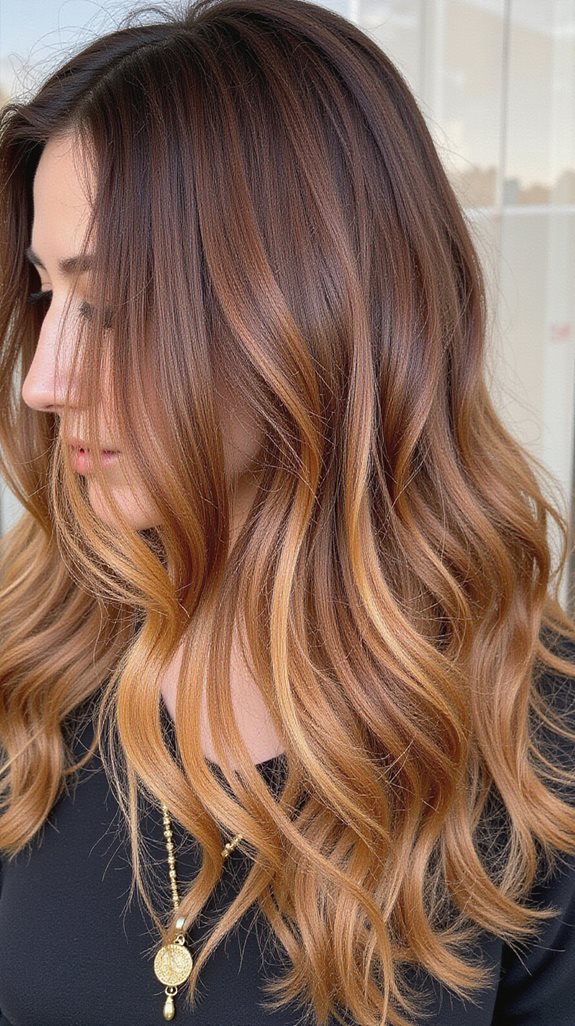
Chestnut brown ombre transitions your natural root color through progressively lighter chestnut, caramel, and warm toasted brown shades as it moves toward the ends, creating a seamless gradient rooted in earth tones.
You’ll achieve the most dimension by keeping roots deep and rich while allowing mid-lengths to soften gradually. This technique works beautifully across all hair textures, enhancing natural movement and depth.
Chestnut brown seasonal trends shift this ombre technique slightly, with cooler months favoring darker, more saturated roots and warmer months inviting lighter, sun-kissed ends.
Gloss treatments every four to six weeks reinforce vibrancy between salon visits, while sulfate-free shampoos and color-depositing products prevent brassiness and fade.
Adjusting your lightening placement seasonally keeps your ombre aligned with current color direction while maintaining a naturally blended finish.
Chestnut Brown Lowlights for Added Depth
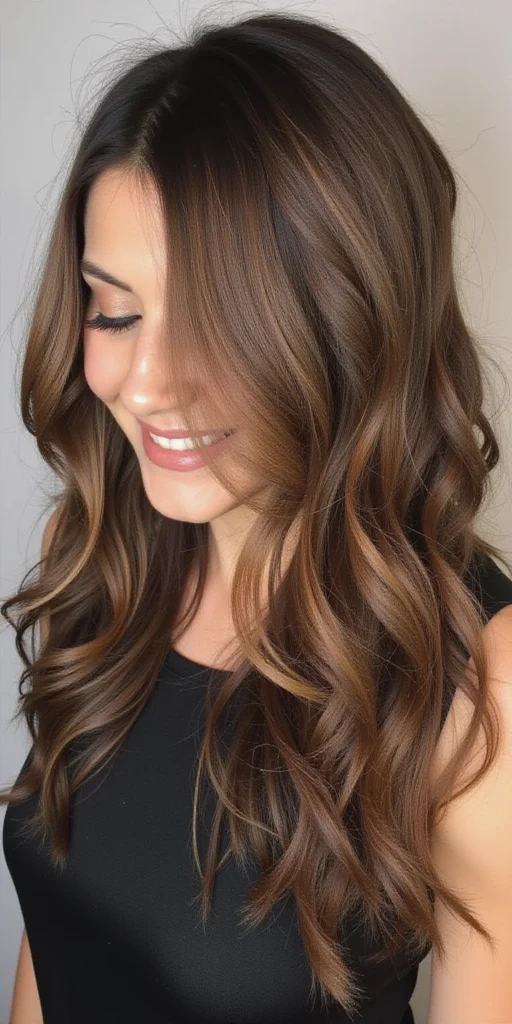
Chestnut brown lowlights add depth and dimension by weaving richer, darker tones throughout your existing hair color. Unlike ombre, this technique deposits shades two to three levels darker than your base, creating natural-looking visual weight.
Strategic placement near roots and mid-lengths mimics natural shadow without making hair appear flat or muddy.
Maintaining chestnut lowlights requires touch-ups every eight to twelve weeks to keep the color fresh and defined. Color-depositing conditioners used between salon visits help preserve the richness of chestnut tones.
Deep conditioning treatments further protect chemically processed sections, ensuring long-lasting dimension and vibrancy.
Chestnut Brown Babylights for Natural-Looking Texture
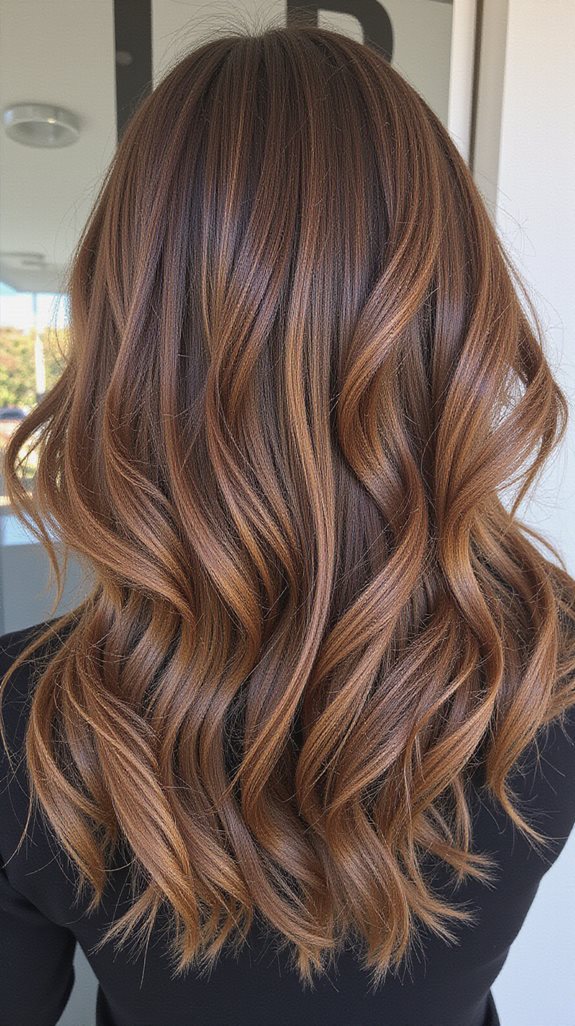
Chestnut brown babylights use ultra-fine, closely spaced sections of hair to replicate the subtle, sun-kissed variation of naturally lit hair. A colorist works with a fine-tooth highlighting board and a soft chestnut formula, weaving color at millimeter intervals for dimensional texture without visible demarcation lines.
This technique suits straight, wavy, and curly textures equally, as placement follows the hair’s natural growth pattern.
For maintenance, schedule gloss treatments every six to eight weeks to sustain warmth and prevent tonal fading. Apply color-safe conditioner mid-shaft to ends after every wash to preserve vibrancy.
Using a diffuser on low heat defines movement and allows the babylights’ dimensional variation to read clearly through the finished style.
Glossy Chestnut Brown for Mirror-Shine Finish
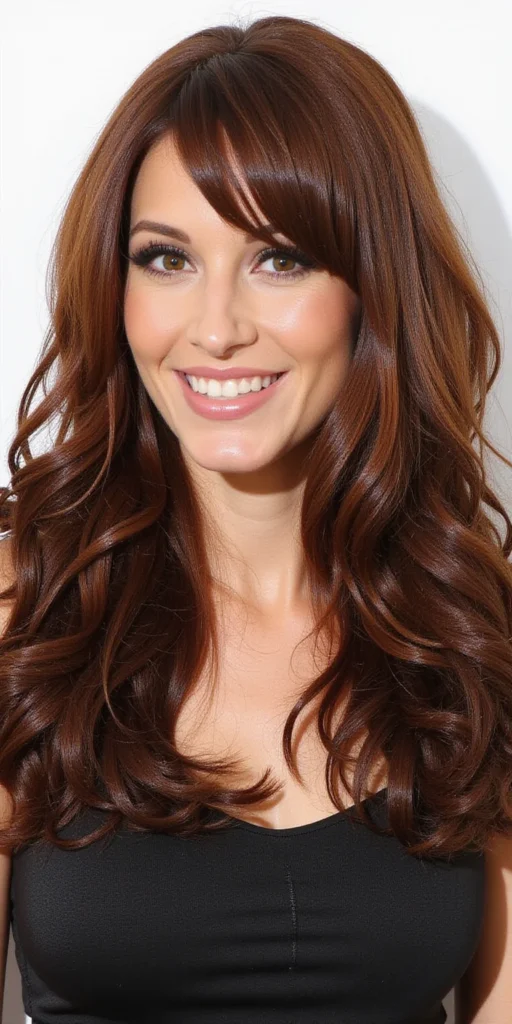
Glossy chestnut brown delivers striking impact through light reflection and surface uniformity rather than tonal variation. Sealed cuticles eliminate frizz, intensify color saturation, and create a signature mirror-shine finish across every strand.
A clear or tinted gloss treatment applied after base color processing smooths the cuticle layer, locking in moisture and maximizing light bounce.
Maintaining that lacquered appearance requires sulfate-free shampoo, a weekly gloss-enhancing mask, and consistent thermal protection during heat styling. Cold water rinses after washing preserve cuticle alignment, extending mirror-shine results considerably longer.
pH-balancing rinses and bond-strengthening treatments used during the salon process further amplify overall reflectivity.
Chestnut Brown With Caramel Streaks
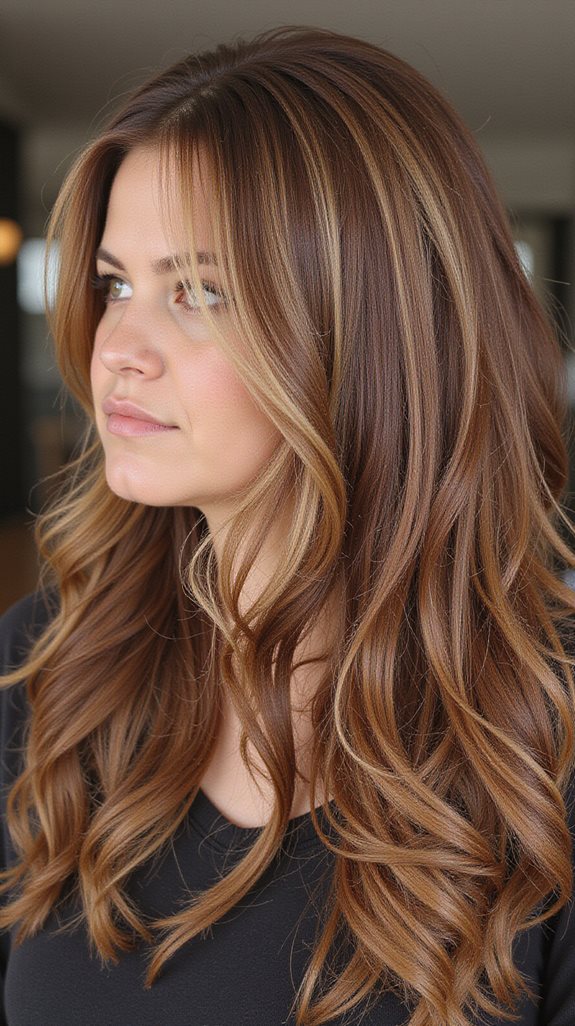
Caramel streaks woven through a chestnut brown base create dimension by introducing warm, golden-blonde tones that catch light without the stark contrast of full highlights.
This technique works best when placed strategically around the face and crown, allowing caramel highlights to frame your features naturally. Your colorist achieves this effect through balayage or foiling, hand-painting sections to ensure seamless blending.
Chestnut brown carries inherent warm undertones — reddish and golden pigments that make caramel streaks integrate effortlessly.
Maintenance requires toning every six to eight weeks to preserve vibrancy and prevent caramel sections from fading brassy. Use sulfate-free shampoo and a color-protecting conditioner to extend the life of both tones.
Chestnut Brown on Short Hair and Pixie Cuts
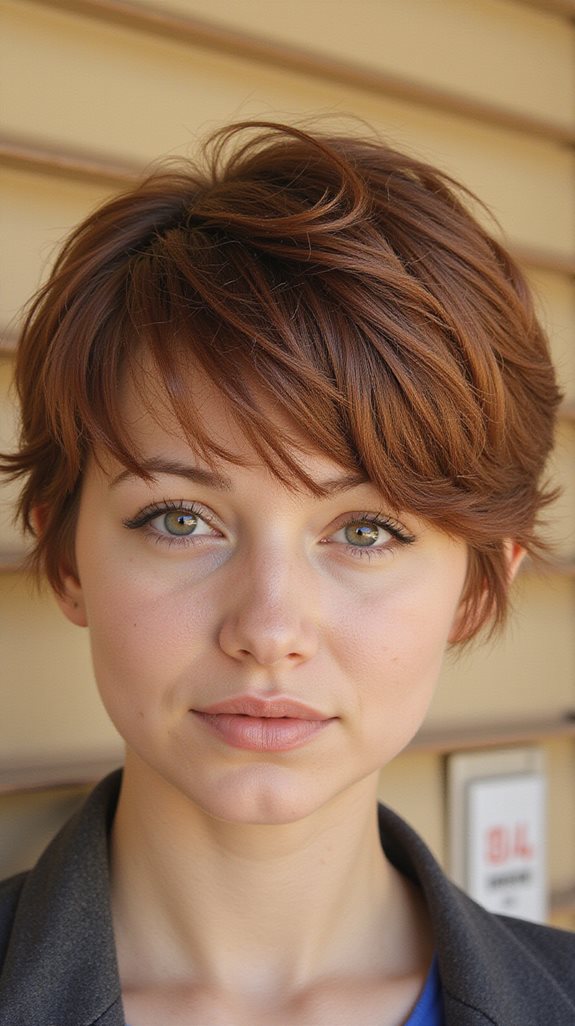
On cropped lengths, the richness of the shade commands full attention, making it an effortlessly striking choice. A glossy finish maximizes luminosity on shorter cuts, while a matte texture delivers a bolder, edgier look.
Chestnut brown flatters a wide range of skin tones and requires minimal upkeep between salon visits. It’s a low-maintenance yet high-impact color option for anyone rocking a shorter style.
Chestnut Brown Bob Hair Color Ideas
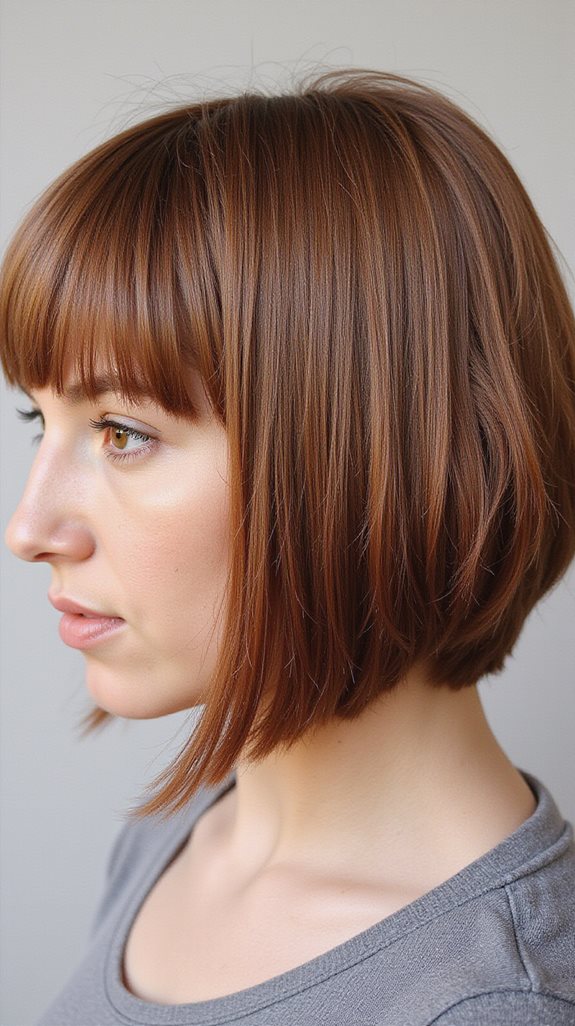
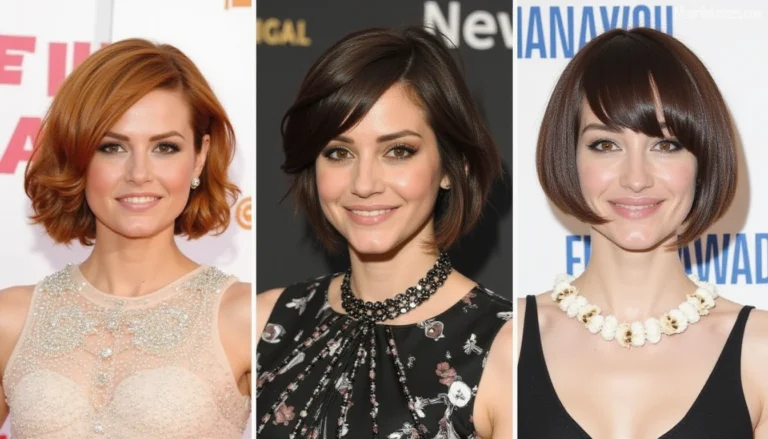
Chestnut brown transforms a bob into a study of structured contrast, where the color’s warm undertones sharpen the geometric precision of the cut.
Chin-length and inverted cuts benefit most, as chestnut brown amplifies the weight line, creating visual density where the cut commands attention. A blunt bob gains depth through solid chestnut application, while a layered bob benefits from dimensional highlights that separate each section distinctly.
For asymmetrical bobs, chestnut brown reinforces directional movement, guiding the eye along the cut’s angle.
Prioritizing chestnut brown care is non-negotiable with bobs since the exposed ends require consistent moisture to prevent brittleness. Use sulfate-free shampoo, apply weekly conditioning treatments, and schedule trims every six to eight weeks to maintain structural integrity.
Chestnut Brown Waves and Curls
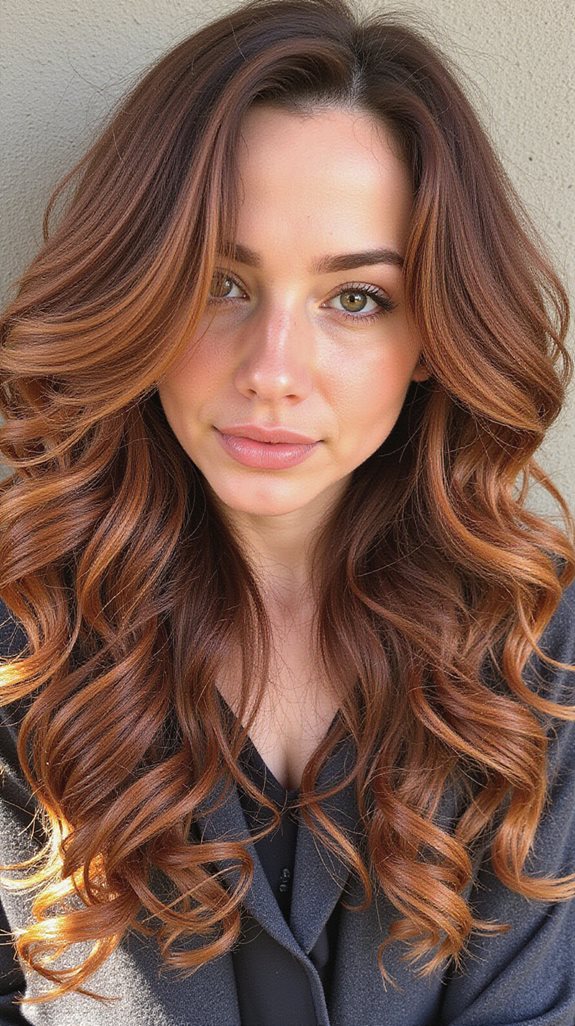
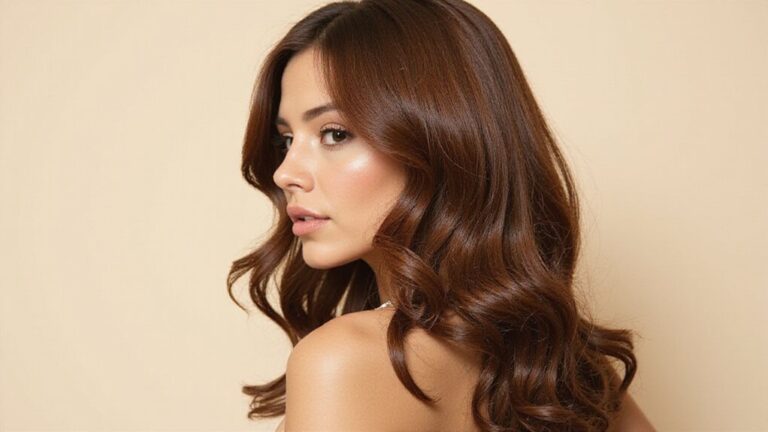
Chestnut brown hair takes on a richer, more dynamic appearance when styled with waves and curls. The natural bends and coils cause the color’s warm undertones to shift and catch light differently, creating the illusion of depth and dimension.
This effect allows single-process chestnut brown to look multidimensional without requiring additional color techniques.
The choice of curl size plays a significant role in how chestnut brown reads. Tighter coils intensify the color’s depth, while looser waves draw out its copper and auburn undertones under direct light.
A 1.25-inch barrel paired with a heat protectant helps preserve the color’s warmth and showcase its full tonal range.
Chestnut Brown for Fair Skin Tones
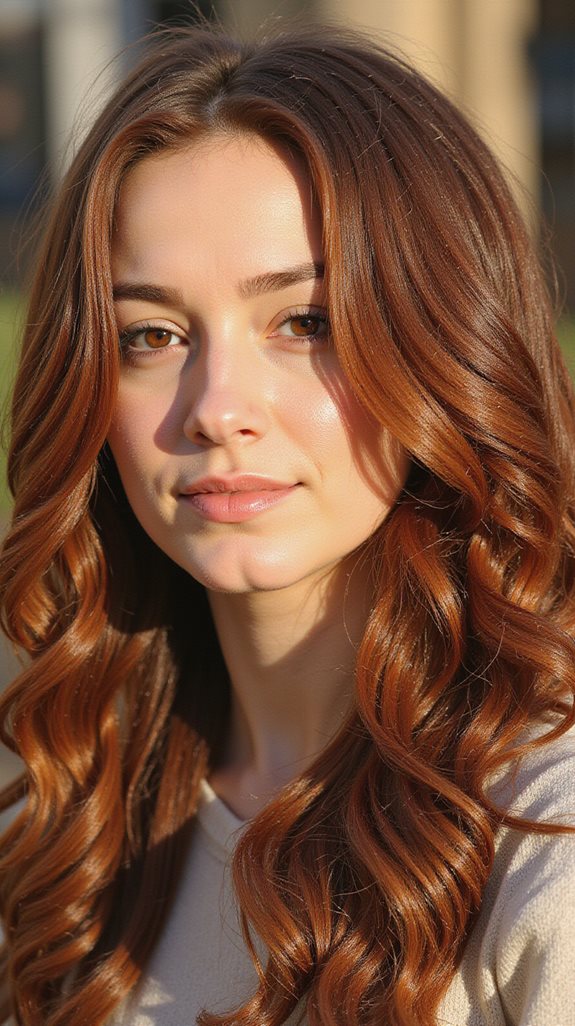
Fair skin tones with cool, pink, or neutral undertones pair beautifully with chestnut brown, as the color’s warm red and copper notes create flattering contrast.
Lighter, golden-leaning chestnut shades work best for fair complexions, avoiding deep or dark formulas that can dull the skin. Dimensional highlights woven throughout help maintain brightness and warmth around the face.
Seasonal shifts influence which chestnut variations suit fair skin most effectively.
Richer, slightly deeper chestnut tones complement the cooler months of autumn and winter, while lighter, sun-kissed versions keep fair complexions glowing in spring and summer.
A professional colorist can fine-tune the formula to match your specific undertone for the most flattering outcome.
Chestnut Brown for Medium and Olive Skin Tones
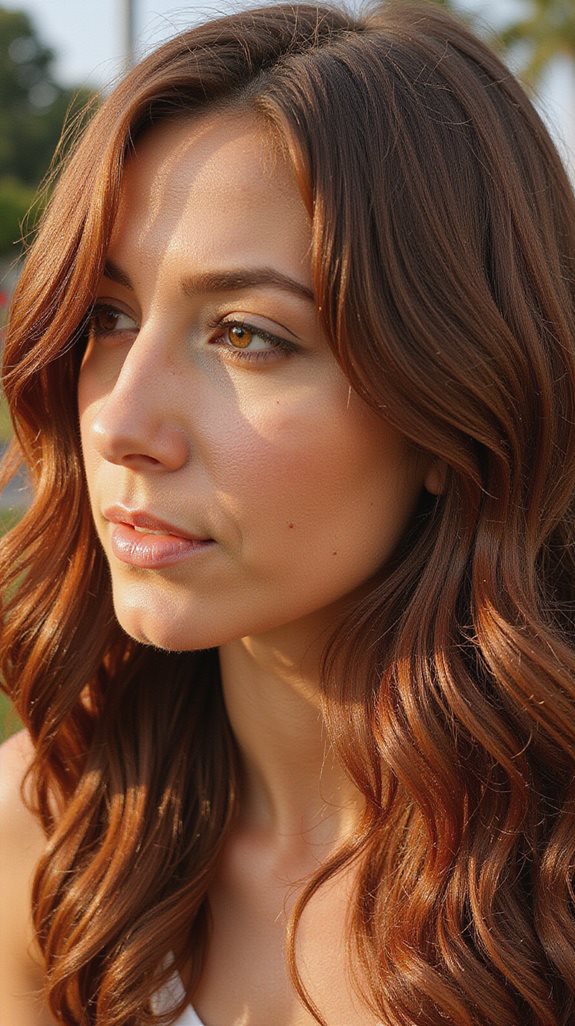
Chestnut brown is a stunning choice for medium and olive skin tones, thanks to its rich red and amber base that harmonizes with warm, golden, or greenish undertones.
Medium skin tones benefit most from chestnut shades with strong copper and mahogany undertones, creating contrast without overwhelming the complexion. Olive skin tones shine with golden-brown or warm auburn chestnut variations that neutralize sallowness while enhancing natural depth.
Avoiding ashy or cool-toned chestnut formulas is essential, as they clash with warm undertones and dull the overall appearance.
Strategic highlights in caramel or honey placed around the face add brightness and dimension to both medium and olive complexions. These carefully chosen tones keep the color looking intentional, vibrant, and beautifully cohesive.
Chestnut Brown for Dark Skin Tones
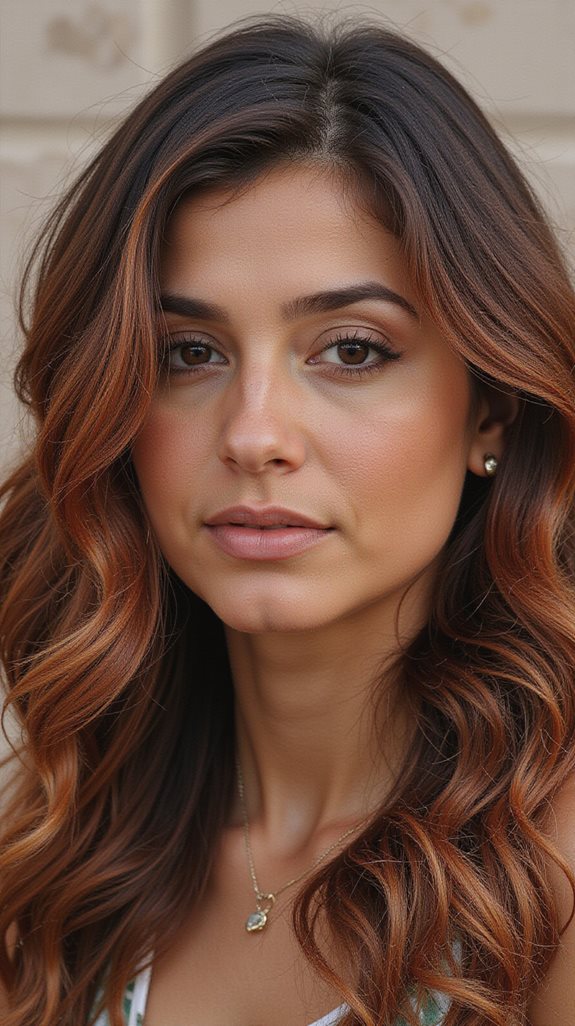
Chestnut brown is a stunning choice for dark skin tones, especially when selecting shades with deep, warm undertones that complement the natural richness of melanin-dense complexions. Auburn-infused chestnuts or mahogany-leaning variants create beautiful dimensional contrast without washing out your features.
Ashy or cool-toned chestnuts should be avoided, as they can create visual disconnection against deeper complexions.
Maintaining chestnut brown on dark hair requires color-depositing conditioners formulated for warm brown tones, applied bi-weekly to counteract oxidative fading. Products containing UV filters and keratin-strengthening compounds are essential, since chemically processed dark hair experiences accelerated moisture loss.
Sulfate-free cleansers preserve both color integrity and the scalp’s natural oil balance, extending vibrancy between professional coloring appointments.
How to Keep Chestnut Brown Hair Color Vibrant
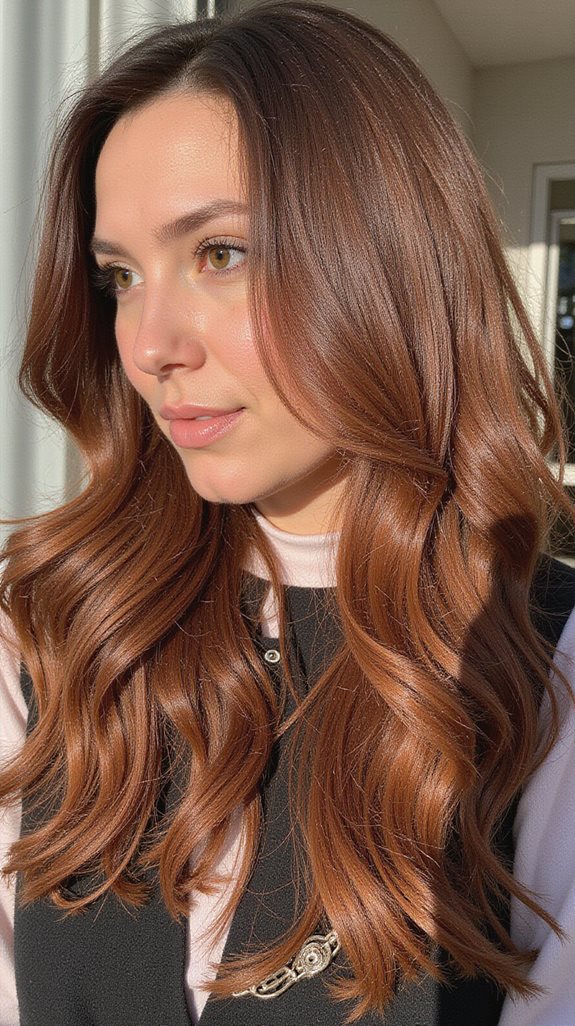
Chestnut brown hair thrives when protected from the elements that strip warmth and depth from the strands. Sulfate-free shampoo, cool water rinses, and UV-protective leave-in sprays work together to slow pigment loss between salon visits.
A weekly color-depositing conditioner helps replenish the rich, warm tones that define this shade.
Deep conditioning treatments every two weeks seal the cuticle, locking color molecules inside each strand for longer-lasting vibrancy. Limiting heat styling and applying thermal protectant spray reduces oxidation and fading caused by high temperatures.
Scheduling a gloss treatment every six to eight weeks refreshes depth and keeps the color looking freshly done.
Chestnut Brown for Gray Hair Coverage
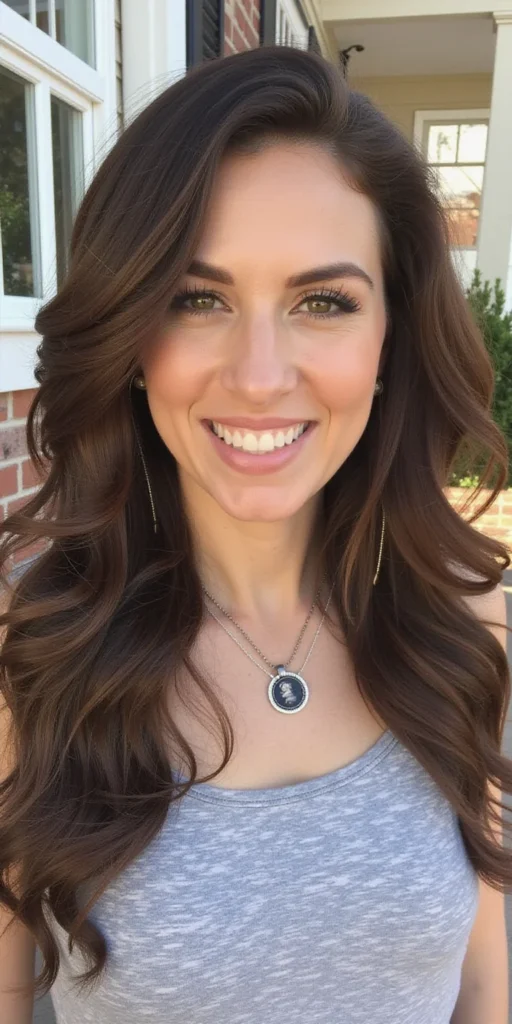
Covering gray hair with chestnut brown requires understanding how gray strands behave differently during the coloring process. Gray hair resists pigment more stubbornly, making proper developer strength and thorough saturation essential for achieving seamless, lasting results.
Applying chestnut brown to gray roots first allows the color to process longer where coverage is most needed, preventing uneven results across the hair.
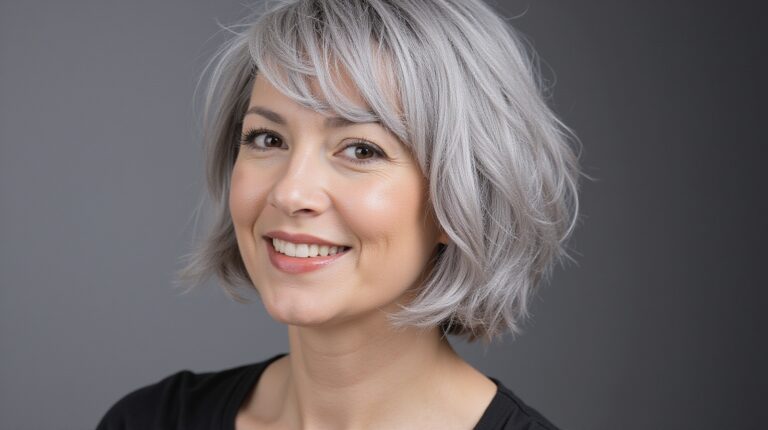
Regular root touch-ups every 4–6 weeks and weekly color-depositing conditioners help maintain a consistent, brass-free chestnut brown tone over time.
Chestnut Brown Color Melt Techniques
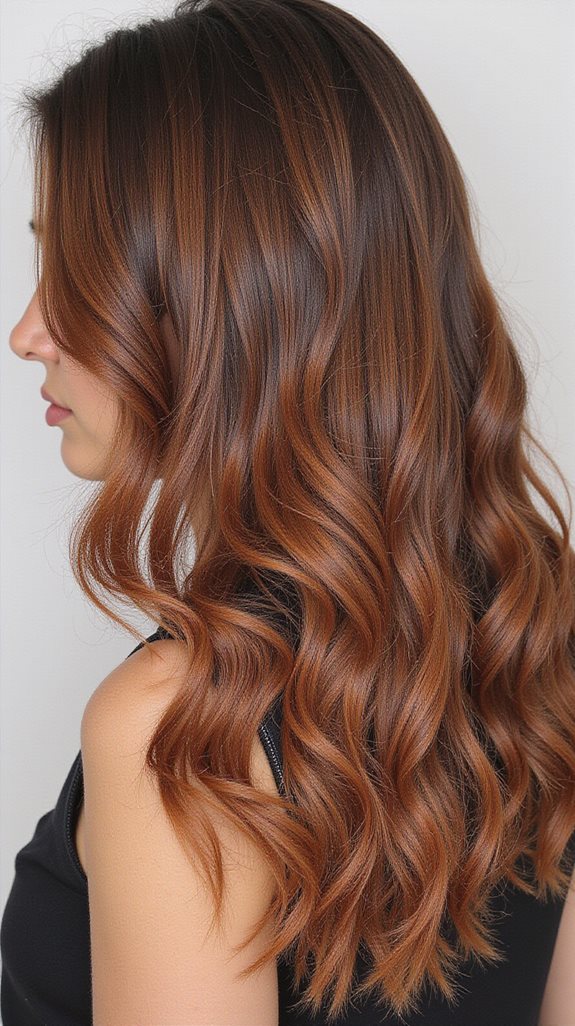
A color melt seamlessly blends two or more chestnut brown shades by eliminating harsh lines between tones, creating a fluid transition from roots to ends.
A deeper chestnut base anchors the roots, while a mid-tone shade feathers through the mid-lengths using a blending brush. Gradient blending softens boundaries between each shade, ensuring even diffusion across small sections.
A lighter chestnut or warm caramel finishes the ends, completing the dimensional shift in tone.
Processing time plays a critical role, as each zone requires sufficient development before rinsing. Toning afterward unifies all shades, producing a cohesive result that moves naturally with the hair.
The Best Tones of Chestnut Brown for Your Eye Color
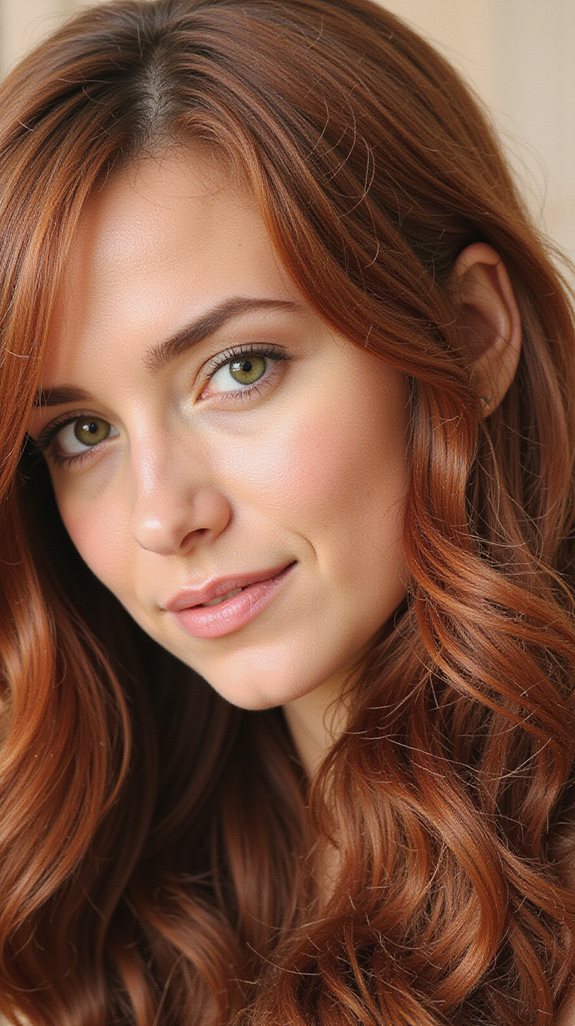
Chestnut brown is one of the most versatile hair colors, but finding the right tone for your specific eye color makes all the difference.
Cool-toned chestnut shades with ashy finishes create striking contrast for blue and gray eyes, while warm and golden undertones bring out the richness in brown and hazel eyes.
Green eyes respond beautifully to neutral-to-warm chestnut shades that enhance the natural yellow-green spectrum within the iris.
Hazel eyes present a unique opportunity since they shift between green, brown, and amber depending on light.
A multidimensional chestnut blend that incorporates both warm and cool tones works best, allowing the hair color to complement every variation of hazel simultaneously.
Selecting the right undertone ensures your chestnut brown enhances your natural eye color rather than dulling or clashing with it.
Frequently Asked Questions
Can Chestnut Brown Hair Color Be Achieved at Home Safely?
Yes, you can safely achieve chestnut brown hair at home using proper Home Dyeing Techniques. Follow DIY Haircare Tips: perform a patch test, use quality dye, apply evenly, and condition thoroughly post-color for optimal results.
How Long Does Chestnut Brown Hair Dye Typically Last?
Chestnut brown hair dye typically lasts four to six weeks. You’ll notice gradual fading, so apply chestnut maintenance tips like color-protecting shampoos. Combat dye fading solutions by scheduling touch-ups every four weeks for sustained vibrancy.
Does Chestnut Brown Hair Color Work on Chemically Treated Hair?
Yes, chestnut brown can work on chemically treated hair, but chemical compatibility matters. You’ll need to assess your hair’s porosity first, then prioritize post-treatment care with deep conditioning to maintain color vibrancy and structural integrity.
What Developer Strength Is Best for Chestnut Brown Hair Color?
For chestnut shades, you’ll want 20 volume developer for gray coverage or color refreshing. Use 30 volume for lifting darker bases. These developer options ensure optimal pigment deposit and rich, dimensional chestnut brown results.
Is Chestnut Brown Hair Color Suitable During Pregnancy?
You should avoid chestnut brown hair dye during early pregnancy due to chemical exposure risks. For pregnancy safety, you’d want to consider color alternatives like ammonia-free formulas, highlights, or henna-based options after your first trimester.
Finally
Chestnut brown is one of the most versatile, flattering shades you can choose, and now you’ve got 21 ways to make it work for your hair. Whether you’re going for a full-coverage color melt, a soft balayage, or gray coverage, the key is selecting the right tone for your complexion and eye color.
Commit to a solid maintenance routine, use color-safe products, and you’ll keep that rich, warm depth looking salon-fresh between appointments.