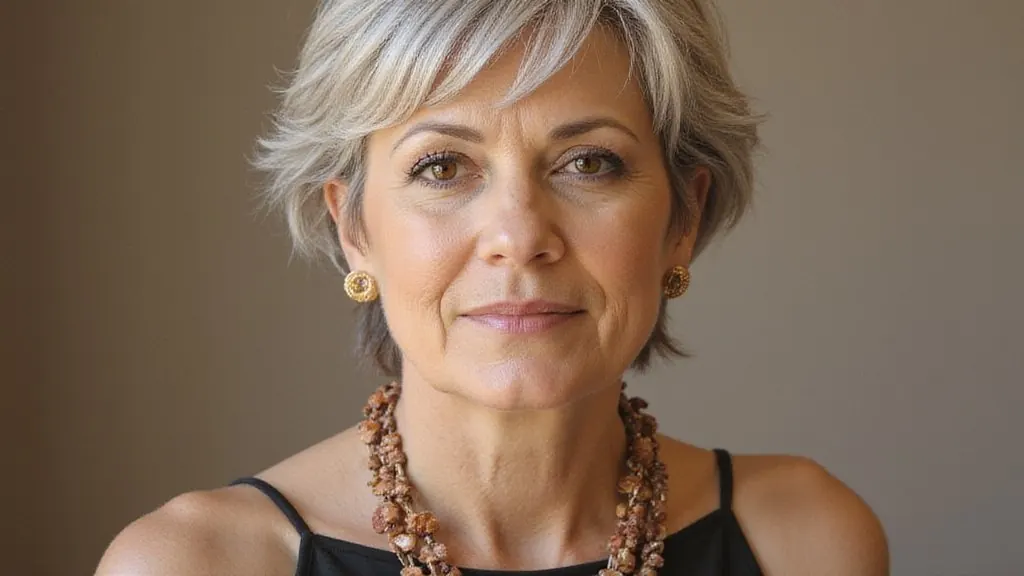
21 Short Haircuts for Thin, Fine Hair Over 50
Fine hair has thin individual strands. Thin hair means fewer strands on your head. Many women over 50 have both, and the result is hair that goes flat by lunch and shows the scalp at the part.
A good short cut helps more than any product. These 21 short haircuts for thin, fine hair over 50 each say where the cut ends, what to tell your stylist, how long it takes to style, and the one thing that can go wrong. Most need a trim every six to eight weeks, and pixies every four to six.
If your hair is thinning quickly or in patches, see a doctor before you see a stylist. Low iron and thyroid problems are common, treatable causes.
1. Classic Pixie
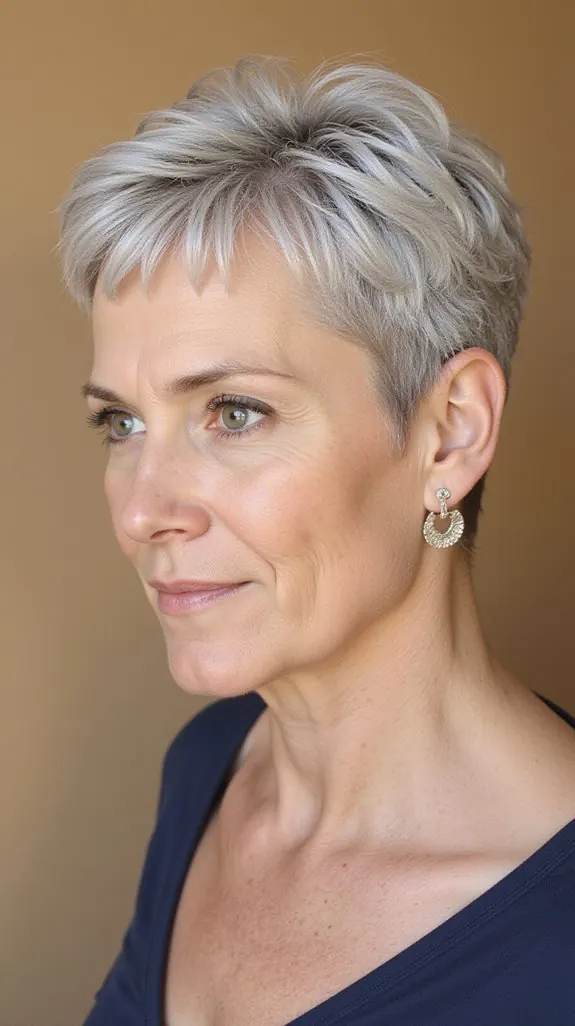
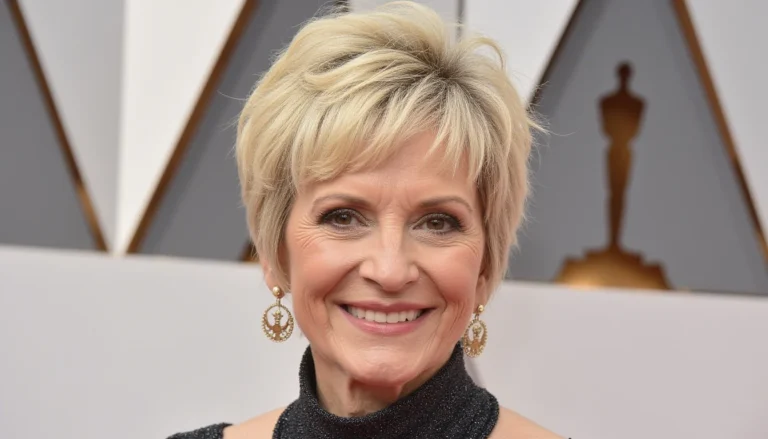
Short hair weighs less than long hair, which is the whole case for a pixie. This one keeps the back and sides short and leaves an inch or two on top, and because the cut is so light, so fine strands stand up instead of lying flat.
Soft texture on top works better than a sleek finish. A sleek pixie on very fine hair can show the scalp under bright light.
Rub a little volumizing mousse into damp roots and blow-dry upward with your fingers. It takes about five minutes. For more lengths and versions, see these pixie haircuts for older women.
2. Textured Pixie With Wispy Layers

Point-cut ends and wispy pieces at the fringe and around the ears keep a textured pixie soft at the edges. It’s a good next step if a classic pixie feels too severe.
Point-cutting with scissors gives texture without thinning the hair further. Highlights or lowlights through the top make the cut look fuller, since the contrast adds depth.
Finish with a light texturizing spray on dry hair. Skip heavy smoothing creams, which make fine pieces clump together and show gaps.
3. Soft Chin-Length Bob
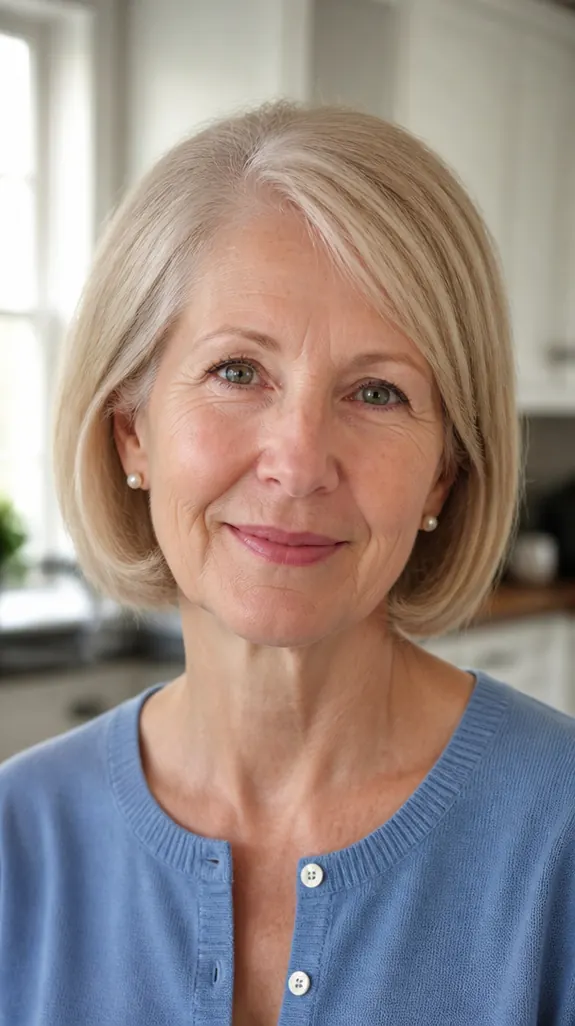
Ending at the chin with a gently rounded edge, a soft bob suits fine, straight hair that falls flat at shoulder length. It’s also the easiest cut here to grow out.
Tell your stylist you want the ends left fairly solid, with only light layering inside. Too many layers on fine hair leave the bottom looking thin.
Turn the ends under with a round brush as you dry. It takes about ten minutes and holds better with a mousse at the roots.
4. Layered Bob
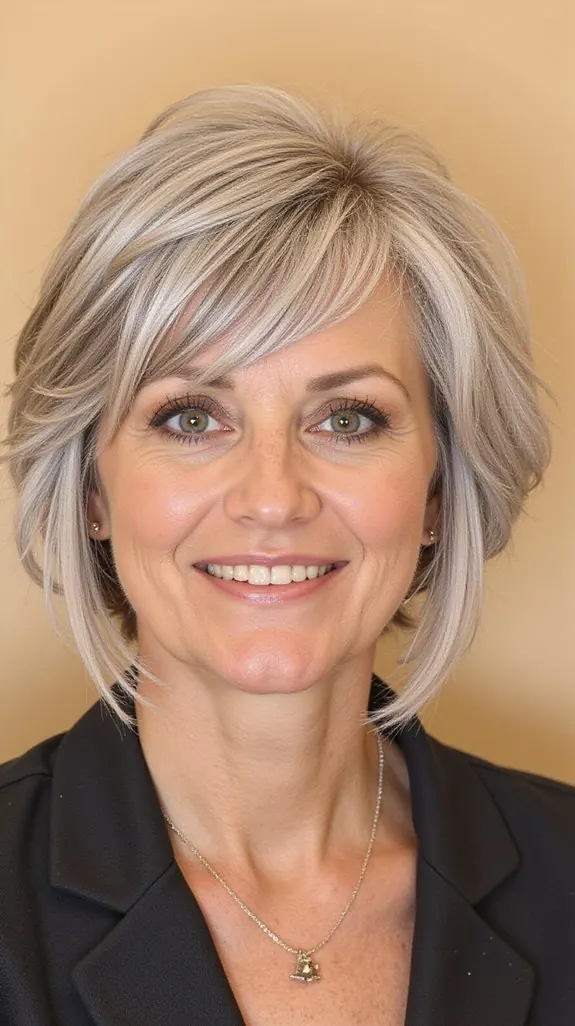
Short layers at the crown are what lift this bob, which ends between the chin and the jaw. It suits round and oval faces, since the height at the top balances the shape.
Keep the layers at the crown and leave the ends mostly solid. That way the top gets height without the bottom looking sparse.
Dry the crown first, lifting the roots with your fingers or a brush. For other bob shapes and lengths, there are more bob haircuts for women over 50.
5. Choppy Bob
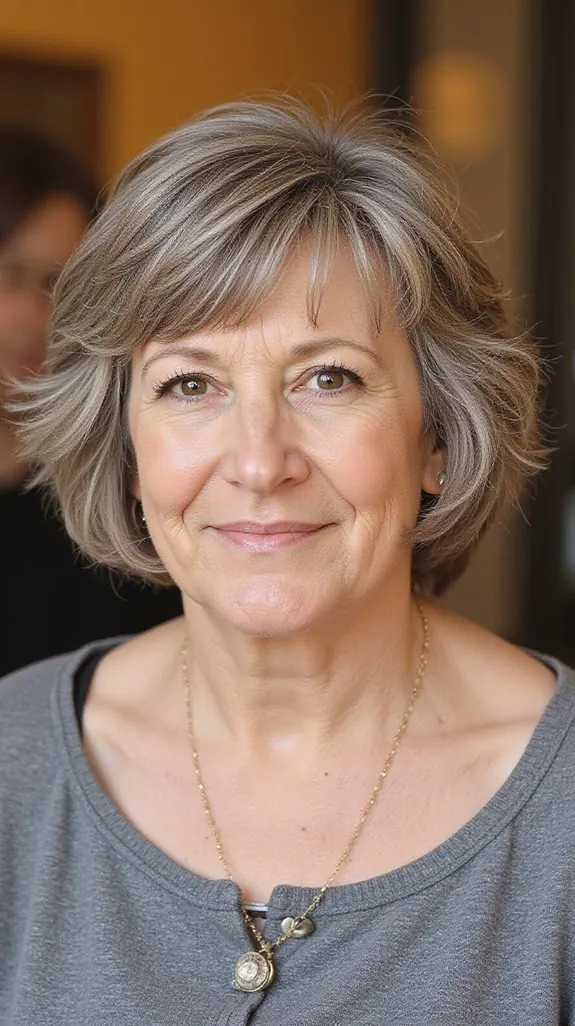
Uneven, point-cut ends break up the line on a choppy bob, so fine hair looks textured instead of limp. It’s a good fit if you’d rather not blow-dry every morning.
Point-cutting with scissors creates the chop. A heavy razor on thin hair can leave the ends see-through, so use one only if your stylist knows fine hair well.
Scrunch a texturizing spray into dry hair to separate the ends. It looks best a little messy.
6. Asymmetrical Bob
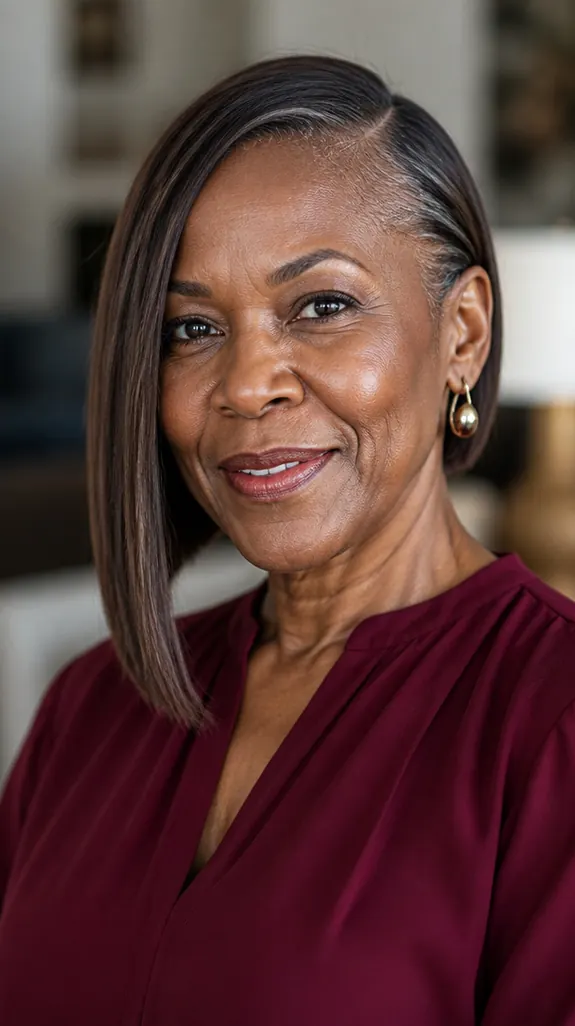
An asymmetrical bob is longer on one side, often below the chin, and shorter on the other, tucked behind the ear. A deep side part lets the long side fall across the face.
Fine hair suits this cut, because the side part piles more hair onto one side and makes it look fuller. It works best on straight or relaxed hair.
Scissor-cut ends keep the long side solid. The cut takes a while to grow out evenly, since the two sides start at different lengths.
7. Stacked Bob

Short, graduated layers at the back make a stacked bob lift at the crown and curve toward the face. From the side, it looks much fuller than a one-length cut.
Have the stacking stop just below the crown, where fine hair tends to go flat first. Highlights through the stack help the layers show.
Lift the back at the roots as you dry it. The stack loses its shape in about six weeks, so keep trims regular.
8. Blunt Bob With Bangs

Cutting all the ends to one length makes fine hair look thicker at the bottom, which is why the blunt bob has stayed a favorite for thin hair. Add blunt bangs and the front looks fuller too.
This might seem to contradict the layered cuts above, but it doesn’t. Blunt ends look dense, and the cut only goes flat if it’s left long and heavy, so keep it at the chin or shorter.
A paddle or round brush and a little smoothing cream on the ends only give the sharpest line. It takes about ten minutes.
9. French Bob
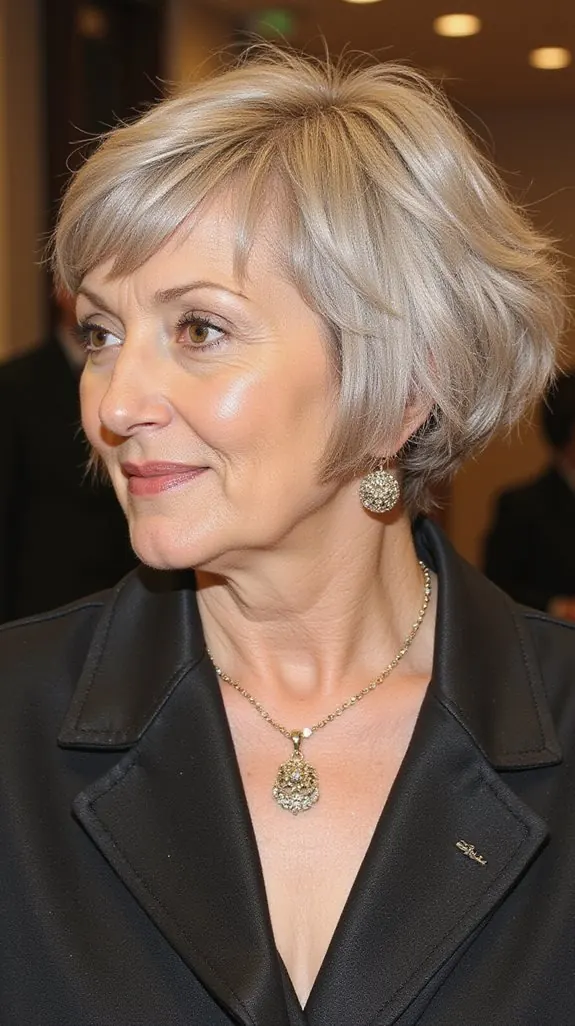
Sitting at or just above the jaw, a French bob comes with short bangs that skim the brows. It looks relaxed and is easy to wear messy, which suits fine hair that won’t hold a sleek finish.
The bangs pull hair forward from the crown, which makes the front look fuller. They need a trim every four to six weeks.
Rough-dry with your fingers and a little mousse, then smooth the bangs with a round brush. A gloss at the salon adds shine to fine strands.
10. Chin-Length Wavy Bob
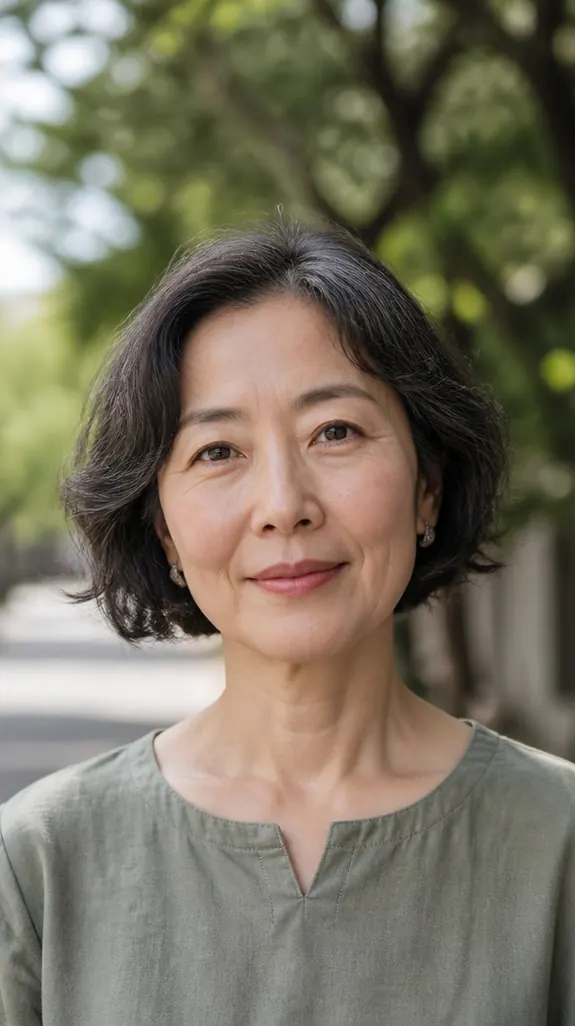
Waves give fine hair texture without the weight of longer lengths, and a chin-length bob is short enough to keep them light. The bends in the hair make it look fuller.
If your hair is naturally wavy, ask for light layers so the waves can form. If it’s straight, a few loose curls with a wand give the same look.
Apply a lightweight mousse to damp hair and diffuse or air-dry. Heavy creams flatten fine waves.
11. Feathered Bob
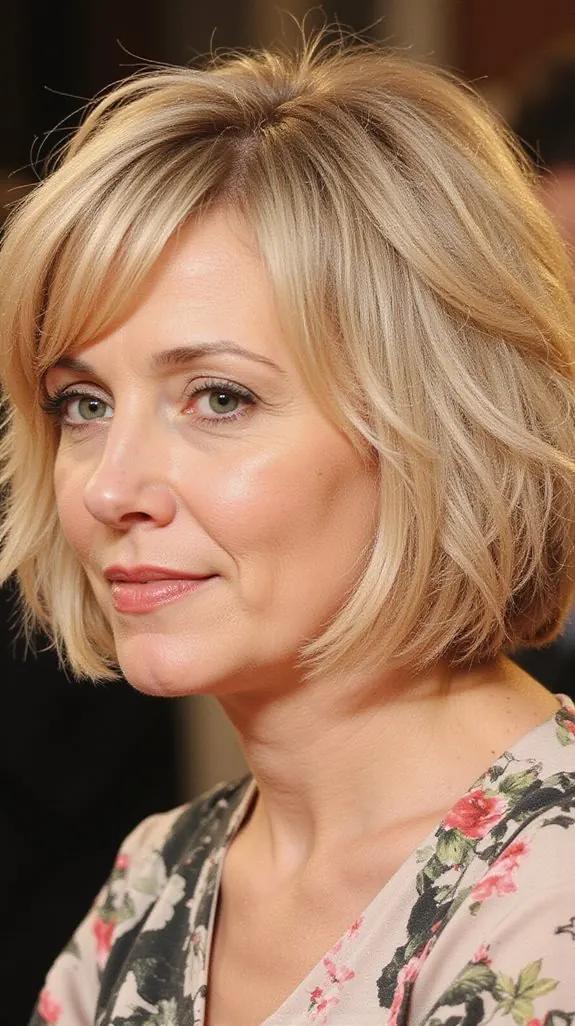
Soft, angled layers that flick away from the face give the feathered bob its shape, a little like a shorter version of the 70s cut.
Feathering works on fine hair when the layers are long and soft. Short, heavy feathering can make thin hair look stringy.
Roll the front pieces back with a round brush as you dry. It takes about ten minutes, and a light hairspray holds the flick.
12. Short Shag

A short shag has choppy layers through the crown and lighter ends, so fine hair gets movement and lift on top.
Have it cut dry, so your stylist can see how the layers fall. Go easy on layering at the ends, or they’ll look thin.
Dry shampoo at the roots on day two adds grip and lift. There are more shag hairstyles for women over 50 if you like this layered look.
13. Tousled Crop
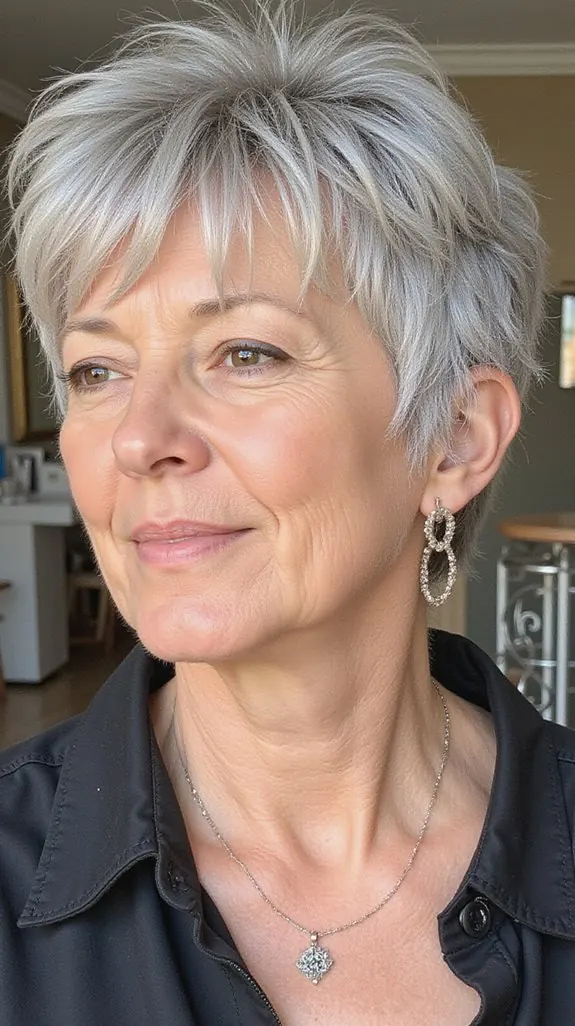
Short at the back and sides with piecey layers on top, a tousled crop is meant to look a little messy. It suits anyone who wants to be out the door in five minutes.
This is one of the lowest-maintenance cuts here. A pea-sized amount of texturizing paste on dry hair and a scrunch is all it takes.
Most crops need a trim every four to six weeks to keep the shape. If you’d like a little more length on top, look at these bixie cuts made for fine hair.
14. Undercut Pixie

The undercut pixie clips the sides and nape very short and leaves longer hair on top, which you can sweep up or to one side.
Removing bulk at the sides makes the top look fuller by comparison. Use a root-lifting spray and blow-dry the top upward with your fingers.
The undercut needs a clipper touch-up every three to four weeks and takes months to grow out.
15. Side-Swept Bob
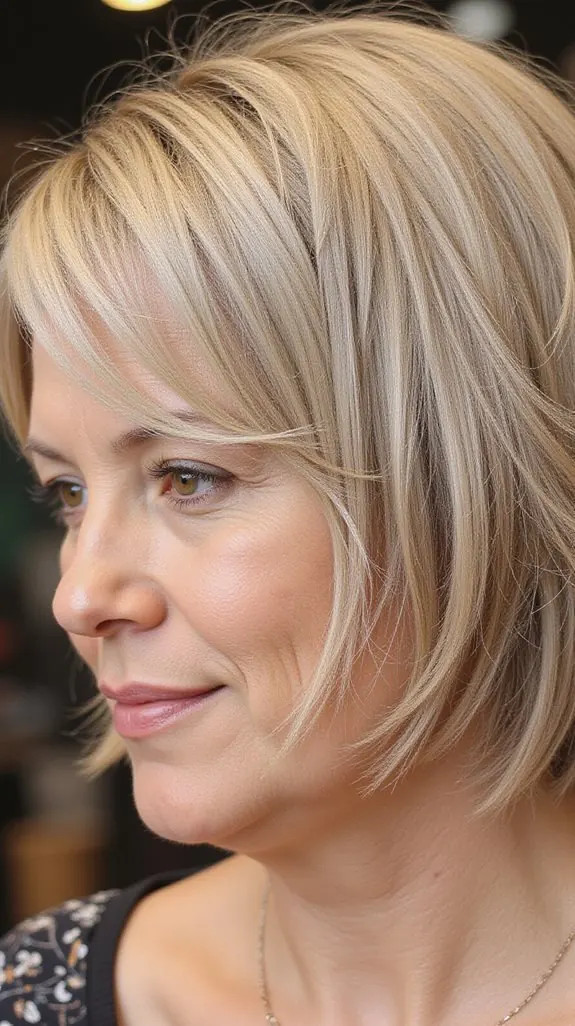
A side-swept bob uses a deep side part and longer front pieces that sweep across the forehead. It helps if your hairline is thinner at the temples.
Place the part on the side where your hair is thickest, so more hair falls over the thinner side.
Dry the front across your forehead so it sets in the right direction. A little mousse at the roots keeps the sweep in place.
16. Curly Pixie
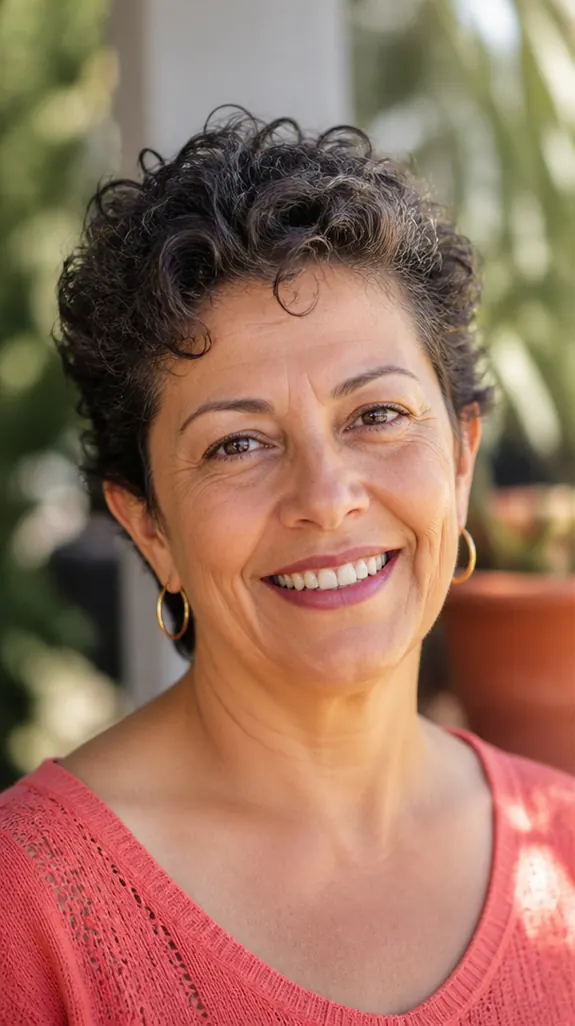
Loose curls on top and a short back and sides make up a curly pixie. Curls add natural height, even when the strands are fine.
Have it cut dry, since curls shrink as they dry. Fine curls do best with a light mousse rather than heavy creams or oils.
Scrunch the mousse into damp hair and air-dry or diffuse on low. For more short curly shapes, there are plenty of curly bixie cuts.
17. Short Layered Cut With Wispy Bangs
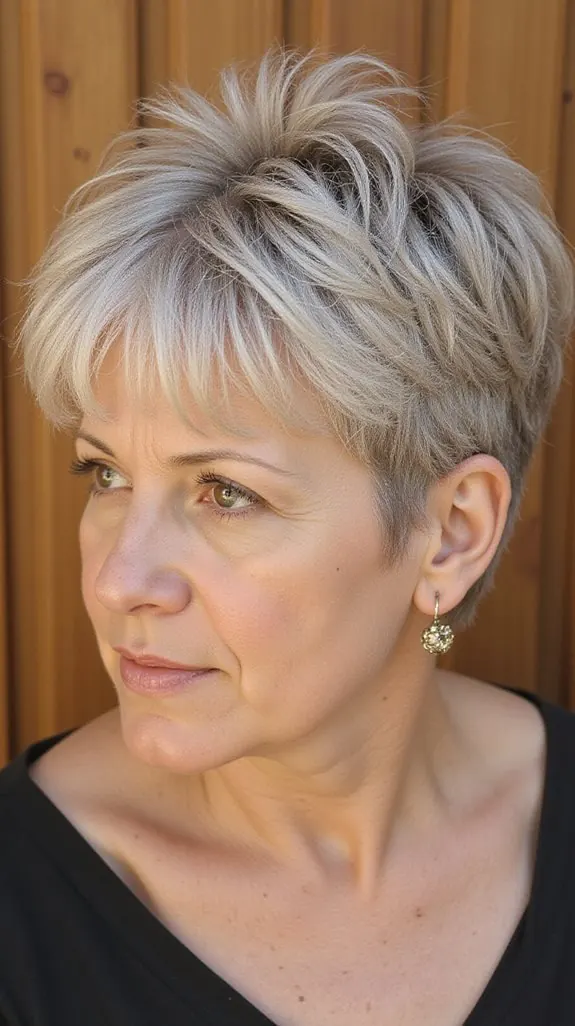
This short layered cut has soft, wispy bangs that fall across the forehead, with light layers around the ears and crown.
Wispy bangs make the front look fuller and can hide a higher hairline. Point-cut them so they aren’t heavy.
Style the bangs first with a small round brush, then the rest. Dry shampoo keeps them from separating by the afternoon.
18. Rounded Bob
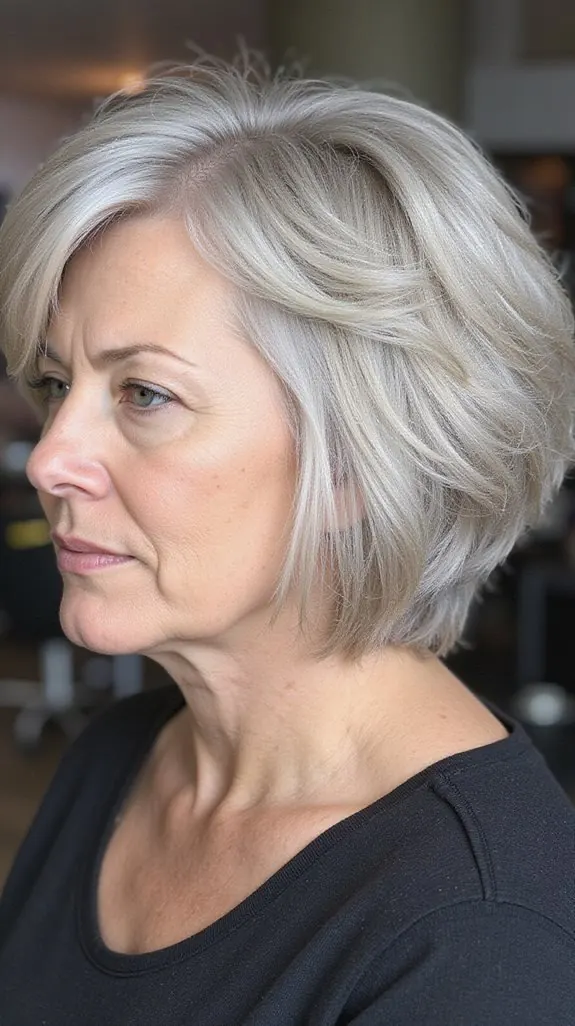
Curving gently from the back to the front and ending at the chin, the rounded bob gives fine hair a soft, full shape. It’s one of the most forgiving cuts if your hair has a cowlick at the crown.
Request the back slightly shorter than the sides, so the shape tips forward. Keep the ends fairly solid.
Turn the ends under all the way around as you dry. A flexible hairspray holds the shape without stiffness.
19. Layered Crop With Face-Framing Pieces
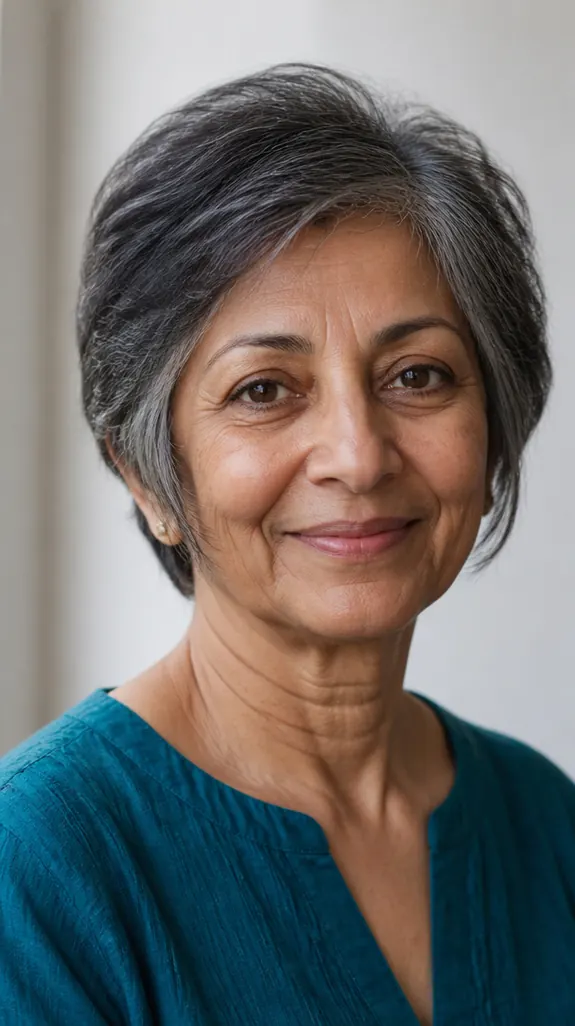
This short layered crop has a short back and sides, soft layers on top, and longer pieces that fall at the cheekbones and in front of the ears.
The longer front pieces soften the face and fill in thinner areas at the temples. Keep them wispy, not heavy.
Dry the front pieces toward your face with a round brush. Trims every six weeks keep the shape.
20. Wedge Cut
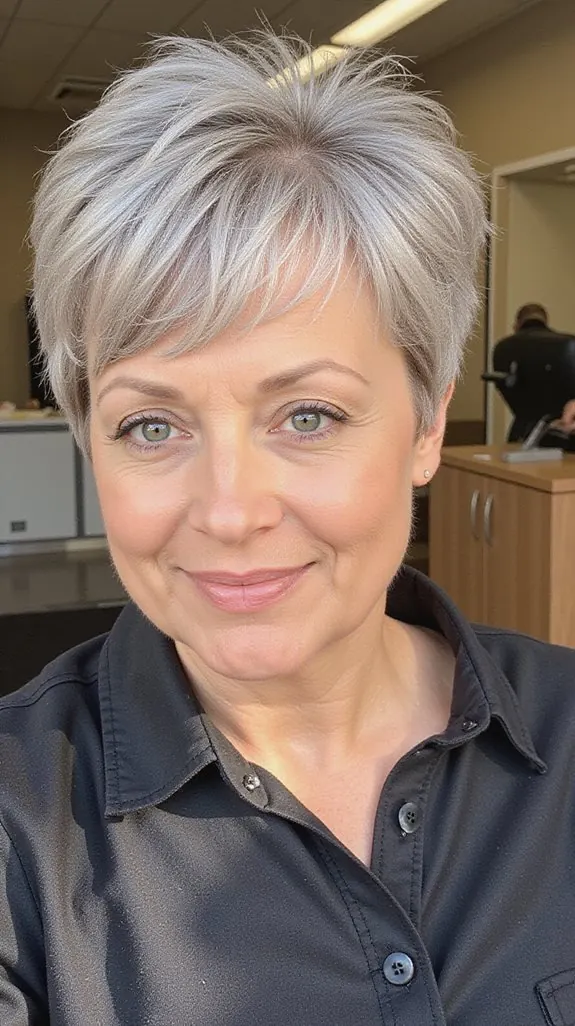
Popular in the 70s and still a strong choice for fine hair, the wedge is short and stacked at the back, longer on top, with a rounded shape that sits close at the nape.
The stacking lifts the crown, so the hair looks fuller from the side. It suits straight, fine hair best.
Lift at the roots and smooth the back down as you dry. Trims every six to eight weeks keep the stack clean.
21. Textured Chin-Length Bob
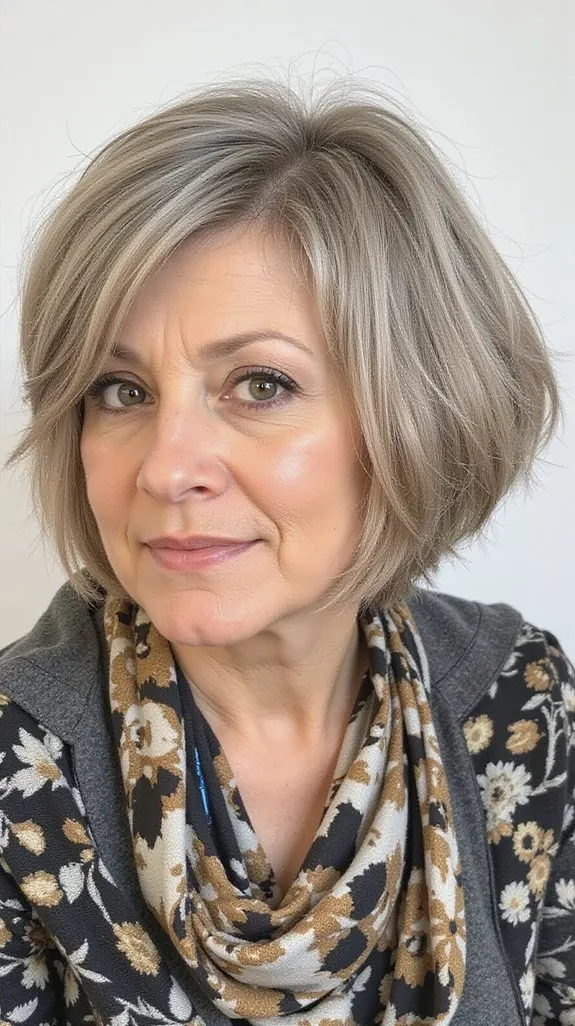
Soft, broken-up ends give this chin-length bob its texture, so the edge looks lived-in instead of solid.
The texture can come from light point-cutting or a light razor in experienced hands. On very thin hair, keep it subtle, or the ends can look see-through.
A dry texturizing spray at the ends adds grip. It’s an easy cut to wear between appointments. For more ideas if you’re gray, see these short styles for gray hair.
Frequently Asked Questions
How Often Should Women Over 50 With Fine Hair Get Trims?
Most short cuts need a trim every six to eight weeks. Pixies, crops and anything with an undercut need one every four to six weeks to keep the shape.
Can Hair Thinning After 50 Be Reversed With Proper Care?
Sometimes, depending on the cause. Low iron, thyroid problems and some medications can cause thinning, and treating them can help. Hair loss linked to menopause and genetics is common. Minoxidil, sold over the counter, is the treatment with the most evidence for women, and it takes three to six months to show results. See a doctor or dermatologist first.
What Vitamins Help Promote Thicker Hair Growth After Menopause?
Vitamins only help if you’re low in them. Iron, vitamin D and zinc are the ones most often checked. Biotin is widely sold for hair, but it rarely helps without a deficiency, and it can affect some blood test results, so tell your doctor if you take it.
Does Coloring Fine Hair Make It Appear Thinner or Damaged?
Color can make fine hair look fuller, because it slightly swells each strand and adds depth. Heavy bleaching does the opposite and weakens fine hair. Lowlights or a gloss are gentler choices.
Are There Specific Pillowcase Materials That Protect Fine Hair?
Yes. Silk and satin pillowcases cause less friction than cotton, so fine hair tangles and breaks less overnight. Satin is the cheaper option and works almost as well.
Choosing Your Cut
Choose by length first. Pixies and crops give the most lift, chin-length bobs suit fine hair that’s thick enough to cover the scalp, and blunt ends make thin hair look fuller at the bottom.
A good cut matters more than products, but a drugstore mousse and dry shampoo do most of the work. If the crown is very thin, a clip-in topper can fill it in, from about $50 for synthetic to a few hundred dollars for human hair. If your hair is thinning fast, start with a doctor’s visit.


One Comment