23 Braided Hairstyles for Black Women Over 50
Braids are one of the most practical ways to wear your hair after 50. A good set saves you daily styling for weeks, keeps your ends tucked away from rubbing on collars and pillowcases, and works with gray, thinning or fragile hair when the braider keeps the tension light.
These 23 braided hairstyles for Black women over 50 cover classic cornrows, knotless braids, twists, updos and gray box braids. Each one says how it’s done, roughly how long it lasts, who it suits and what to watch out for. Further down there’s a short section on protecting your edges, because the right braid installed too tight can still cost you hair at the hairline.
1. Classic Cornrows
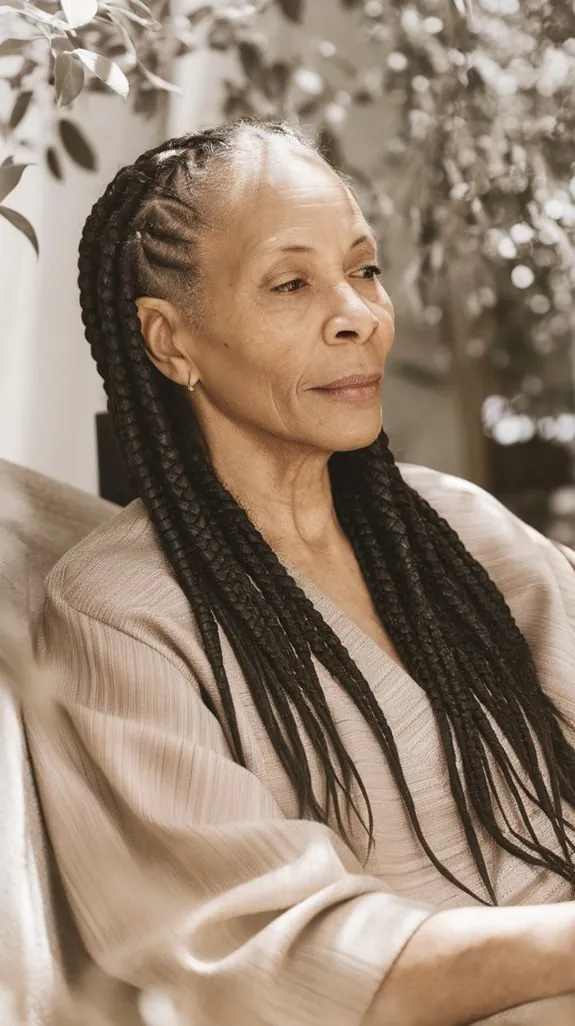
Cornrows are braided flat against the scalp in rows, either straight back or in curves and patterns. You can wear them on your own hair with no extensions, which keeps them light and cheap.
On natural hair they usually last about two to four weeks. Straight-back rows are the easiest to wear every day, while curved designs look dressier. For more ways to wear them, these hairstyle ideas for Black women include several cornrow-based looks.
The rows along the hairline carry the most tension, so have those left a little looser, especially if your edges have thinned.
2. Elegant Box Braids
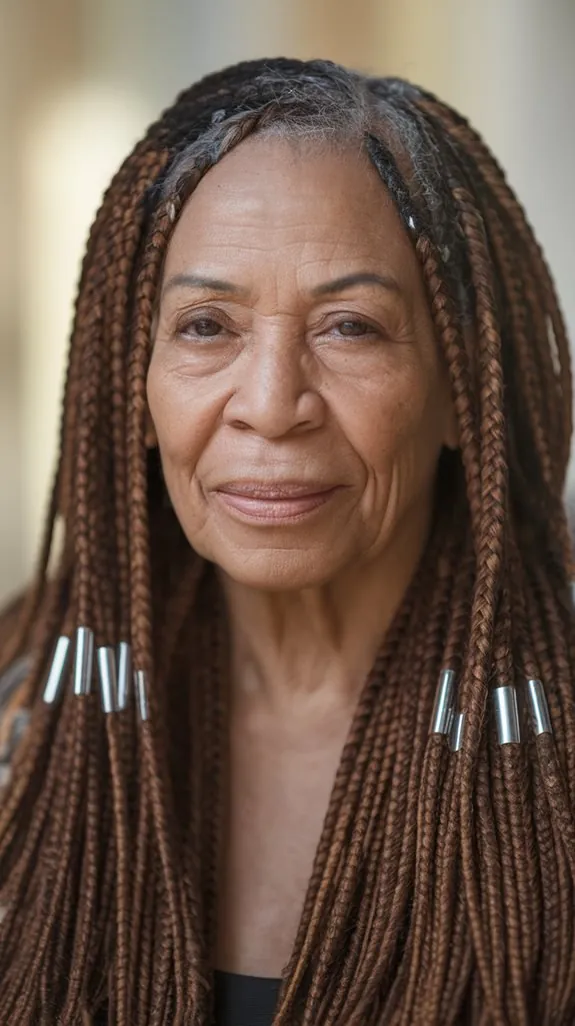
Box braids are individual braids that start from small square sections of your hair, with extension hair braided in. They’re the classic long-wear protective style and can be worn down, in a ponytail or pinned up.
A full set takes several hours to install and usually lasts six to eight weeks. Medium-sized braids at shoulder or bra-strap length are a good balance for most women over 50, since they’re lighter than very long or very small braids.
Mid-back and waist-length braids look beautiful, but the weight pulls on the roots all day. If you’ve noticed thinning at the temples, go shorter.
3. Sleek Senegalese Twists
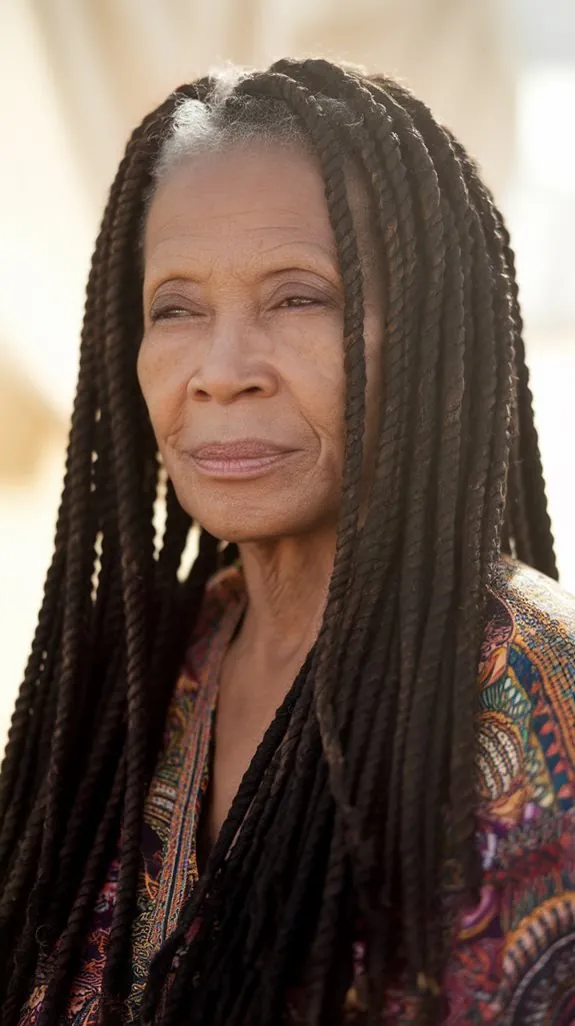
Senegalese twists are two-strand rope twists made with smooth extension hair, so they look sleek and glossy rather than textured. They suit women who like a neat, polished look.
Expect four to eight weeks of wear. The ends are sealed with hot water to stop them unraveling, and a light oil on the scalp keeps them comfortable.
Twists can loosen a little faster than braids, especially if you swim, so they’re a good choice for someone who doesn’t mind a touch-up at the front after a few weeks.
4. Chic Goddess Braids
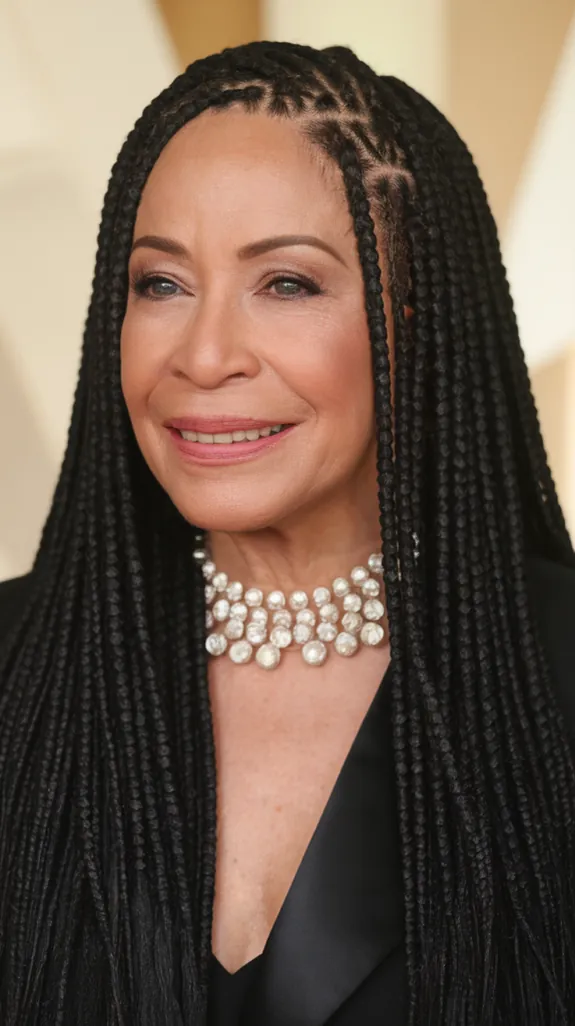
Goddess braids are large, raised cornrows, often styled in curves or swept up into a crown or side updo. Because there are only a few braids, they install faster than most styles.
Two to six thick braids frame the face and look dressy enough for a wedding or a special dinner. On natural hair they hold for one to three weeks, longer with extensions.
The large braids are heavier at each anchor point, so it’s worth having the braider keep the hairline sections loose.
5. Stylish Fulani Braids
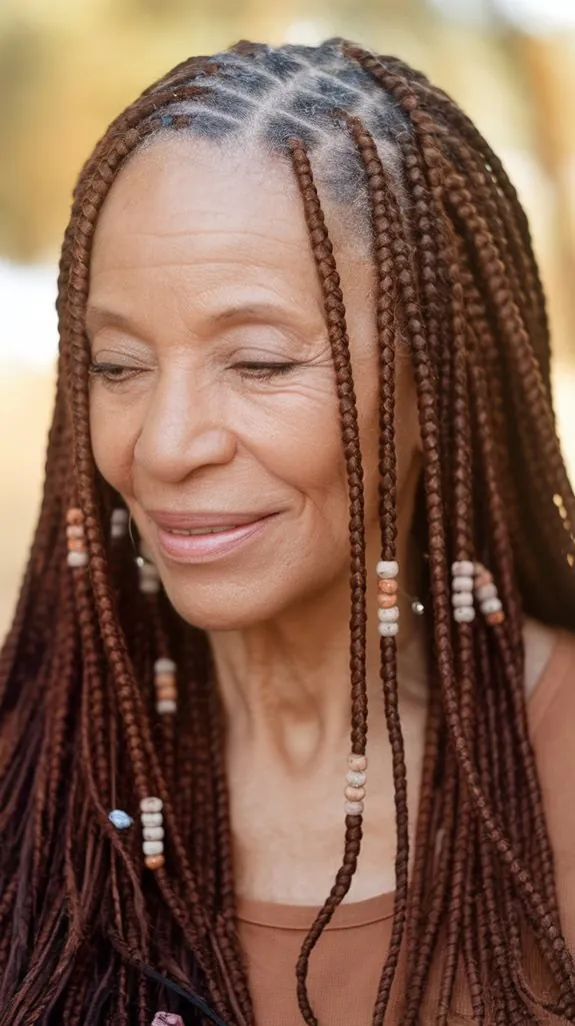
Fulani braids come from the Fulani people of West Africa. The classic pattern has a cornrow down the center of the head, braids running toward the face on each side, and loose braids at the back, often finished with beads or cowrie shells.
A set lasts four to six weeks and can be done with or without extensions. Keep the beads to a few at the ends, since a lot of beads adds weight.
If you like the look and want to try variations, there are more braided styles that use the same center-part pattern.
6. Versatile Knotless Braids
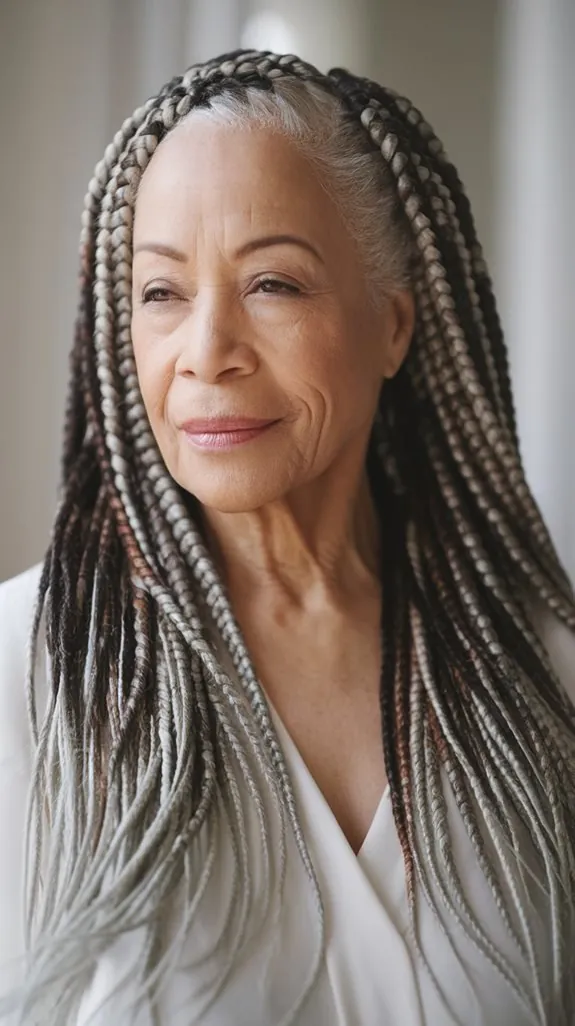
Knotless braids look like box braids, but they start with your own hair at the root and extension hair is fed in gradually as the braid grows. There’s no knot at the base, so they lie flatter and pull less on the scalp.
Few braids are kinder to fine hair or thinning edges. They take longer to install than box braids, often a full day for a long set, but they’re lighter and more comfortable from the first night.
Plan on six to eight weeks of wear. Medium size and shoulder length keep them light enough to wear every day.
7. Beautiful Micro Braids
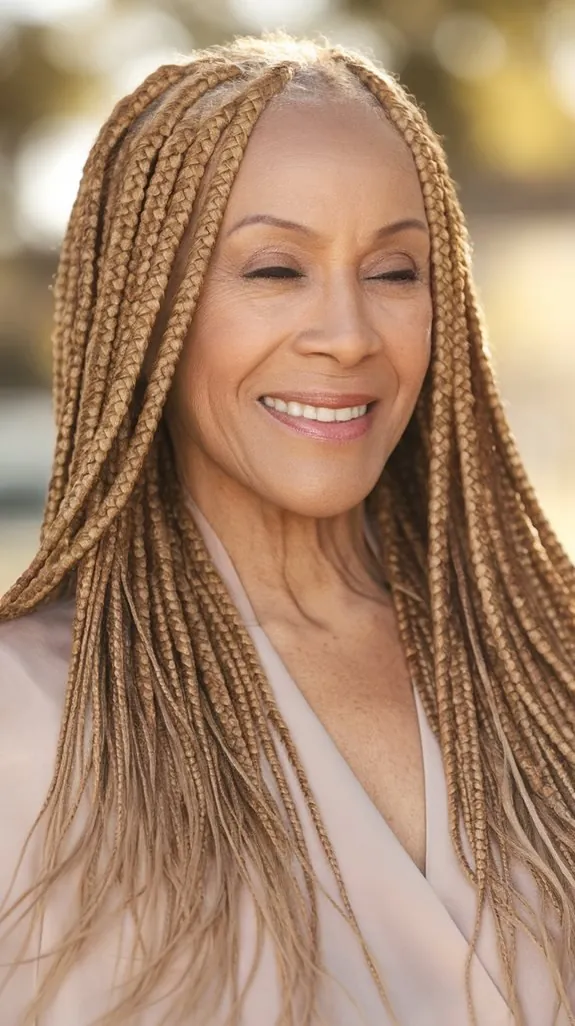
Micro braids are very small, thin braids, often hundreds of them. They look fine and swingy, almost like loose hair, and can be curled or pinned up like hair.
They’re also one of the hardest braid styles on your hair. Installation can take most of a day, and taking them out takes hours, which is when a lot of breakage happens. Each tiny braid holds very few strands, so the pull on each one is high.
If your hair is fragile, thinning or gray and dry, a slightly larger knotless braid gives a similar look with much less risk.
8. Sophisticated Marley Twists
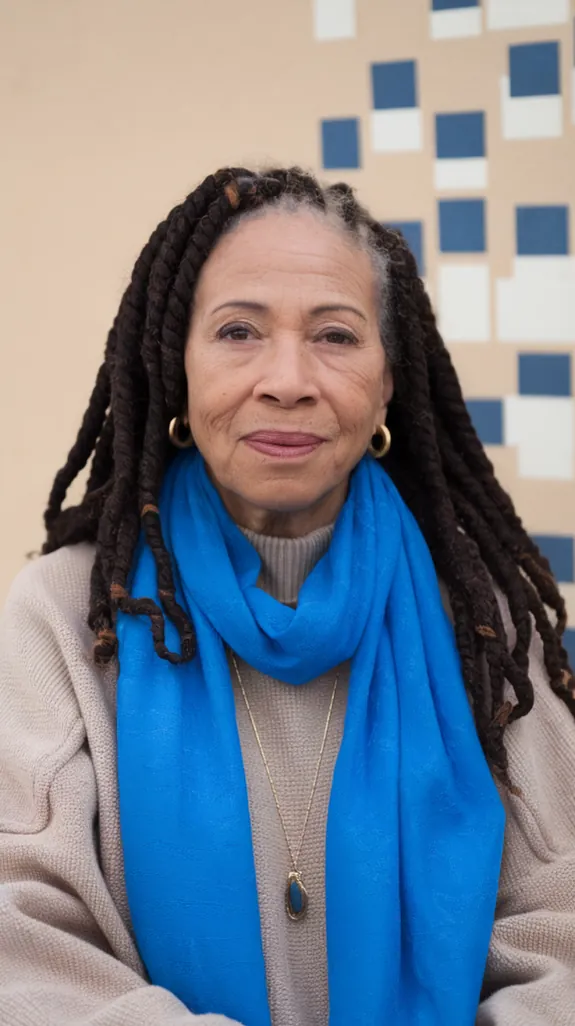
Marley twists use a textured extension hair that looks like natural, coily hair. The result is fuller and softer-looking than Senegalese twists, with a matte finish that blends well with your own hair.
A set holds up for four to eight weeks. Thicker twists install faster and are easy to style into a bun or a high ponytail.
Textured extension hair can feel a little coarse and may itch at first, so a rinse of the hair in apple cider vinegar and water before installing helps some people.
9. Trendy Ghana Braids
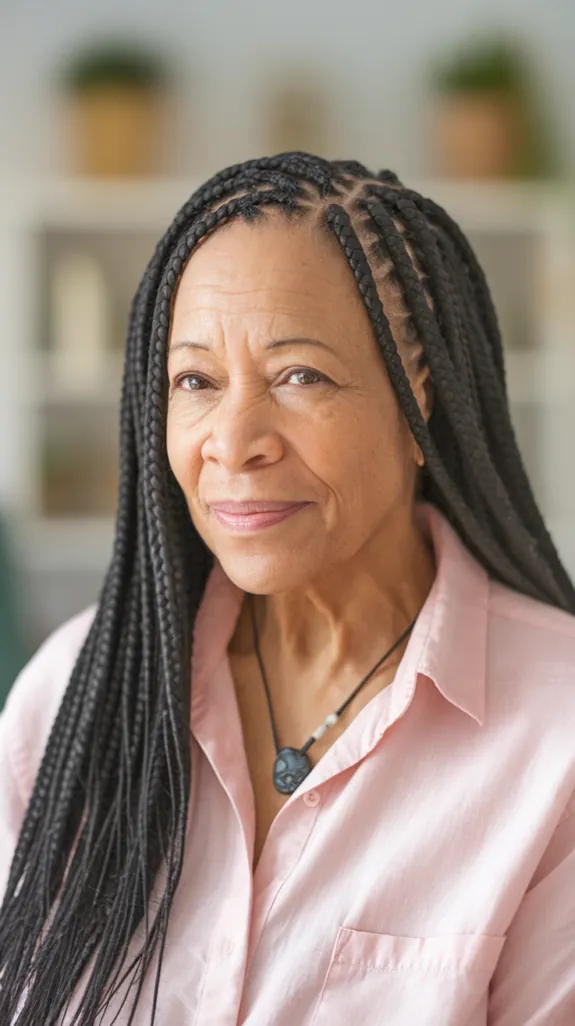
Ghana braids, also called feed-in braids, are cornrows with extension hair added a little at a time, so each braid starts thin at the hairline and grows thicker toward the back. That gradual build gives a smooth, natural start and more length than plain cornrows.
Depending on size, they last two to six weeks. Straight-back Ghana braids are the easiest to keep neat, and a few large ones are faster to install than many small ones.
Feed-in starts are gentler than a big block of extension hair at the hairline, which makes them a better choice than heavy box braids for many women with delicate edges.
10. Flattering Crochet Braids
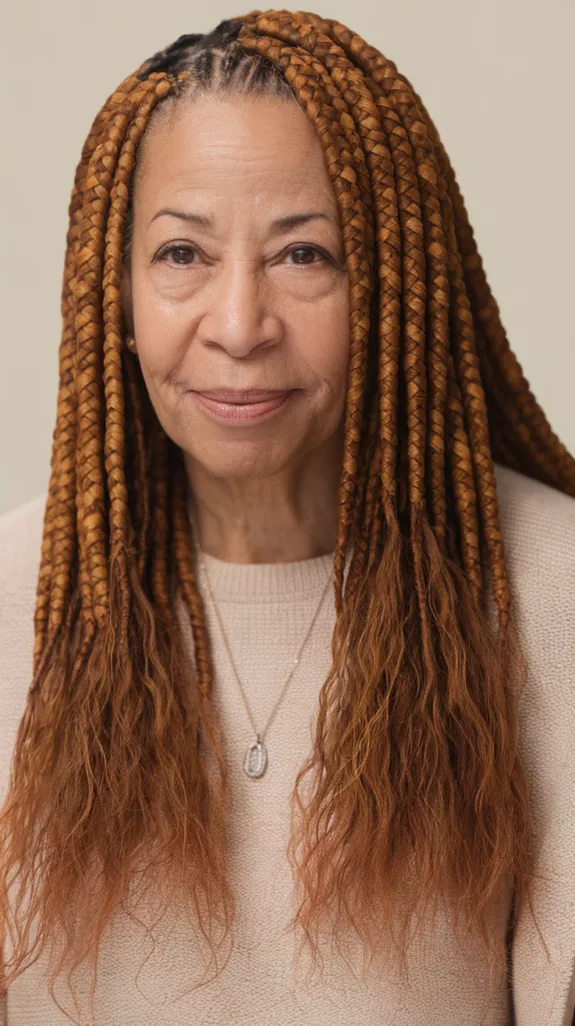
Crochet braids are made by cornrowing your own hair and then looping extension hair through the rows with a crochet hook. You can choose braids, twists, curls, waves or locs in almost any length.
They install much faster than individual braids, often in two to four hours, and your own hair stays braided and protected underneath for the four to eight weeks they last.
The base cornrows still need to be loose at the hairline. Because the scalp is covered, a nozzle-bottle of diluted shampoo works well for washing without taking the style down.
11. Intricate Lemonade Braids
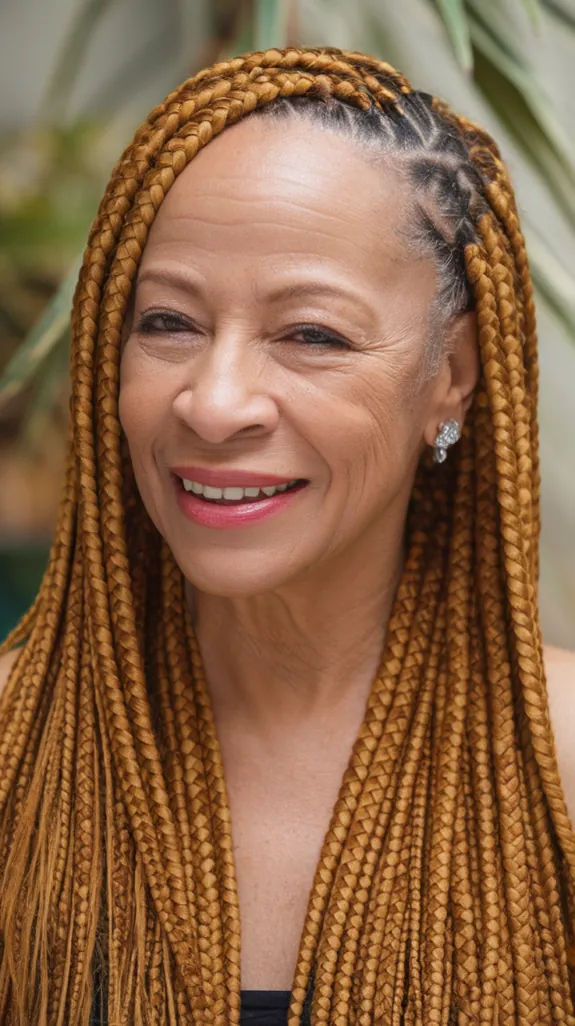
Lemonade braids are cornrows that all sweep to one side of the head, then hang down as loose braids. They were made popular by Beyoncé’s Lemonade visual album and look striking from the side.
With extensions, expect four to six weeks. The side sweep frames the face and draws the eye up, which suits most face shapes.
Because all the braids pull in one direction, the hair on that side takes more tension. Switch the direction next time you get them done.
12. Eye-Catching Jumbo Braids
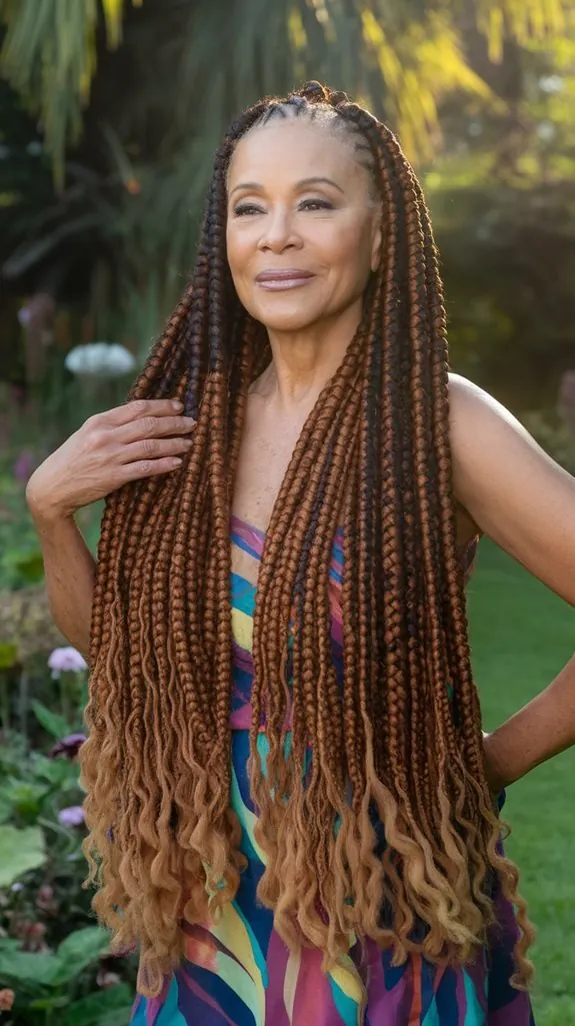
Jumbo braids are extra-large box braids, often a dozen or two for the whole head. The look is bold and easy to spot from across a room.
They’re the fastest box-braid style to put in, often a few hours. The trade-off is weight. Each big braid holds a lot of extension hair, and long jumbo braids pull hard on the roots.
Keep them at shoulder length or shorter, and skip them if your edges are already thinning.
13. Playful Two-Strand Twists
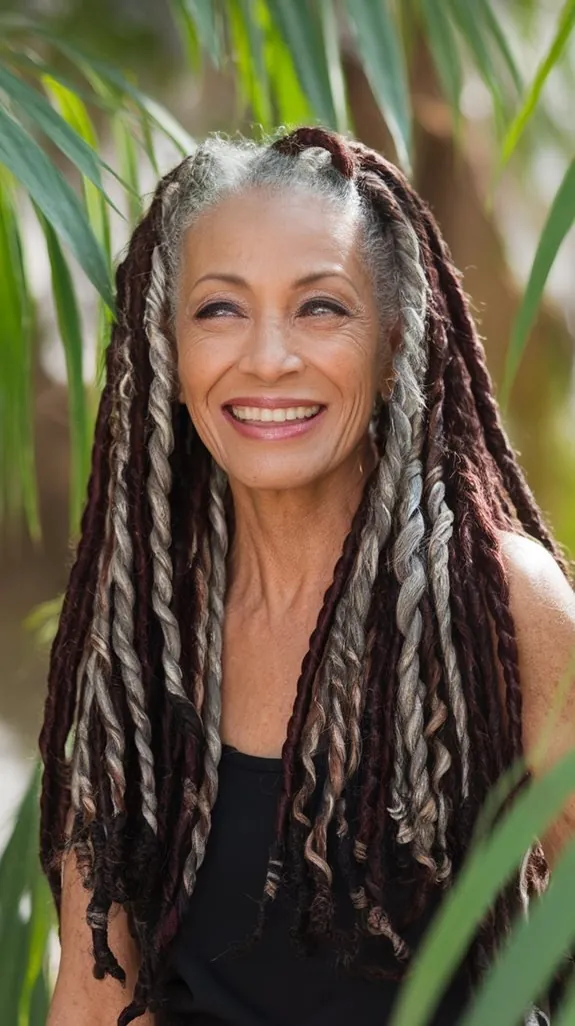
Two-strand twists use only your own hair: you divide a section into two strands and twist them around each other. They’re easy to do at home and cost nothing but a little curl cream or butter.
Twists hold for one to two weeks. When you take them out, you get a defined twist-out that lasts several more days.
Twists are a good way to give your hair a break between longer braided installs, since there’s no added weight or extension hair.
14. Braided Crown or Halo Updo
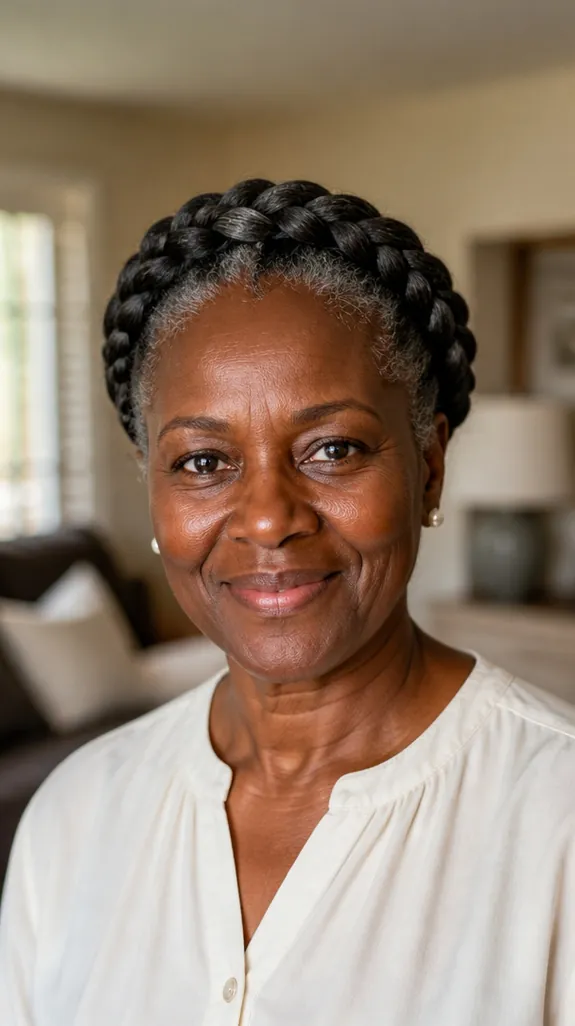
A braided crown, sometimes called a halo braid, wraps one or two braids around the head like a headband. It can be done on your own stretched hair or with a little extension hair for length.
It looks elegant for a wedding, church or a dinner out, and it keeps hair off your neck in hot weather. On natural hair it usually lasts a few days to a week.
If you want more updo ideas in the same spirit, these braided buns for Black women show buns and crowns that work on gray and natural hair.
15. Lightweight Passion Twists
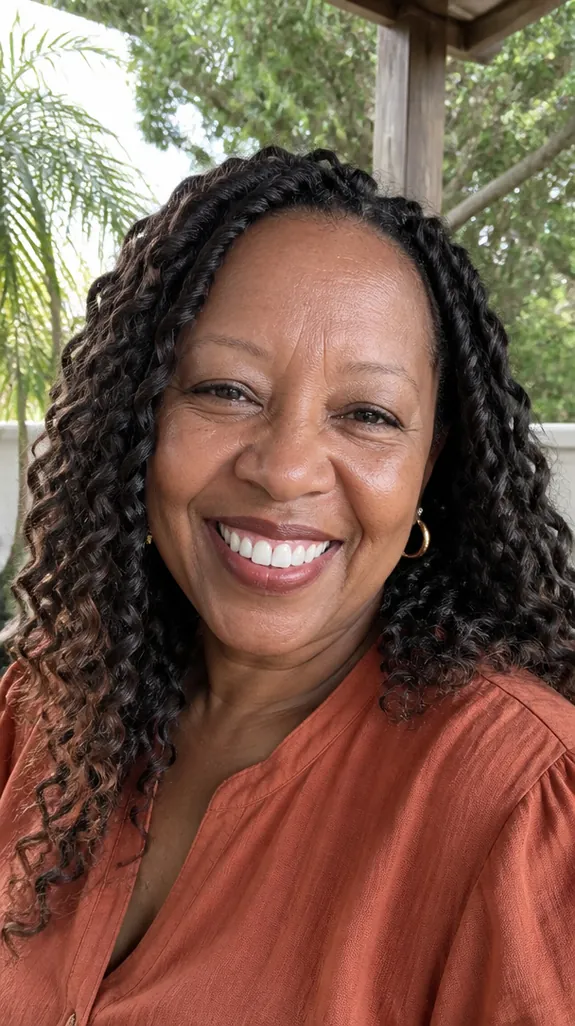
Passion twists are two-strand twists made with soft, wavy extension hair, so they look loose and bohemian rather than sleek. They’re lighter than many twist styles and feel soft from the first day.
A set lasts four to eight weeks, and a medium or bob length is easy to manage. The wavy hair can frizz a little over time, which most people like as part of the look.
Keep the twists at the hairline small and loose. A satin bonnet at night stops the soft hair from tangling.
16. Refined Dutch Braids
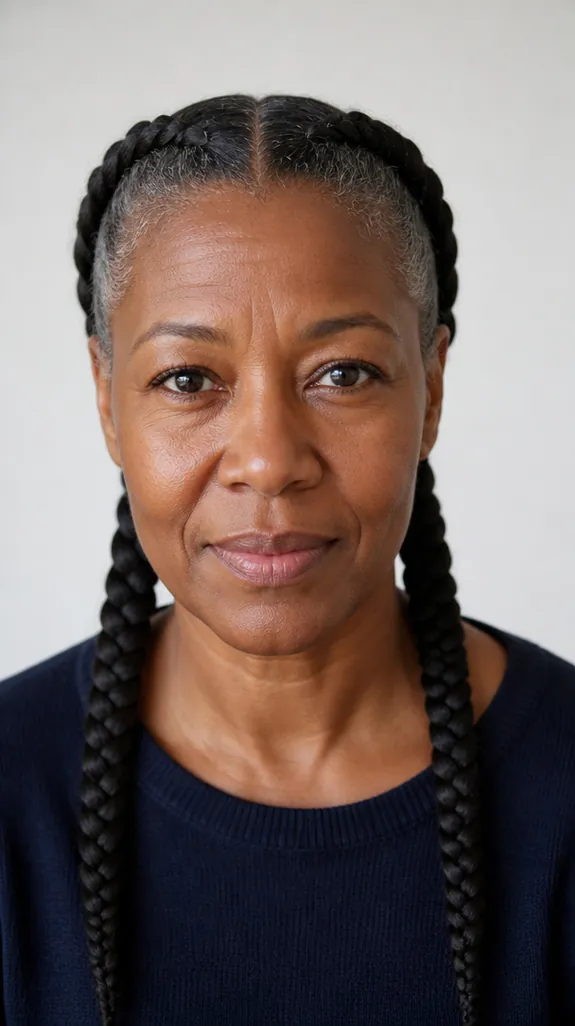
Dutch braids are braided with the strands crossed under rather than over, so the braid sits on top of the hair and stands out. Two Dutch braids, one on each side, are the most popular version.
On natural hair they’re usually done on stretched or blown-out hair, sometimes with a little extension hair added for length and fullness. They last a few days to a week and are quick to redo at home once you know how.
They’re a good short-term option between longer installs, since they come out easily and carry little weight.
17. Contemporary Faux Locs
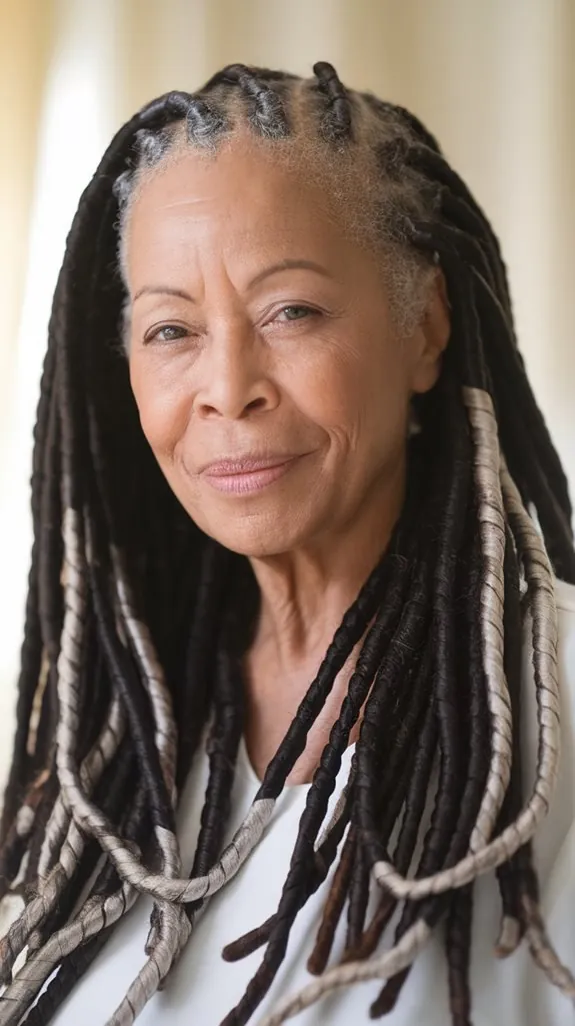
Faux locs give you the look of locs without the long-term commitment. Extension hair is wrapped around braids or twists to look like mature locs.
They usually last six to eight weeks. A new set can feel stiff and heavy for the first few days, and a long set is heavy throughout, so shoulder or mid-back length is easier to live with.
Lighter, distressed or bohemian locs are softer and weigh less than the classic smooth version.
18. Subtle Side-Swept Braids
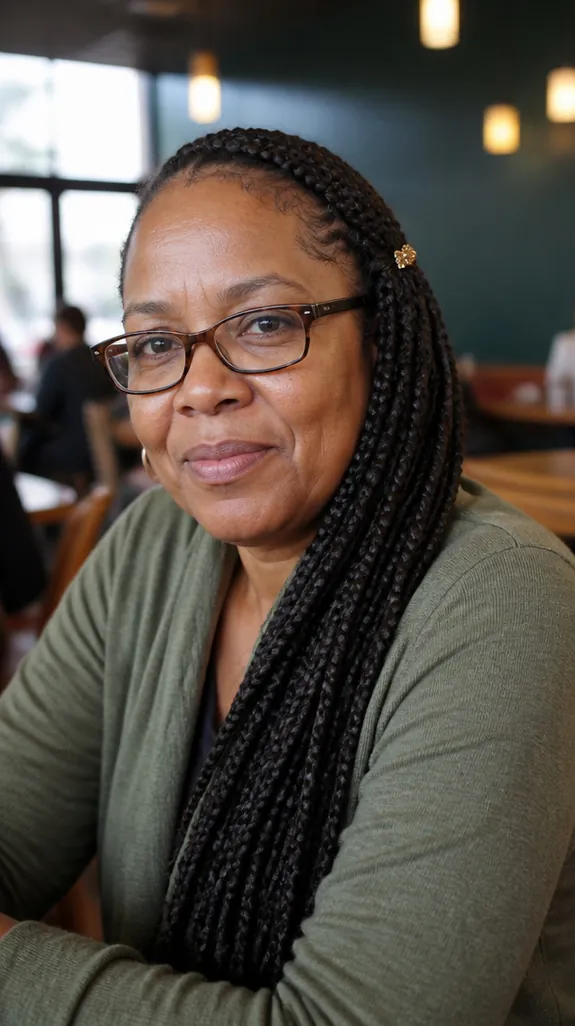
Side-swept braids are a way to wear box braids or knotless braids rather than a separate install. You gather the braids over one shoulder and pin or clip them in place behind the opposite ear.
It takes a minute and makes long braids look dressier. A low side ponytail or a braided low bun are two other easy ways to wear the same set.
Change the side you sweep to every few days so the same roots aren’t always pulled in one direction.
19. Dynamic Box Braid Bob
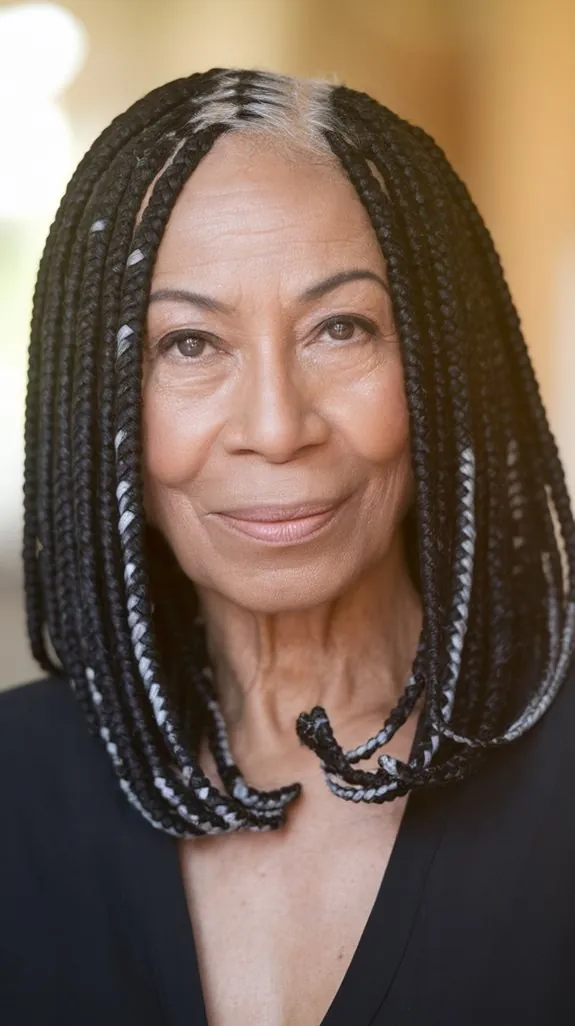
A box braid bob is box braids cut to chin or shoulder length. It’s lighter, cooler and quicker to install than a long set, and it looks neat and modern.
Most last six to eight weeks. Knotless versions are even lighter, and a side part or a few gold cuffs give it a finished look.
It’s an easy start for women who are new to braids or who want something low-key for work.
20. Natural-Looking Tree Braids
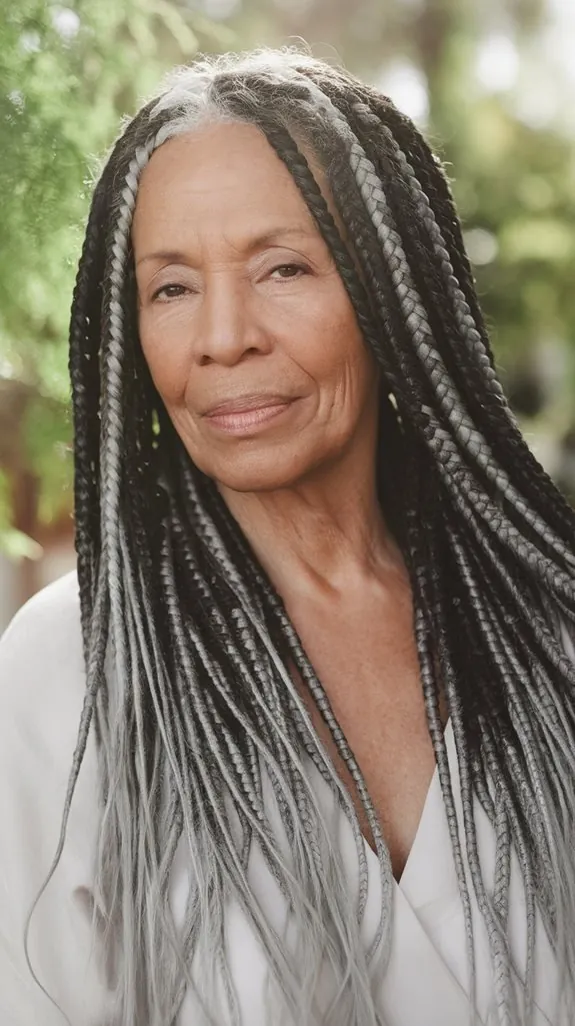
Tree braids are small cornrows along the scalp with extension hair left loose at intervals, so most of what you see looks like loose hair. They’re a good option if you want a protective style that doesn’t look braided.
The extension hair can be straight, wavy or curly to match the look you want. Expect four to eight weeks of wear.
Matching the texture of the extension hair to your own, especially at the parting, keeps the look natural.
21. Youthful Bohemian Braids
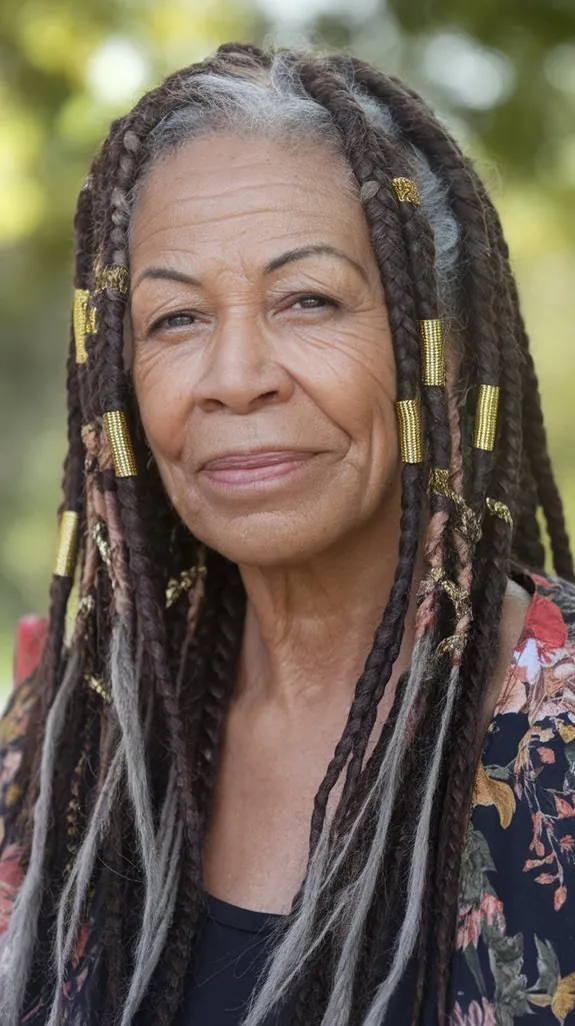
Bohemian braids are box or knotless braids with curly or wavy strands left out along the length, so they look soft and a little undone.
A set lasts four to six weeks. The loose curls tangle more than plain braids, so they need a little leave-in conditioner or mousse every few days and a satin bonnet at night.
Human hair curls last longer and tangle less than synthetic ones, but they cost more.
22. Glamorous Beaded Braids
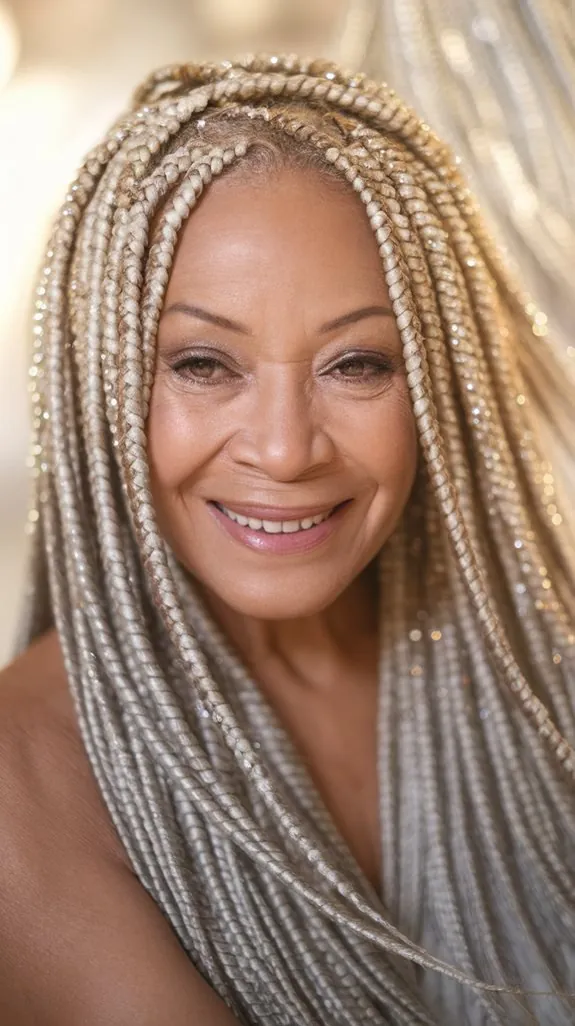
Beaded braids add wooden, glass, metal or ceramic beads along the braids or at the ends. They work with box braids, Fulani braids and cornrows.
Beads are where weight adds up fast. A few light beads at the ends look lovely, while a bead on every braid can pull on the roots and click against glasses.
Wooden and plastic beads are much lighter than glass or metal, so they’re the better choice for a long-wear set.
23. Salt-and-Pepper Box Braids
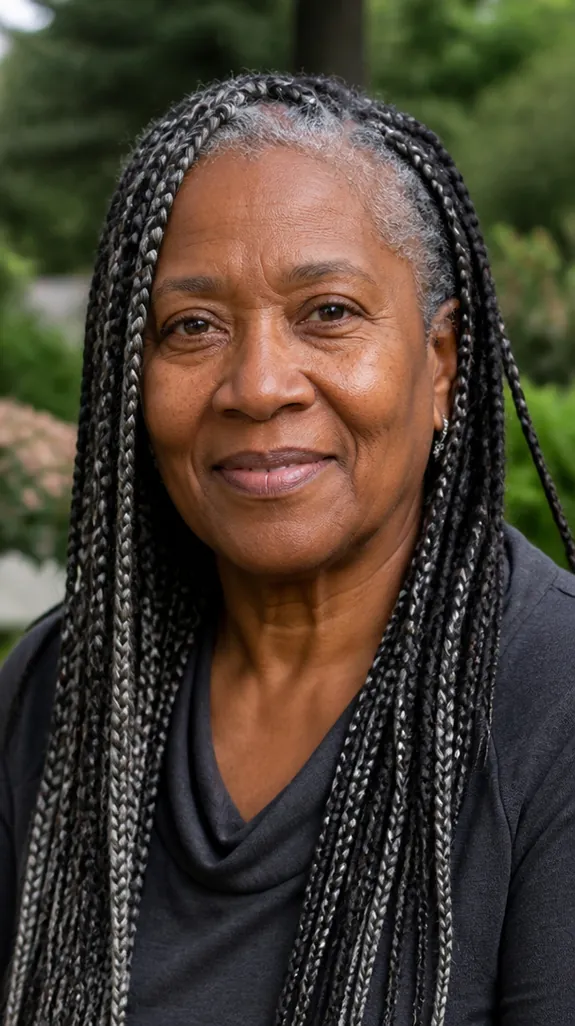
Salt-and-pepper box braids mix black and gray extension hair, or gray hair on its own, to suit hair that’s going gray. It’s one of the most flattering ways to wear braids as your color changes, since the regrowth blends in.
Your braider can mix the colors in each braid for a natural salt-and-pepper look, or go silver all over if you’ve decided to keep your gray. Like other box braids, they last six to eight weeks.
Gray hair is often drier and more fragile, so moisturize your scalp and edges every few days. If you’re thinking about growing out your gray, this guide to natural gray hair for Black women over 50 and these salt-and-pepper hair ideas cover cuts and care alongside braids.
How to Keep Your Edges Healthy in Braids
Traction alopecia, hair loss from long-term pulling at the roots, is common in Black women and often shows first at the temples and along the hairline. Caught early, it can usually be reversed. Left alone for years, it can become permanent.
Dermatologists and the hair-loss experts at Johns Hopkins Medicine give the same practical advice. Request looser braids, especially along the hairline. Take braids out after about two to three months at most. Switch styles between installs so the same spots aren’t always under tension, and give your hair a short break between sets.
Speak up during the install if it hurts. Tightness, bumps, headaches or soreness after braiding are signs the braids are too tight. Choosing knotless or feed-in starts, smaller sets, lighter extension hair and shorter lengths also takes a lot of strain off the roots.
Frequently Asked Questions
How long should I keep braids in after 50?
Most braided styles look best for six to eight weeks. Experts suggest taking them out after two to three months at the most, then giving your hair a short break before the next set.
What are the best braids for thinning hair?
Knotless braids, feed-in Ghana braids, a box braid bob and crochet styles on a loose base put the least strain on thin hair. Avoid micro braids, very long braids and heavy jumbo braids.
Can I get braids on gray hair?
Yes. Gray hair can be braided like any other hair, and you can use gray or salt-and-pepper extension hair to match it. Gray hair tends to be drier, so moisturize your scalp and edges often.
How do I sleep in braids?
Wrap your braids in a satin scarf or bonnet, or sleep on a satin pillowcase. It cuts friction, keeps the style neat longer and helps prevent frizz at the roots.
Choosing Your Next Braided Style
Start with what your hair can handle. If your edges are strong and your hair is thick, box braids, Fulani braids and goddess braids are all good options. If your hair is fine, thinning or gray and fragile, choose knotless braids, feed-in cornrows, a box braid bob or a crochet style, and keep the length short to medium.
Whichever you pick, ask for gentle tension at the hairline, take the style out on time and switch it up for the next install. Your hair will be in better shape for every set that follows.