
20 Pixie Haircuts for Older Women in Their 50s, 60s and 70s
A good pixie takes ten minutes to style and still looks finished at dinner. A bad one leaves you fighting a flat crown every morning and booking a fix two weeks later, which gets expensive fast.
I’ve gathered 20 pixie cuts that suit women in their 50s, 60s and 70s, from a close classic crop to a jaw-length pixie bob. Each one covers what to tell your stylist, which hair type it suits, and how long you can stretch it between trims, because the trim schedule is where a short cut costs you money.
1. Classic Short Pixie Cut for Women Over 60

This is the cut most stylists picture when you say “pixie.” The sides and nape sit close to the head, the top stays an inch or two longer, and the ears show.
Request tapered sides and about two inches on top. That extra length lets you push the front forward on a casual day or sweep it to the side for something dressier.
It works on fine, thick and gray hair alike, and it puts the focus on your eyes and cheekbones. Expect a trim every four to six weeks, since the neckline loses its shape first.
2. Soft Wispy Pixie for Fine Hair

Fine hair looks thin when it’s cut blunt, so this version uses feathered ends instead. Your stylist point-cuts or razors the edges, which breaks up the line and makes the hair look denser.
Skip heavy creams and oils. A pea-sized amount of drugstore volumizing mousse at the roots, then a blow-dry with your fingers, is all the product it needs.
Wispy ends can look frayed if you go too long between cuts, so book every five weeks. If your hair is also thinning at the temples, these short cuts for thin, fine hair over 50 give you more options.
3. Bold Undercut Pixie for Older Women
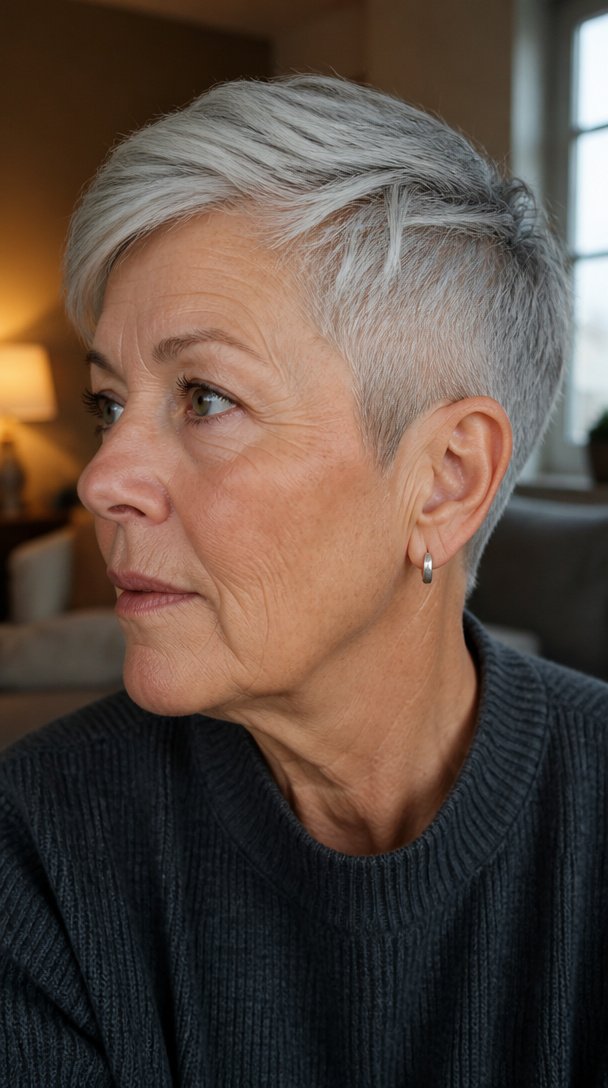
Thick hair that puffs out at the sides is the reason to try an undercut. Your stylist clips the hair underneath, from the temple to behind the ear, and leaves the top long enough to cover it.
Wear it down and nobody sees the shaved section. Tuck one side behind your ear and it shows.
Choose a #2 or #3 clipper guard if this is your first undercut. The trade-off is upkeep. The clipped area shows regrowth in about three weeks, so look for a salon that does quick, cheap neck and side cleanups between full cuts.
4. The Textured Pixie Cut With Layers

Picture a classic pixie with the bulk taken out. Your stylist cuts short layers through the top and sides at different lengths, so the hair moves instead of sitting flat in one piece.
Layers suit hair that has lost body with age, and the broken-up shape blurs fine lines around the face.
Work a little texturizing spray through damp hair and rough-dry it with your fingers. Too many layers on very fine hair can look sparse, so tell your stylist to keep the crown layers longer than the sides.
5. Side-Swept Pixie for a Youthful Look

A deep side part and a long fringe swept across the forehead soften a square or long face. The diagonal line draws the eye across rather than down.
Blow-dry the front with a round brush, pushing it in the direction you want it to fall. A light styling cream keeps it in place without the crunch of hairspray.
Keep the fringe long enough to reach your cheekbone. Cut it shorter and it flips up, and you’ll need a flat iron every morning to control it.
6. Pixie Cut With Bangs for Older Women

Bangs cover forehead lines, and they’re cheaper than any cream that promises to. On a pixie, they also frame the eyes, which helps if your brows have thinned.
Keep them choppy and slightly uneven. Straight-across bangs on short hair look severe after 50. Glasses wearers should have the bangs sit just above the frames, and there’s more on hairstyles that work with glasses.
Many salons trim bangs for free or a few dollars between cuts, so you can stretch the full pixie to six weeks while the fringe stays neat.
7. Edgy Disconnected Pixie Over 50
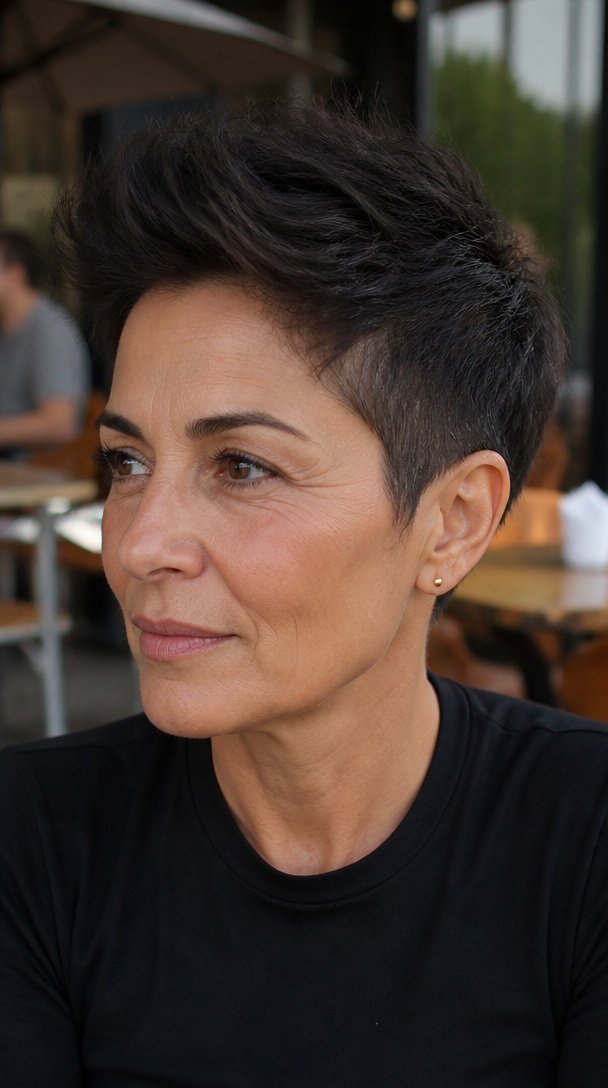
Here the top and sides don’t blend. The sides are cropped very short, the top is left two or more inches long, and there’s a visible step where the two lengths meet.
That longer top is the reason it helps fine hair. It stacks up and looks thicker than it is.
Tell your stylist you want the disconnection at the temples, not lower. Strong cheekbones and a defined jaw suit it best. On a round face, the short sides can make the cheeks look wider.
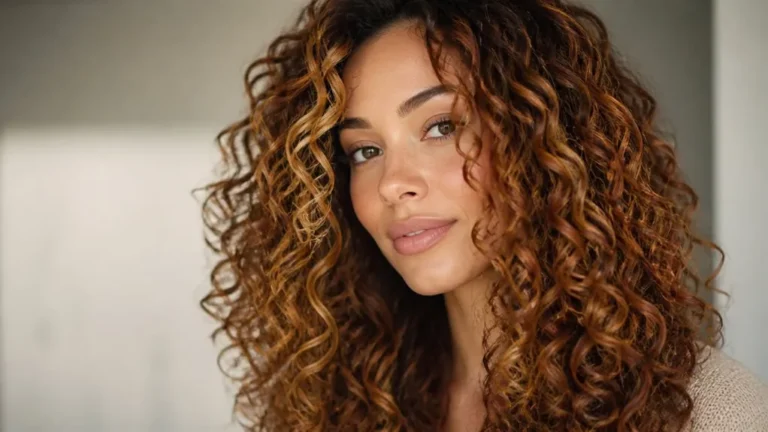
8. Feminine Pixie With Soft Curls
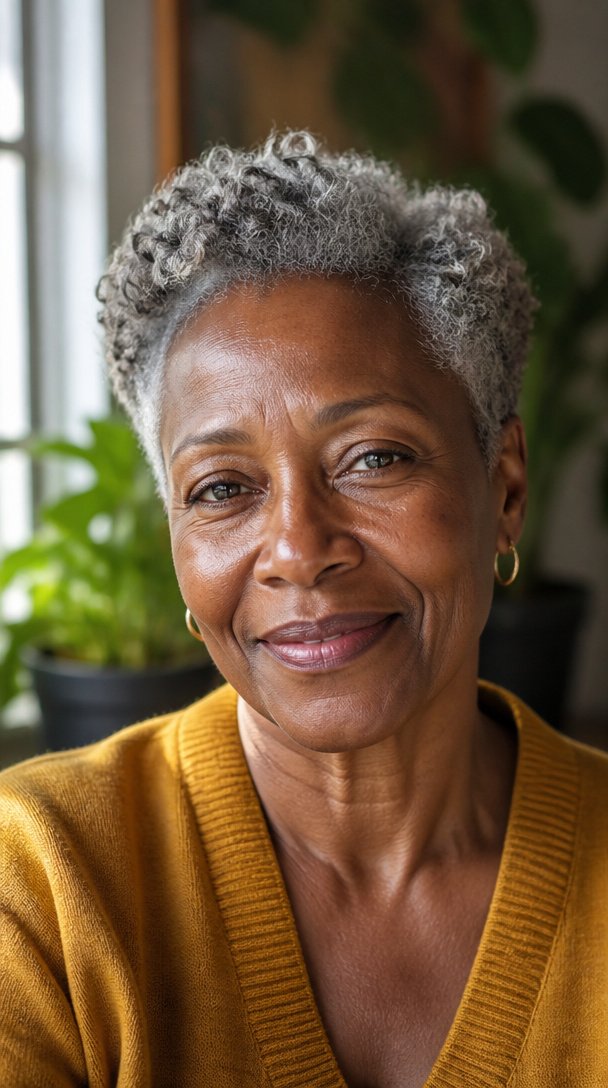
Curly hair needs a curl specialist for this one, because a stylist who cuts curls wet and straight can take off far more length than you expected. Get the top cut dry, curl by curl, with an inch or two more length than a straight pixie.
Scrunch a light curl cream into damp hair and diffuse on low heat. Pushing the curls around with a brush or towel will turn them into frizz.
Curls shrink as they dry, so this cut always looks shorter than it measures. Gray and silver curls are often coarser than your old color was, so they may want a heavier cream.
9. Silver Pixie Cut for Going Gray

Going gray with a pixie is the fastest route, since you can cut out most of the old color in one or two appointments. After that, you stop paying for root touch-ups entirely.
Silver hair can turn yellow from sun, hard water and hot tools. Using a purple shampoo once a week costs a few dollars and keeps it bright. A clear gloss at the salon adds shine if yours looks dull.
Trim every four to six weeks, because ragged ends on gray hair look dry faster than on dark hair. If you’re keeping some of your darker color in the mix, look at these salt-and-pepper styles.
10. The Asymmetrical Pixie for a Modern Edge

One side falls longer, usually toward the jaw or cheekbone, and the other is cut short and close. The uneven line breaks up a round or square face.
Pick the long side based on your part and which side of your face you prefer. Most people already have a side their hair falls toward.
Asymmetry shows a missed trim more than any other cut on this list. Once the short side grows an inch, the shape looks lopsided rather than deliberate, so stick to a five-week schedule.
11. Choppy Pixie Cut for Women Over 70

Hair in your 70s is often finer and drier, and a choppy cut works with that. Your stylist cuts uneven, piecey layers on purpose, so the shape looks styled even when the hair has little body.
There’s nothing to blow-dry smooth. Rub a drop of light pomade between your palms and twist a few pieces at the crown.
Very short choppy pieces at the front can show a thinning hairline. If that’s a worry, keep the fringe longer and choppier at the sides only.
12. Long Pixie Cut for a Graceful Transition

Coming down from shoulder-length hair? Start here. A long pixie leaves three to four inches on top and covers the tops of the ears, so the change feels smaller.
You can sweep the longer pieces to one side for a dressed-up look or leave them loose and tousled. It also handles fine or thinning hair well, since the length on top gives the layers something to stack on.
It’s also the stage you pass through when growing a pixie out. If you want something in between that lasts a little longer between cuts, try a bixie, the pixie and bob hybrid.
13. Sleek Tapered Pixie for Fine Hair

Fine, straight hair does well with a sleek finish. The nape and sides are tapered close, and all the length sits on top, where you want the volume.
Mousse at the roots, then a blow-dry with a round brush, lifting the front up and over. Finish with a pea-sized amount of pomade to calm flyaways. Once you know the routine it takes under ten minutes.
A tapered neckline grows out fast and fuzzy. A cheap neck trim at week three keeps the back clean until the next full cut.
14. Voluminous Pixie Cut for Thinning Hair

Thinning is different from fine. With fine hair, each strand is thin. With thinning hair, there are fewer strands, often at the crown or part.
For thinning, the stylist keeps the nape short and the top a little longer and layered, so the hair lifts up over the sparse areas instead of lying flat on them. Avoid a fixed part, since it shows the scalp.
Root-lift spray before drying and a light hold hairspray afterward keep the shape. If thinning is sudden or patchy, it’s worth asking your doctor about it, since a haircut can only hide so much.
15. The Shaggy Pixie for a Relaxed Vibe

Hate styling? Shaggy layers through the crown and longer pieces at the nape give this cut a lived-in look on purpose.
Air-dry it with a little texturizing cream and you’re done. It looks best a few days after washing, so you can skip daily shampoos.
Gray and silver hair suits a shag well, since coarser gray strands hold the piecey texture. Have your stylist leave the nape a touch long, but not so long that it starts to look like a mullet.
16. Pixie With a Natural Wave Pattern
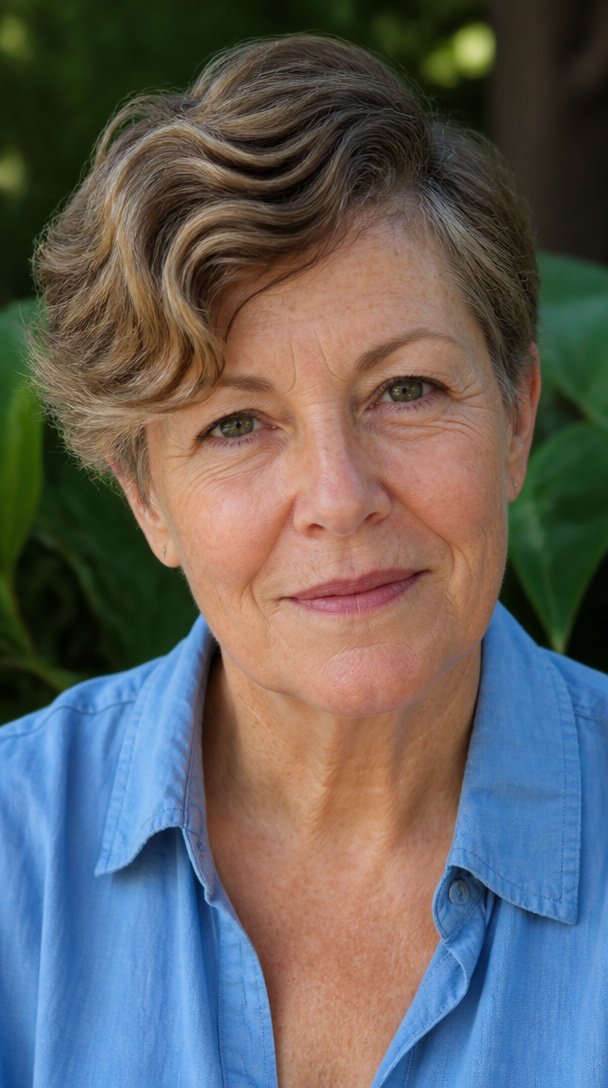
If your hair has a slight bend, a pixie can bring it out instead of fighting it. The wave shows most on top, where the hair is longest.
Find a stylist who will cut the top dry, or at least check how it falls dry before finishing. Waves that are cut wet often dry shorter and frizzier than you expected.
A light curl-enhancing mousse scrunched in while damp, then air-drying, is enough. Brushing it out when dry breaks up the wave.
17. Short Spiky Pixie for a Daring Look

Spikes need short, even layers all over and at least an inch on top to stand up. Your stylist cuts the sides and back close so the top gets all the height.
This one needs product every day. A strong-hold wax or pomade, worked through dry hair and pinched into points, is the only way it holds.
Color tips make the texture pop. Salt-and-pepper hair with platinum ends looks good, and a deep violet rinse washes out in a few weeks if you change your mind.
18. Round Face Pixie Cut That Slims and Flatters

A round face needs height on top and less width at the cheeks. Keep the sides close, add volume at the crown, and avoid a fringe that cuts straight across.
Wispy pieces in front of the ears break up the curve of the cheek. An off-center part does the same thing for the forehead.
Highlights placed on top and at the front draw the eye up too. If you’re avoiding color costs, the height alone does most of the work.
19. Low-Maintenance Pixie for Busy Women

One length, soft layers, and a tapered nape. This version needs no heat tools, just towel-drying and a finger-comb with a little pomade.
The uniform length is what keeps it low-maintenance. Without dramatic layers or an undercut, it grows out evenly, and it looks fine at week six instead of week four.
That longer gap between trims saves money over a year. It’s the plainest cut on this list, and it won’t feel like a big change if you like something with more personality.
20. The Elegant Pixie Bob for Women Over 50

A pixie bob sits between the two cuts. It’s short and stacked at the back like a pixie, and longer at the front, where it reaches the cheekbone or jaw.
That front length softens a strong jaw and gives you something to tuck behind your ears. It looks sleek with a flat iron or loose and tousled with a little texture spray.
Because it’s longer, it can go six to eight weeks between trims, which makes it the most budget-friendly cut here. On very fine hair, keep the front at the cheekbone, since jaw length can look thin.
Frequently Asked Questions
Can a Pixie Cut Help Disguise a Receding Hairline in Older Women?
It can, if the front is left longer. A soft, choppy fringe or a side-swept front covers a receding hairline far better than a slicked-back crop. Avoid very short spikes at the front, which show the scalp.
How Often Should Older Women Get a Pixie Cut Trimmed?
Most pixies need a trim every four to six weeks. The pixie bob and the low-maintenance one-length pixie can go six to eight. Cuts with an undercut or tapered neckline show regrowth soonest, so a cheap neck cleanup in between buys you time.
Does Hair Color Affect How a Pixie Cut Looks on Older Women?
Yes. Dark hair shows the shape and edges of the cut clearly, while silver and blonde hair blur them and look softer. Highlights add depth to a flat-looking crop. For ideas that start from natural gray, see these natural gray styles for Black women over 50.
Can You Wear a Pixie With a Heat-Sensitive Scalp?
Yes. Several cuts here need no heat at all, including the shaggy, choppy, curly and low-maintenance versions. When you do blow-dry, use the low heat setting and keep the dryer moving rather than pointing it at one spot.
Are Pixie Cuts Good for Hair Growing Back After Chemotherapy?
A pixie is a common choice as hair grows back, since it evens out patchy regrowth and new hair often comes in with a different texture. Wait until the scalp has healed and feels comfortable, and check with your care team about when to start using hair products or color again.
Picking Your Pixie
Start with your hair type and your budget. Fine or thinning hair does best with the wispy, tapered or voluminous cuts, curly and wavy hair need a stylist who cuts dry, and gray hair suits almost any pixie on this list.
If salon visits every month aren’t in the budget, choose the pixie bob, the long pixie or the one-length cut, which all stretch to six weeks or more. Take a photo of the exact cut to your appointment, and tell your stylist how long you’re willing to spend styling it each morning.






4 Comments