
21 Bixie Cuts for Fine Hair That Add Real Volume
Fine hair goes flat by noon when the cut is wrong, and no amount of mousse fixes a bad shape. A bixie is short and stacked like a pixie in back and soft like a bob around the face, so the volume lives in the haircut and your styling routine can stay short and cheap.
I’ve pulled together 21 versions, from sleek and blunt to curly and grown-out. Each one covers what to tell your stylist, how often it needs a trim, and where it falls short, since a few of these need more salon visits than a tight budget allows. Over 50? There’s a separate list of bixie cuts for women over 50 too.
1. The Classic Bixie Cut for Fine Hair

Start here if you’ve never had a bixie. Your stylist keeps the crown short and stacked, leaves the pieces around the ears a little longer, and tapers the nape so the back sits close to your neck.
On fine hair, that short crown is where the lift comes from. Leave it longer than about three inches and it collapses under its own weight.
The shape blurs fast. Book a trim every six to eight weeks; by week nine the sides start brushing your jaw and the cut drifts toward a shaggy bob.
2. Textured Bixie With Choppy Layers

Picture the classic cut after a stylist goes in with point-cutting shears. Layers between half an inch and two inches long sit at different heights, so the hair breaks into piecey chunks instead of lying in one flat sheet.
A pea-sized dab of texture paste, warmed between your palms and pinched through the ends, is all the styling it takes.
Very sparse hair can look see-through once that much length comes out. If you can see your scalp at the part today, request softer layers instead of deep chops.
3. Bixie Cut With Side-Swept Bangs

A long side bang makes the easiest bixie to grow into if you’re coming from shoulder-length hair. The fringe is cut to about the cheekbone and swept across the forehead so it blends into the sides.
Blow-dry it with a small round brush on low heat, pushing the root the opposite way first and then across. That one move gives the bang height at the part.
This version suits oval and heart-shaped faces. On humid days the bang drops into your eyes, so keep a small clip in your bag.
4. The Tousled Bixie for Extra Volume

Messy on purpose takes more work than it looks. The cut needs choppy layers at the crown so the hair has somewhere to go when you rough it up.
Spray a root-lift product at the scalp while your hair is damp, rough-dry it with your fingers, then twist a few front pieces with texture spray. Babylights or a slightly darker root make the separation easier to see on fine hair that tends to blend into one block of color.
Product builds up quickly in a short cut, so this style looks its best on the first or second day after a wash.
5. Blunt Bixie Cut for a Sleek Finish
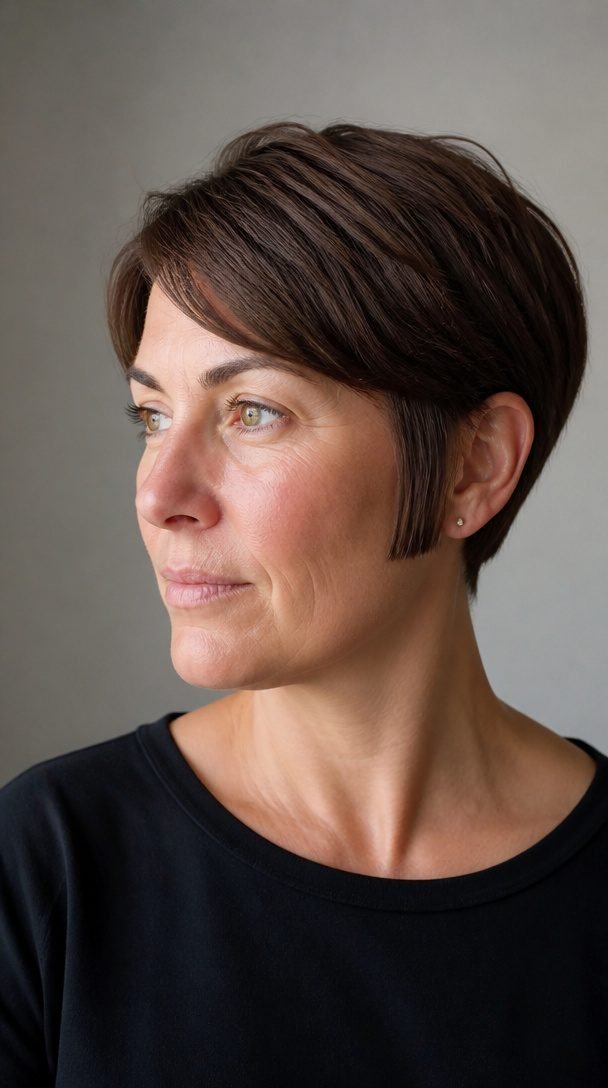
Sleek and clean, the blunt bixie skips razored or wispy ends. Your stylist cuts the perimeter in one straight line at ear level, so every strand ends at the same point and the ends look thicker than they are.
Smooth a drop of serum through damp hair, blow-dry downward with a paddle brush, and finish with one pass of a flat iron on the ends.
A line this crisp shows uneven growth within a few weeks. Plan on trims at the six-week mark instead of stretching to eight.
6. Bixie Cut With Curtain Bangs

Curtain bangs split at the center and fall to either side like parted drapes, framing the eyes. On a bixie they add weight to the front, where fine hair tends to look thinnest.
Blow-dry them over a round brush away from your face, then let them fall back. A little volumizing mousse at the roots keeps them from going limp by midafternoon.
Bangs outgrow the rest of the cut by weeks. Many salons trim a fringe for free or a few dollars between appointments, so check with yours before you commit.
7. The Wispy Bixie for Ultra-Fine Hair

Ultra-fine hair, the kind that slides out of every clip, does best with feathered, tapered ends. Your stylist removes bulk with point-cutting or a razor so no heavy line drags the shape down.
Graduated layers at the crown and temples lift the roots, and the outer edge stays light. Foam mousse on damp hair, then air-drying, is the whole routine.
A razor can fray hair that’s bleached or fragile. If yours is color-treated, request shears instead. For more cuts built around very thin strands, see these short cuts for thin, fine hair over 50.
8. Bixie Cut With Undercut Layers
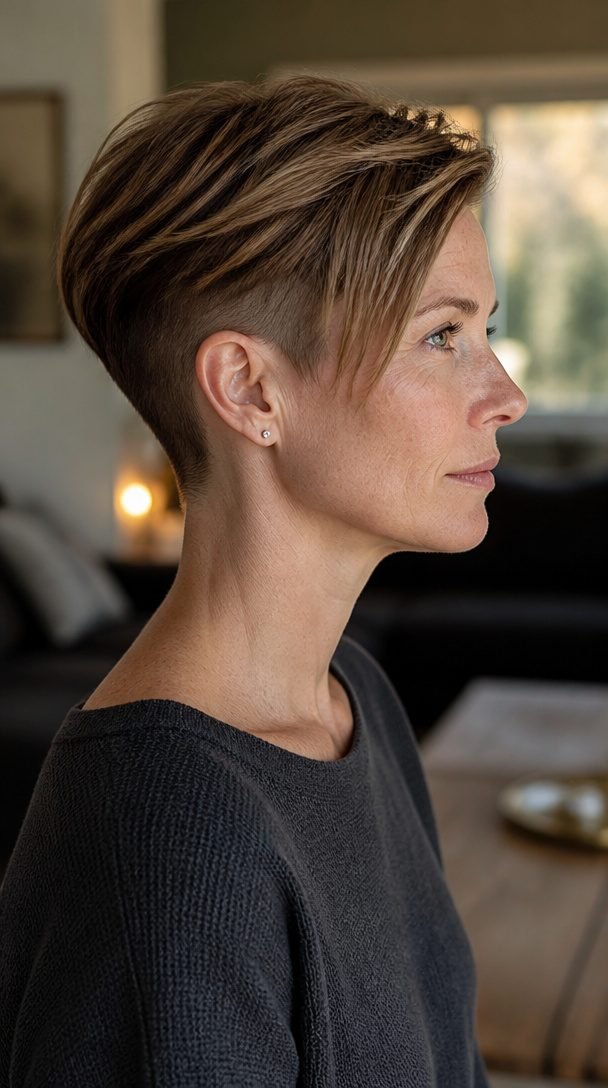
Hiding a short clipped section under longer hair takes the bulk out of the nape and sides, which is where fine hair tends to look stringy. The underlayer is clipped close from about an inch above the ear down, and the longer top falls over it.
Push the top to one side and the undercut shows. Leave it down and it stays hidden.
Clipped hair grows out fast. Plan a quick tidy of the undercut every four weeks, even if the top can wait, and know that growing it out takes several awkward months.
9. The Easy Undone Bixie

This is the bixie for anyone who would rather skip the blow-dryer. Soft, uneven layers through the top and a tapered back mean it looks finished when it dries messy.
Leave wax on the shelf, since it flattens fine hair within an hour. Mist sea salt spray at the roots, scrunch, and air-dry; a dusting of dry shampoo on day two brings the grip back.
A loose cut like this can look unkempt at a formal event. Keep a small comb and a bit of pomade handy for days you want it neater.
10. Bixie Cut With Face-Framing Layers

Longer, tapered pieces around the cheekbones and jaw draw the eye to your face and away from thin spots on top. The crown stays short for lift.
Work mousse or texture spray from root to mid-length, then blow-dry with your fingers to define the front pieces.
Those front pieces reach the chin within two months. Book a face-framing trim around week five or six to keep the outline sharp.
11. The Bold Disconnected Bixie

Disconnected means the top layers aren’t blended into the sides, so a clear step sits between the short back and the longer top. It’s the most dramatic cut here, and on fine hair that contrast makes the top look fuller.
Color pushes the effect further. A shade darker underneath and lighter on top makes the step easy to spot from across a room.
The step softens quickly. Trims every four to five weeks keep it crisp, which makes this one of the pricier bixies to maintain. With the back this short, it sits closer to a full pixie than any other cut here.
12. Bixie Cut With Micro Bangs

Micro bangs stop well above the eyebrows, about an inch up the forehead. Paired with a textured bixie, the short blunt fringe gives fine hair a strong, graphic line at the front.
Comb the fringe flat with a fine-tooth comb and a dab of light-hold pomade, and leave the layers behind it loose.
Expect a fringe trim every three to four weeks. Micro bangs also show every cowlick, so check your hairline in the mirror before you book.
13. The Voluminous Feathered Bixie

Feathered layers curve back from the face like a 1970s flip, cut shorter at the crown and longer at the edges. Your stylist uses a razor or texturizing shears to avoid blunt lines that would flatten the shape.
Rough-dry with mousse, then finish with a large round brush, rolling the front pieces back and away from your face. A flexible-hold spray keeps the flicks in place without crunch.
Pass on this one if you don’t enjoy using a blow-dryer. Air-dried, feathered layers look uneven instead of swept.
14. Bixie Cut With a Deep Side Part
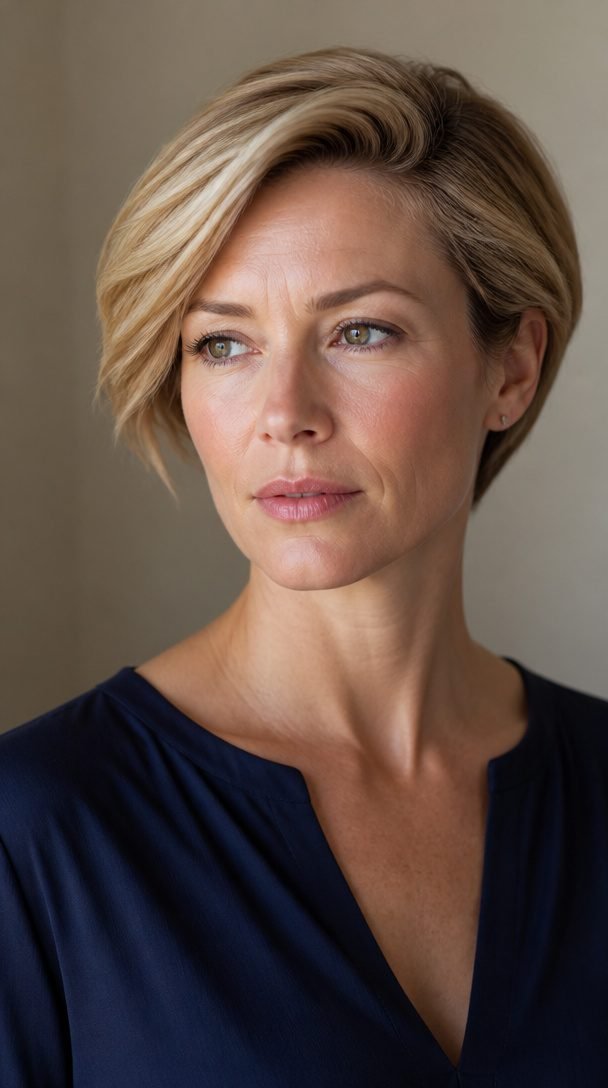
Shifting your part an inch or two toward one ear costs nothing and adds lift right away. On a bixie, the heavier side sweeps across the forehead and the short side tucks behind the ear.
Blow-dry the roots in the opposite direction first, then flip them over to the new part. That root lift holds all day on fine hair.
Your hair may fight a new part for a week or two. Pin it in place while it dries until the roots settle in the new direction.
15. The Edgy Asymmetrical Bixie

One side sits near the ear and the other drops to the cheekbone or jaw. The longer side gets soft point-cut ends, and the shorter side is cut crisp and close.
On fine hair, the long side adds bulk right where you want it, so the cut looks thicker without extra product. A rice-grain amount of pomade keeps the edges defined.
Uneven lengths are harder to style at home. Before you leave the chair, have your stylist walk you through the blow-dry for the long side.
16. Bixie Cut for Round Face Shapes

For a round face, aim for height at the crown and less width at the cheeks. Keep the top longer and lifted, the sides close to the head, and the fringe side-swept so it breaks up the curve.
Point-cut or razored ends at the sides angle downward, which slims the outline of your face.
Skip a straight-across fringe and chin-length sides here. Both put a horizontal line exactly where you don’t want one.
17. Bixie Cut for Square Face Shapes

A strong jaw pairs well with soft, rounded layers and a side-swept fringe, which take the edge off sharp angles. Keep the length near the jaw curved instead of cut in a straight line.
Work a little pomade or texture spray through the ends for movement, and bend the ends outward with a flat iron to round the shape.
Sleek, flat styling does the opposite and makes the jaw look squarer. Save the blunt bixie for another face shape.
18. The Soft Romantic Bixie

Loose curls make a short cut softer and dressier, and the bends give fine hair more body than it has straight. You need about three inches on top for a curling iron to grip.
Wrap the front pieces around a 3/4-inch curling iron or flexi-rods, keep the crown lifted, then break the curls apart with your fingers. Mousse applied before drying helps them hold.
Fine hair drops curls fast. Finish with a flexible-hold spray and expect to redo a few pieces by evening. Natural curls skip the iron entirely, and these curly bixie cuts show the shape on real texture.
19. Bixie Cut With Highlighted Layers

Lighter strands over a slightly deeper base create contrast, and contrast makes fine hair look denser. Balayage or babylights spread the color without hard stripes.
Face-framing highlights brighten the front, while the darker underlayers give the cut depth.
Bleach makes fine hair more fragile, and highlights add a salon bill every 8 to 12 weeks. An at-home gloss between visits keeps the tone fresh for much less.
20. The Low-Maintenance Wash-and-Go Bixie

The wash-and-go bixie is cut to dry into shape. Built-in layers do the work, so styling takes a minute or two.
Wash with a volumizing shampoo, scrunch a small amount of mousse through damp hair, then air-dry or diffuse on low heat.
Very straight, slippery hair can still dry flat with this cut. If that sounds like yours, have your stylist point-cut extra texture into the crown.
21. The Grown-Out Bixie Between Styles

Growing out a bixie means a few months where the layers lengthen at different rates. The crown gets heavy while the nape softens, and the cut stops looking like any one style.
Light trims every six to eight weeks keep the shape tidy without costing length. Take a little off the back each time so it stays in proportion with the top.
Texture spray separates overgrown layers, and side-swept styling or a couple of bobby pins carry you through the in-between stage on the way to a lob or a shorter pixie.
Frequently Asked Questions
How Often Should Fine Hair Be Trimmed to Maintain a Bixie Cut?
Most bixies need a trim every six to eight weeks. Cuts with micro bangs, an undercut, or disconnected layers need attention sooner, every three to five weeks, because their sharp lines blur first.
Can Color-Treated Fine Hair Still Pull off a Bixie Cut?
Yes. A short cut removes the most damaged ends, which helps color-treated fine hair look healthier. Use a sulfate-free shampoo, keep heat tools on low, and request shears rather than a razor on bleached ends.
Is the Bixie Cut Suitable for Women Over 50 With Fine Hair?
Yes. Fine hair often thins further after 50, and a bixie keeps enough length on top to cover the scalp while staying short enough to lift. Keep the crown short and the sides soft, and skip blunt micro bangs if your hairline has thinned.
What Hair Products Work Best for Styling a Fine Hair Bixie?
Two products cover most bixies: a root-lift spray or mousse at the roots, and a texture spray or light paste on the ends. Drugstore versions do the job; you don’t need salon prices for either.
Can You Get a Bixie Cut if Your Fine Hair Is Naturally Curly?
Yes, and curls give a bixie volume that straight fine hair has to fake. Have it cut dry, curl by curl, so your stylist sees where each one lands. Expect the cut to look shorter dry than wet, since curls shrink.
Choosing Your Bixie
Bring two photos to your appointment: the cut you want and your own hair on an ordinary day. Your stylist can tell you which version will hold up on your texture and how often you’ll need to come back.
On a tight budget, pick a bixie with a soft outline, like the classic, wispy, or wash-and-go cut. Those grow out gracefully and stretch to eight weeks between trims.






One Comment