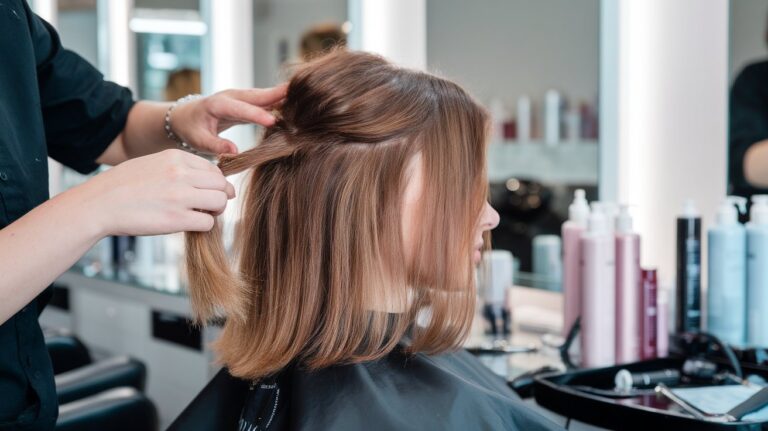
25 Low-Maintenance Haircuts for Women Over 50
If your mornings include fifteen minutes with a round brush and a flat iron, the right haircut could give most of that time back. A low-maintenance cut works with your natural texture, holds its shape as it grows and still looks finished on days when you only towel-dry.
These 25 low-maintenance haircuts for women over 50 include pixies, bobs, shags and longer cuts for straight, wavy, curly and coily hair. Each one notes how often it needs a trim and roughly how long it takes to style, so you can compare them before your next appointment.
What Makes a Haircut Low Maintenance
Short hair dries faster, but it also needs more frequent trims, so the easiest cut depends on where you want to save time. Some women hate blow-drying, while others hate sitting in the salon chair. Look for these qualities when you compare cuts.
- It works with your natural texture, so you can air-dry it
- It grows out without losing its shape
- It needs one styling product or none
- It doesn’t depend on color to look finished
- It suits the way your hair parts on its own
1. Short Textured Pixie

A short pixie with choppy texture on top is about as quick as hair gets. There’s almost nothing to dry, and the piecey finish looks intentional even after you’ve slept on it. On days when it sticks up, a damp hand smooths it back down in seconds.
Plan on seeing your stylist every four to six weeks, since a pixie loses its shape faster than longer cuts. Styling takes two or three minutes with a pea-sized amount of paste. For more short shapes, see these pixie cuts for older women.
2. Long Pixie With Side-Swept Bangs

A longer pixie keeps two to three inches on top and a sweep of bangs to one side. It looks softer than a short crop and still dries in a few minutes, which makes it a good first short cut.
The extra length buys you more time between appointments, usually five to seven weeks. Push the bangs to one side with your fingers as they dry and you’re done. Fine to medium hair that tends to lie flat does well in this shape.
3. Very Short Cropped Cut
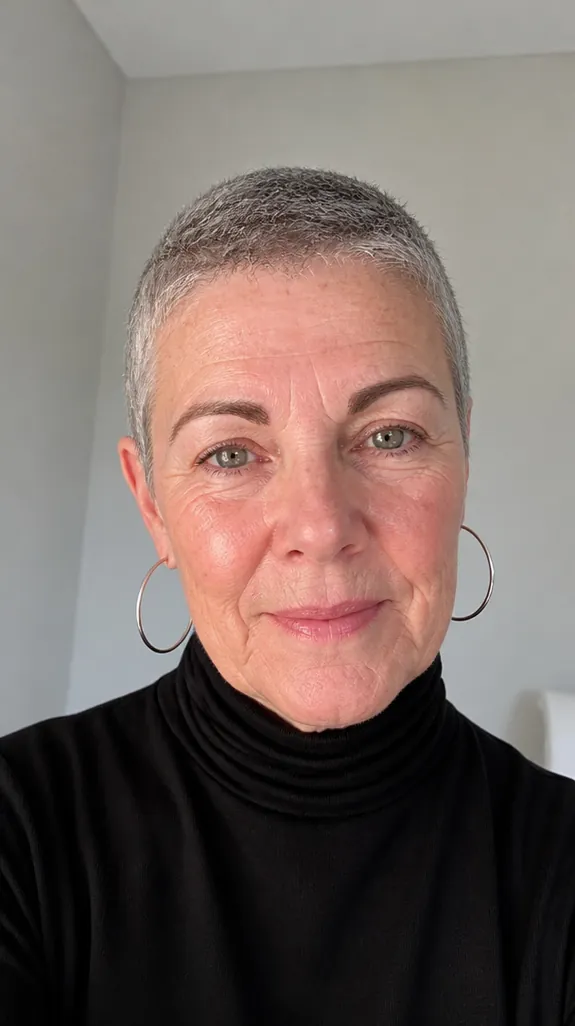
A cropped cut, close all over with a little length on top, takes the least effort of anything on this list. There’s no blow-drying and no product beyond a little cream, and it shows off earrings and cheekbones.
The trade-off is a cleanup every three to five weeks to keep the edges neat. Thick or coarse hair holds this shape best. Many women choose it once their gray grows in, because one cut removes the old dye.
4. Silver Pixie That Skips the Dye

Letting your natural gray grow in removes the biggest upkeep job of all, the root touch-up every four weeks. A silver pixie makes that switch quick and looks bright with very little styling.
Use a purple shampoo once a week to keep yellow tones away, and see your stylist every five to six weeks. If you’re still in the middle of the switch, these ways to transition to gray hair over 50 make the grow-out easier.
5. Short Curly Pixie
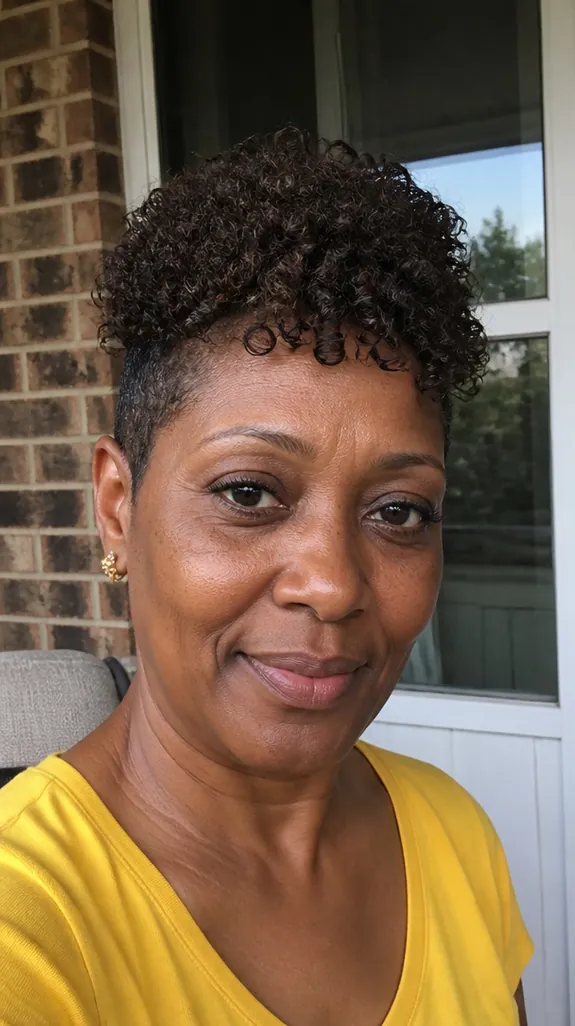
Curls cut short spring into shape on their own, so a curly pixie needs little more than water and a curl cream. The shorter length also stops curls from getting weighed down or frizzy at the ends.
Have it cut dry so the stylist sees where each curl sits. Scrunch in cream on damp hair and let it air-dry, which takes about five minutes of hands-on time. Six to eight weeks between cuts holds the shape.
6. Classic Bixie
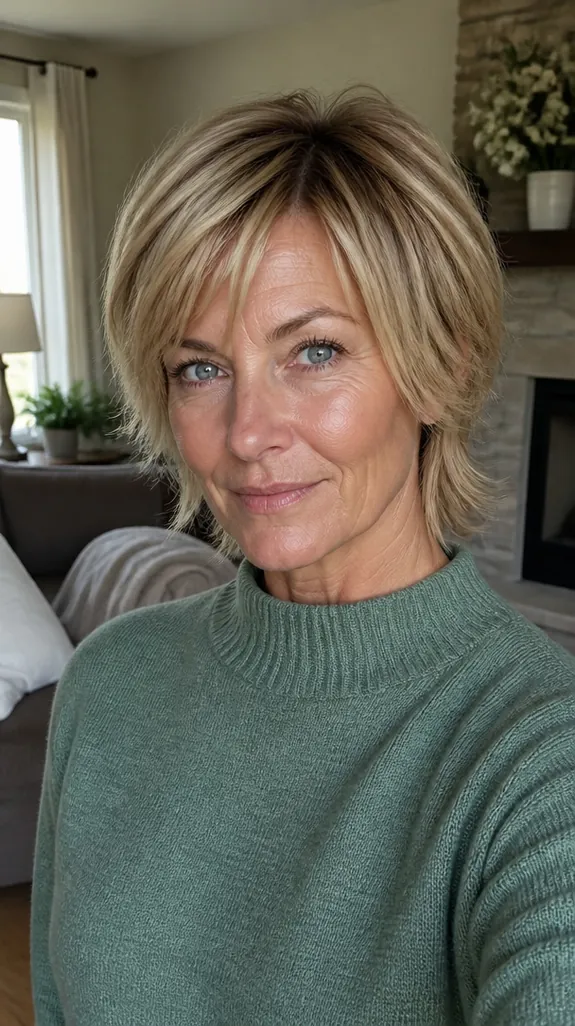
The bixie sits between a pixie and a bob, with soft layers on top and a longer nape. It has enough length to tuck or push around, yet it dries quickly and grows out without an awkward stage.
Most women can go six to eight weeks between cuts. Rough-dry it with your fingers and add a little texture spray. These bixie haircuts for women over 50 show more lengths and textures.
7. Ear-Length Bob

A bob that ends around the earlobe is short enough to dry fast and long enough to feel like a bob. It works on straight and slightly wavy hair, and it frames the face without bangs.
Book a trim every six to seven weeks to keep the line crisp. Blow-dry it with a paddle brush for about five minutes, or let it air-dry and tuck one side behind your ear.
8. Chin-Length Blunt Bob

A blunt bob is cut to one length, so it grows out evenly and keeps its shape longer than many layered cuts. The solid line also makes fine hair look thicker at the ends.
Expect eight weeks or so between trims. Straight hair needs only a quick blow-dry, while wavy hair may need a few minutes with a flat iron. If your hair is thin, these short cuts for thin, fine hair include more blunt shapes.
9. Stacked Bob
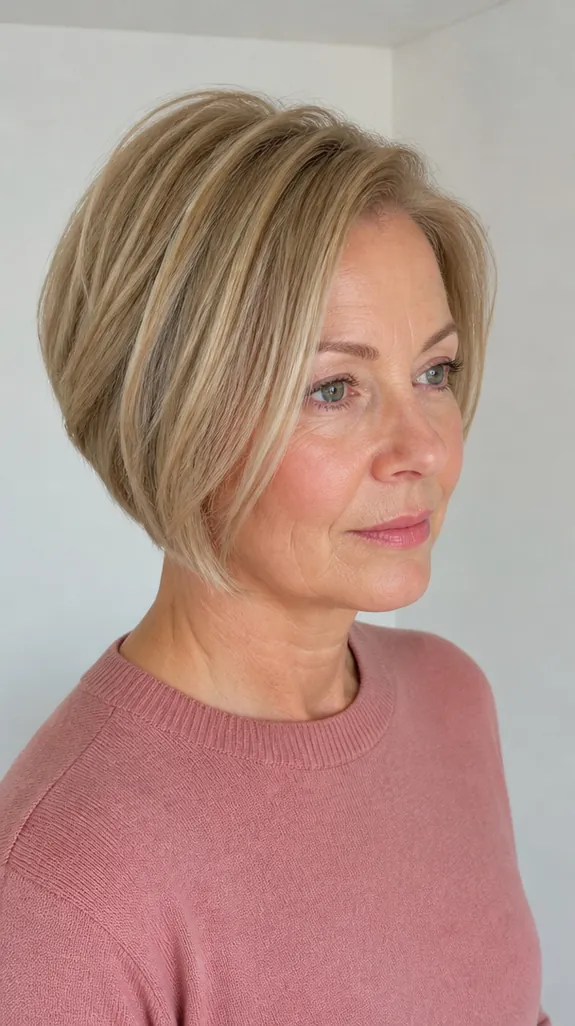
Short layers stacked at the back give this bob built-in volume at the crown, so you don’t need to tease or curl it. The front stays longer and frames the face, which helps if your hair goes flat at the back of the head.
It does need a cut every six weeks, since the stacking loses its lift as it grows. Blow-dry the back up with a round brush for about five minutes. Medium to thick hair holds the stack best.
10. Layered Bob for Wavy Hair

Waves look best when layers let them move, and a layered bob gives natural waves room to form without heavy styling. You can skip the hot tools on most days, and if your waves are loose, a curl cream adds definition without any crunch.
Scrunch a light mousse into damp hair and leave it to air-dry or diffuse it on low. Seven to nine weeks between cuts is enough, since a little growth softens the layers rather than spoiling them.
11. Curly Bob
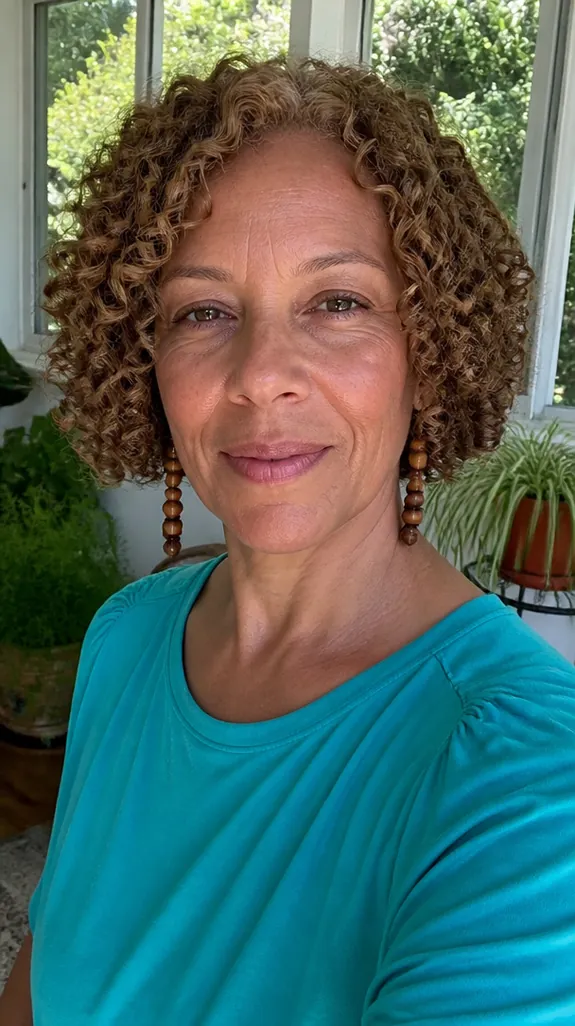
A curly bob cut to sit at the jaw or just below keeps curls bouncy and manageable. It’s one of the best wash-and-go cuts for natural curls, because the length supports the curl without stretching it out.
Refresh second-day curls with a spray of water and a little cream instead of rewashing. A curl-trained stylist can reshape it every eight to ten weeks to keep the outline round and the ends healthy.
12. Salt-and-Pepper Bob

A bob in natural salt-and-pepper hair needs no root appointments, and the mix of dark and silver strands gives the cut depth on its own. It’s a way to stop coloring without going very short.
Keep it chin length or a little longer and trim every seven to eight weeks. A shine spray stops the gray from looking dull. These salt-and-pepper hair ideas over 50 include longer cuts as well.
13. Air-Dry Wavy Lob

A long bob at the collarbone, cut with a few long layers, looks good straight out of the shower if your hair has some natural bend. Many women with wavy hair find it the most forgiving length.
Comb a leave-in conditioner through damp hair, twist a few sections and let it dry. On the second day, rewet the front pieces and scrunch them back into shape. Eight to ten weeks between cuts is plenty, because the length hides a little growth.
14. Side-Parted Long Bob

A side part gives a long bob shape and lift at the root without any curling. It’s a simple cut that works on most face shapes and hair types, and it rarely looks dated.
Blow-dry it for five minutes with a paddle brush, or air-dry and smooth the top. A trim every eight weeks keeps the ends neat. If you wear glasses, these hairstyles for women over 50 who wear glasses show more side-parted lengths.
15. Short Shag
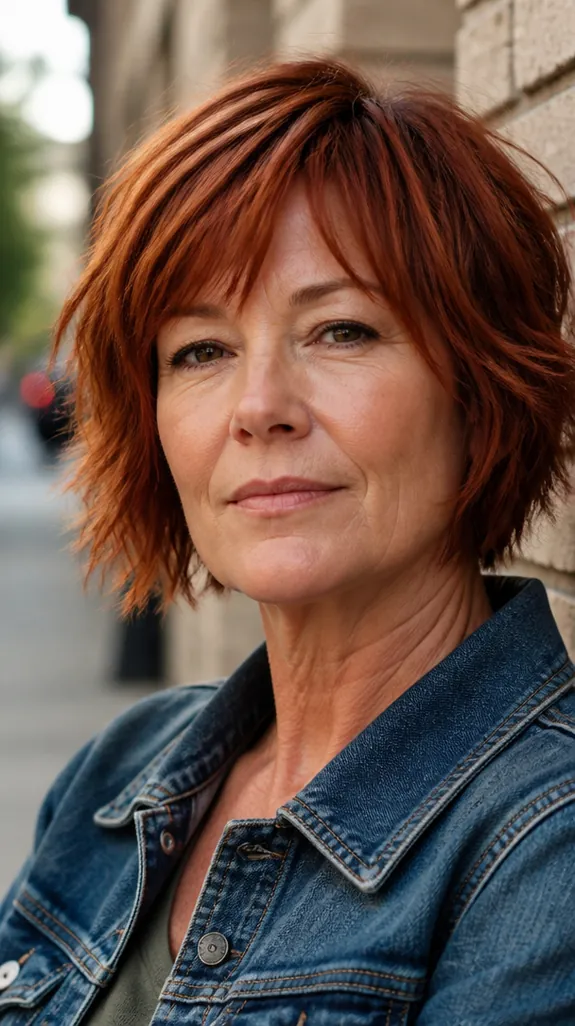
A short shag has choppy layers that look better slightly messy, which suits anyone who doesn’t want to style. The texture also hides cowlicks and flat spots at the crown, along with the line if you’re letting color grow out.
Rough-dry it with your fingers and twist a few pieces with paste. It grows out without a clear line, so you can stretch cuts to eight weeks. Thick and wavy hair gives the best texture.
16. Soft Shag

A longer shag reaches the shoulders, with layers around the face and a light fringe. It takes on natural waves well and looks fuller on thinning hair than a one-length cut. Keep the fringe long and wispy so it doesn’t need trims between appointments.
Scrunch in a texture spray and let it air-dry, then twist two or three front pieces around a finger if you want more shape. Plan on a cut every eight to ten weeks. These shag haircuts for women over 50 include shorter and longer versions.
17. Shoulder-Length Cut With Long Layers

Shoulder length is long enough to pull back on busy days and short enough to dry quickly. Long layers keep it from looking heavy and help it fall into place without a brush.
Blow-dry it in about ten minutes, or air-dry and smooth the ends with a drop of serum. This length can go ten weeks between appointments. These layered hairstyles for women over 50 show more layer placements.
18. Feathered Shoulder Cut

Feathered layers swept back from the face add movement and lift around the cheeks. The cut holds up as it grows, since each layer blends into the next. It works best on straight or slightly wavy hair of medium thickness.
Blow the front pieces back with a round brush for a few minutes, or push them back with your fingers as the hair dries. Cuts every eight to ten weeks keep the feathering light.
19. Collarbone Cut You Can Tuck

A collarbone cut with front pieces long enough to tuck behind the ears gives you two looks with no extra effort. Tucked, it looks neat for errands. Loose, it frames the face.
Keep the front pieces at least chin length so they stay put behind your ears. A small amount of cream at the tuck point stops pieces from sliding forward. Air-dry it or blow it smooth, and come back every nine to ten weeks.
20. Tapered Natural Cut
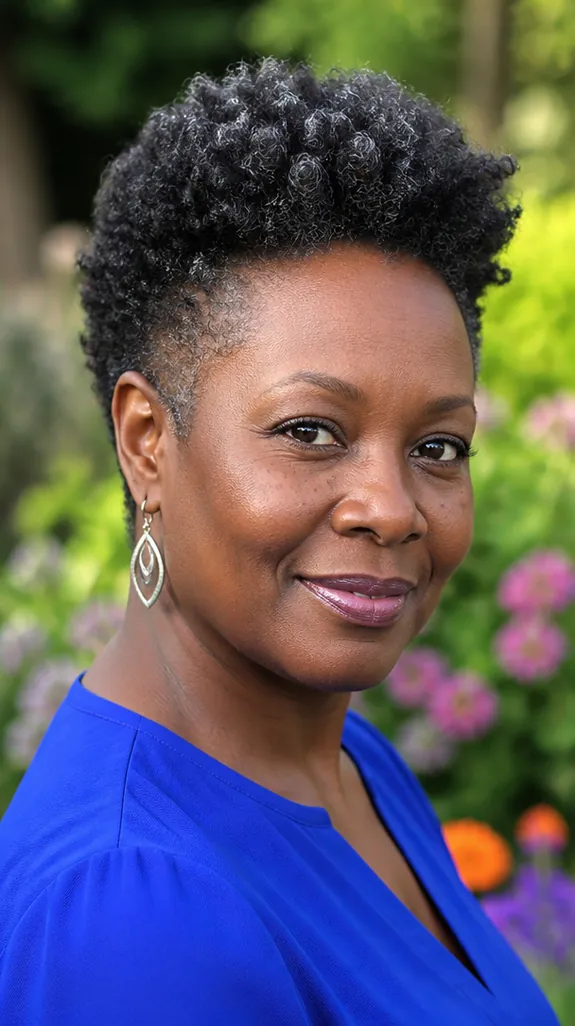
A tapered cut leaves natural coils short at the sides and back and fuller on top. It’s quick to wash and define, and it works on coily hair at every stage, including while gray grows in.
Define the coils with a cream or gel on wet hair and let them dry. Clean up the taper every four to six weeks. For care and styling tips, see this guide to natural gray hair for Black women over 50.
21. Rounded Cut for Natural Curls
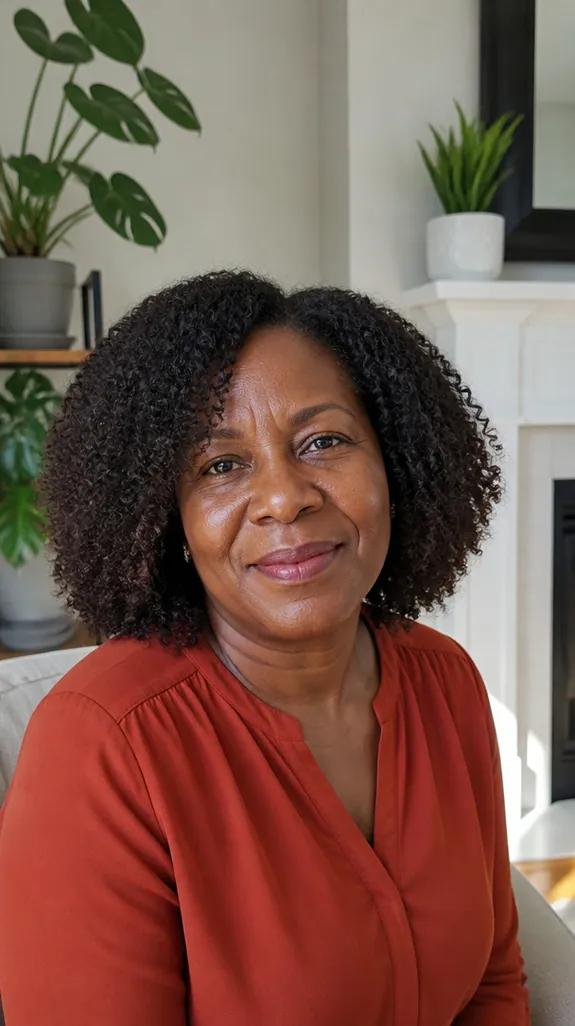
Cutting natural curls into a rounded shape gives them an even outline that holds for weeks. The curls do the styling, and the shape stops them from spreading into a triangle. Both coily and tightly curled hair suit this outline.
Wash and condition, apply a curl cream, and let the curls dry without touching them. A curl-trained stylist can shape it dry every ten to twelve weeks, so you’ll only need four or five cuts a year.
22. Long One-Length Hair

Long hair cut to one length is the lowest-maintenance long style, because there are no layers to grow out of shape. You can wear it down, in a ponytail or in a clip.
A trim every ten to twelve weeks removes split ends. Washing and drying take longer than with a short cut, so many women wash only two or three times a week. For more long styles, see these long hair ideas for women over 50.
23. Long Layers for Thick Hair

Thick long hair can feel heavy and take ages to dry. Long layers remove some of the weight, so the hair dries faster and falls into shape without much brushing. You keep the length without all the weight on your neck and shoulders.
Your stylist can also thin the sections underneath. Layers on long hair hold their shape for two to three months. Air-dry it in a loose braid for soft waves with no heat at all.
24. Short Cut for Fine Hair

Fine hair looks fuller when it’s short, and a cut with light layers at the crown adds height without daily volumizing. It dries in minutes and doesn’t fall flat by lunchtime. Look for a stylist who point cuts rather than thinning heavily, which can leave fine hair wispy.
Spray a volumizer at the roots and rough-dry with your head tipped forward. Book cuts every six weeks, since fine ends start to look thin as they grow. A light dry shampoo at the roots on the second day adds lift without a wash.
25. Long Hair You Can Pull Back

Sometimes the easiest cut is one you rarely style at all. Hair cut just long enough for a low ponytail, a bun or a clip can go up in seconds on busy days.
Keep a few face-framing pieces so it looks softer when pulled back. Ten to twelve weeks between cuts works for most women. A silk scrunchie prevents dents and breakage where the hair is tied.
Cuts That Take More Work Than They Look
Short, straight-across bangs need a trim every three or four weeks and a blow-dry most mornings. Very sharp lines, like an undercut or a steep angled bob, also lose their shape quickly and send you back to the salon often.
A cut that fights your texture costs the most time, such as a sleek bob on naturally curly hair. Heavy highlights add toner and root visits on top of your trims, so count color in the total time before you choose.
Frequently Asked Questions
What is the most low-maintenance haircut for women over 50?
For daily styling, a pixie or bixie that matches your texture takes the least time. For the longest stretch between cuts, one-length long hair or a shoulder-length cut with long layers can go ten to twelve weeks.
Is short or long hair easier to look after after 50?
Short hair takes less time each morning but needs a trim every four to eight weeks. Long hair can wait longer between cuts, though washing and drying take more time.
How often should women over 50 get a haircut?
Pixies usually need a trim every four to six weeks, bobs every six to eight, and shoulder-length or long hair every eight to twelve.
What haircut needs no styling?
A cut made for your natural texture comes closest, such as a curly bob, a tapered natural cut or an air-dry wavy lob.
Choosing Yours
Start with your natural texture and how often you’re willing to sit in a salon chair. Short cuts save time every morning but need cutting every month or so, while longer cuts can wait two or three months between appointments.
Bring a photo to your next appointment, tell your stylist how many minutes you spend on your hair now, and say how many you’d like to spend. A good stylist will cut for the way you actually live.