
19 Ways to Transition to Gray Hair Over 50
At about half an inch of growth a month, shoulder-length dyed hair takes close to two years to grow out on its own. That’s a long time to look at a root line, and it’s the main reason so many women keep dyeing longer than they want to.
These 19 ways to transition to gray hair over 50 make that stretch shorter or easier to live with. Some are salon techniques, like gray blending and color removal. Others you can start at home this week, such as changing your part or switching shampoos.
Choosing How Fast You Want to Go
Every method on this list fits one of three approaches. Some women want the dye gone fast, some want the change to be hard to spot, and some would rather spend little and wait. Knowing which one you prefer narrows the list quickly, and you can combine them.
- Fast: a short cut, often paired with a gloss to even the tone
- Gradual: highlights, lowlights or demi-permanent color over several months
- Low cost: trims, a new part, root powder and accessories while the gray grows in
1. Get a Short Cut and Skip Most of the Grow-Out
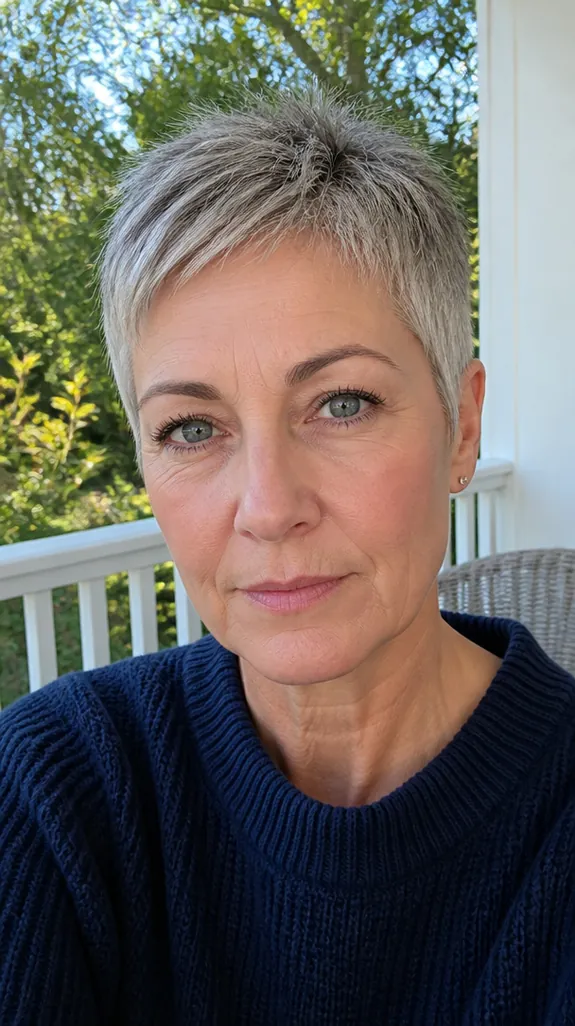
The quickest route to full gray is a short cut that removes most of the dyed length at once. A pixie or a short bixie can leave you with only an inch or two of old color, which a few trims will finish off.
It’s a big change, so wait until your roots have grown in two or three inches first. You’ll get to see your gray before the old color is gone. For shapes that work at this stage, these pixie cuts for older women include several with longer tops.
2. Grow It Out With Trims Every Six Weeks
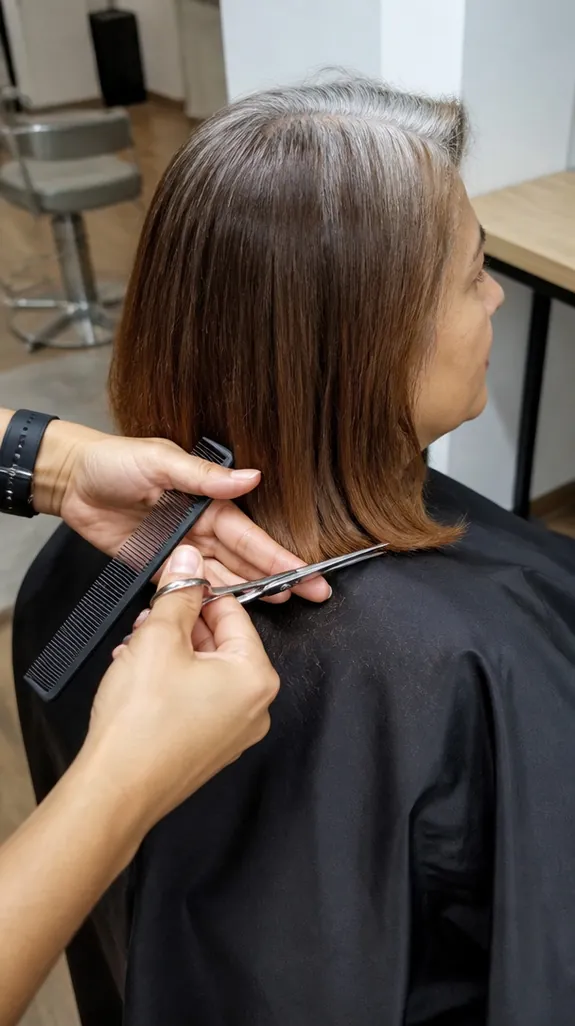
If you’d rather keep your length, plan on regular trims instead of one dramatic cut. Hair grows about half an inch a month, so shoulder-length hair can take a year and a half to two years to lose the last of the dye.
Taking off half an inch to an inch every six weeks moves the dyed ends out steadily and stops them from looking dry. Tell your stylist from the start that you’re growing out color. This guide to keeping long hair healthy covers the care side of a long grow-out.
3. Let an Inch of Root Grow Before Seeing a Colorist
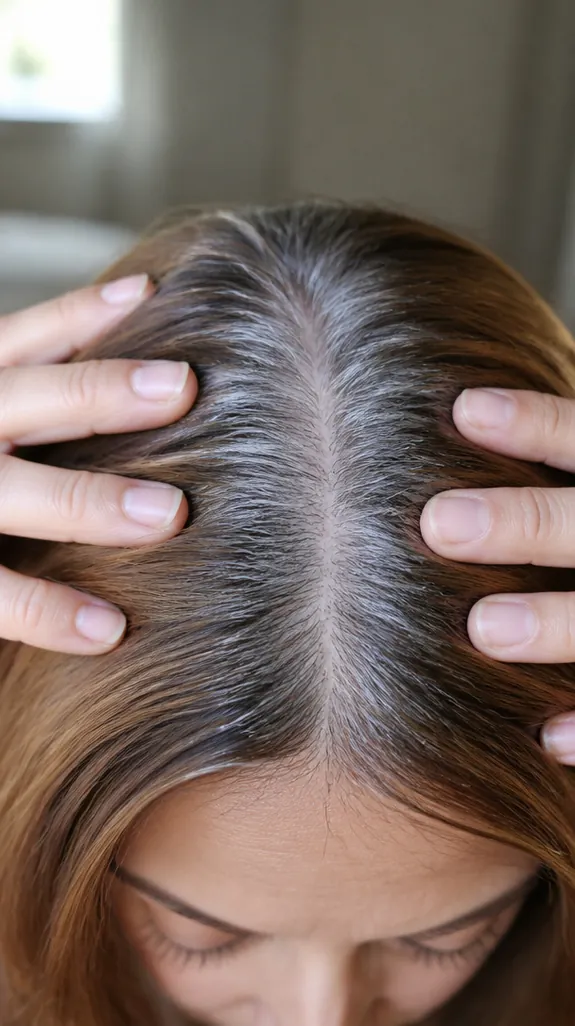
Wait until you have at least an inch of regrowth before booking a blending appointment. That inch shows your colorist how much of your hair is gray and where it sits, and those two facts decide the whole plan.
Many women find their gray is concentrated at the temples or the part, with darker hair underneath. Knowing your real pattern keeps you from paying for color you may not need, and it helps the colorist choose between highlights and lowlights.
4. Blend With Highlights

Highlights woven through dyed hair bring those strands closer to your new gray, so the line at the root fades into the rest. Colorists often start them a couple of inches below the scalp, which gives the regrowth a softer edge.
This route works best on light brown and blonde hair, where the gap between the dye and the gray is small. Expect two or three sessions spaced a couple of months apart, with a toner at each one to keep the blend cool.
5. Add Lowlights to Break Up the Line

Lowlights do the opposite job, adding darker ribbons through hair that’s turning silver. They keep a mostly gray head from looking flat or washed out, and they hide the root line while it grows.
Colorists tend to suggest lowlights when hair is less than about half gray and the natural base is on the darker side. As more gray comes in, each appointment uses fewer lowlights, until one day you can stop booking them.
6. Swap Permanent Dye for Demi-Permanent
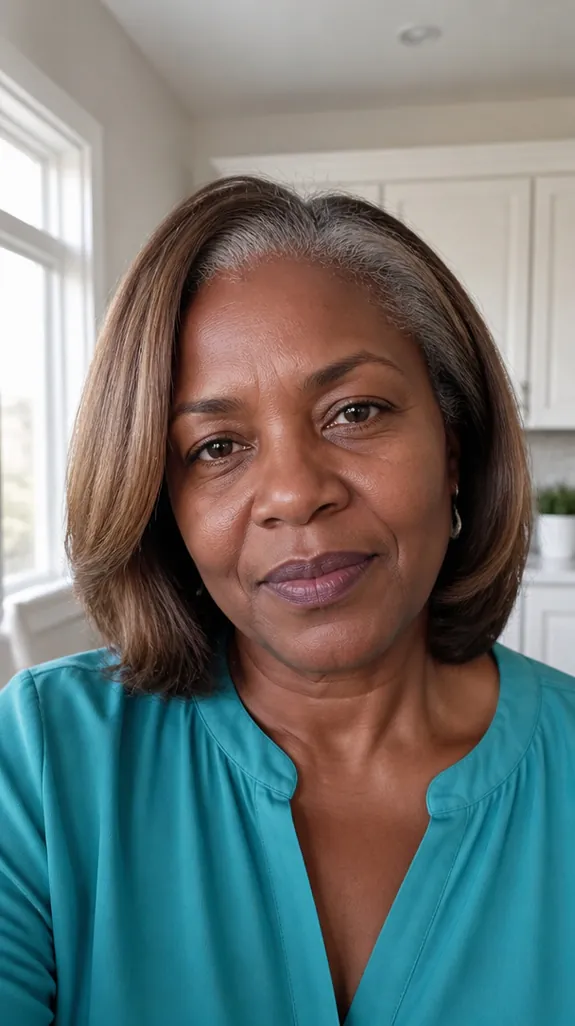
Permanent dye leaves a hard line at the root that only cutting removes. Demi-permanent color fades over roughly two dozen shampoos, so the line softens on its own between visits. It’s also easier on the hair, since it uses a lower-strength developer than permanent dye.
Have your colorist pick a demi shade a little lighter than your current color. Each round can go a step lighter again, and your gray takes over a bit more every time. Most women can space these appointments six to eight weeks apart.
7. Try Babylights at the Part

Babylights are very fine highlights placed close together, usually along the part and hairline where gray shows first. They blur the root in the exact spot people notice most, and they look natural up close.
Because the strands are so thin, the regrowth is hard to see and you can space appointments further apart. They make a good middle step if full highlights feel like too much change at once.
8. Cover Roots With Powder or Spray Between Visits
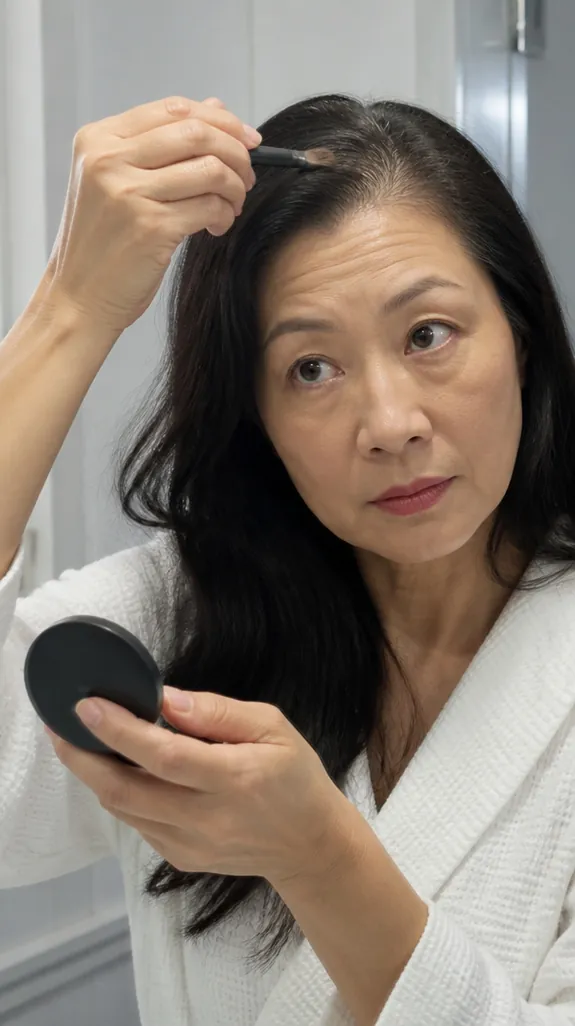
Root touch-up powders and sprays wash out with your next shampoo, so they cover the first weeks of regrowth without adding more permanent color. Choose a shade a little lighter than your dye, which makes the edge less obvious.
Dab powder along the part with the small brush it comes with, or hold a spray a few inches away and mist lightly. Set it with a touch of hairspray if you’ll be out in rain or wind.
9. Change Your Part

Moving your part an inch to one side, or zigzagging it with the end of a comb, hides the straight line of regrowth that shows on a center part. It costs nothing and works right away.
A deep side part also adds lift at the root, which helps if your hair has thinned. Switch sides every few weeks so the gray grows in evenly around the crown and one side doesn’t lie flatter than the other.
10. Choose a Cut That Hides the Line

Layered and textured cuts disguise the line between dye and gray far better than one-length hair. In a shag or a choppy bob, the two colors mix as the pieces move, and neither shade sits in one solid band.
Blunt bobs show the line most clearly, so leave them until the dye has grown out. These shag haircuts for women over 50 include several layered shapes that suit the middle months of a transition.
11. Wear Headbands, Scarves and Hats

A wide headband or a folded silk scarf covers the part and temples, the two places gray shows first. On a bad-root day, a sun hat or a beret does the same job and looks deliberate.
Pick wider styles during the first three or four months, then move to thinner bands as more gray grows in. A scarf tied low at the nape also keeps longer hair tidy while the ends grow out.
12. Consider a Color Remover at the Salon
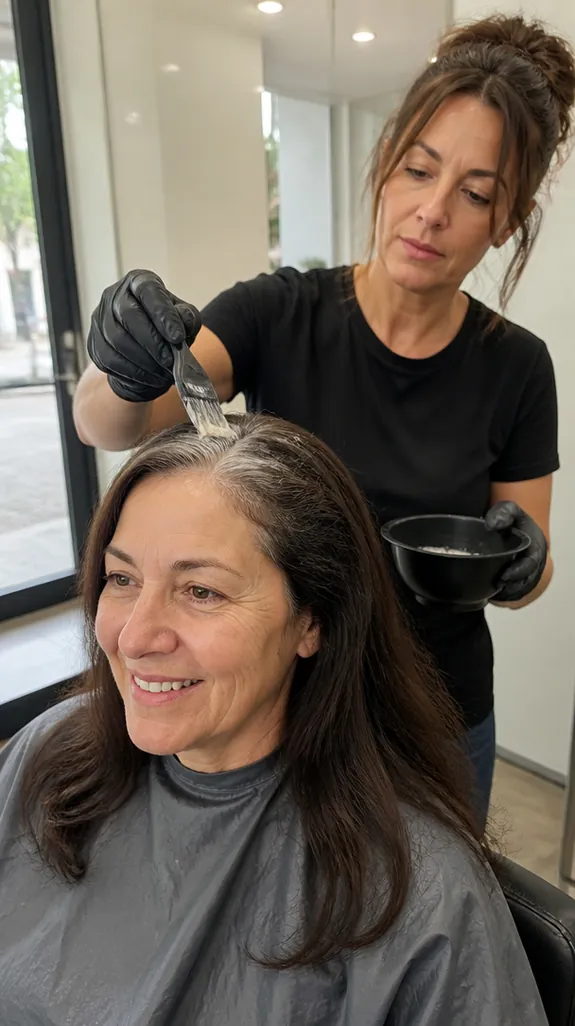
A salon color remover lifts dark artificial pigment from the hair so the colorist can tone it closer to your gray. It’s one of the faster ways to shrink the contrast, though it can leave hair dry.
Leave this one to a colorist rather than trying it at home, since the result depends on how many layers of dye you’ve built up over the years. Book a deep-conditioning treatment for the same visit.
13. Even Out the Tone With a Silver Gloss

Natural gray often grows in as a mix of white, silver and pewter strands, sometimes with yellow at the ends. A silver gloss or toner at the salon evens those shades into one cooler color.
Glosses last four to six weeks and add shine, which gray hair can lack. They’re also useful at the end of the transition, when the dye is fully cut out and you want the new color to look finished. These gray bob hairstyles over 50 show a few finished shapes.
14. Keep Gray Bright With Purple Shampoo
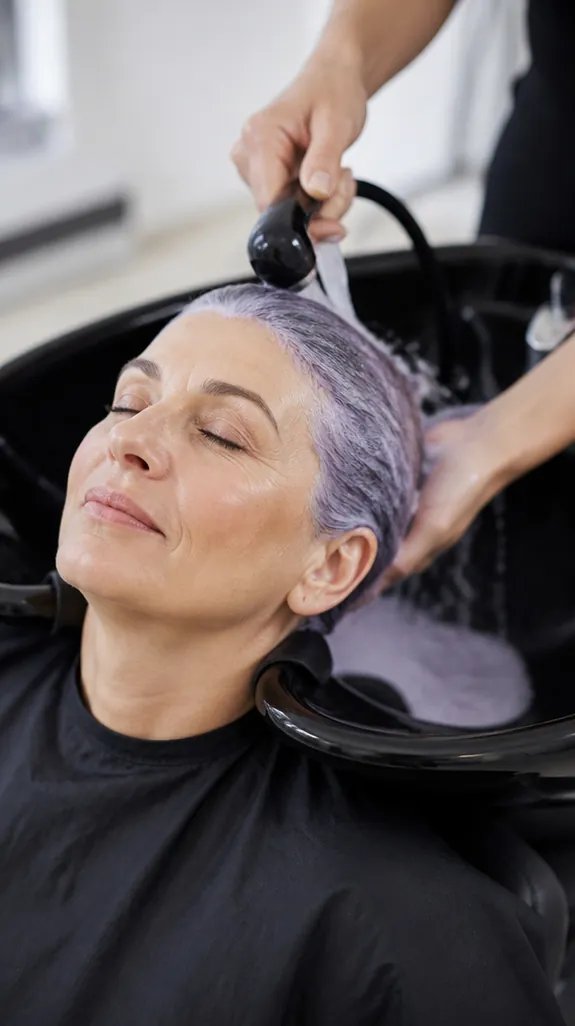
Purple shampoo cancels yellow tones and keeps silver looking clean on white, pewter and blonde-gray hair alike. Use it once a week in place of your regular shampoo and leave it on for two to five minutes before rinsing.
Longer than that can turn white hair faintly lilac, so start short and add time if you need to. On the other wash days, a gentle color-safe shampoo stops the gray from drying out.
15. Clarify Once a Month
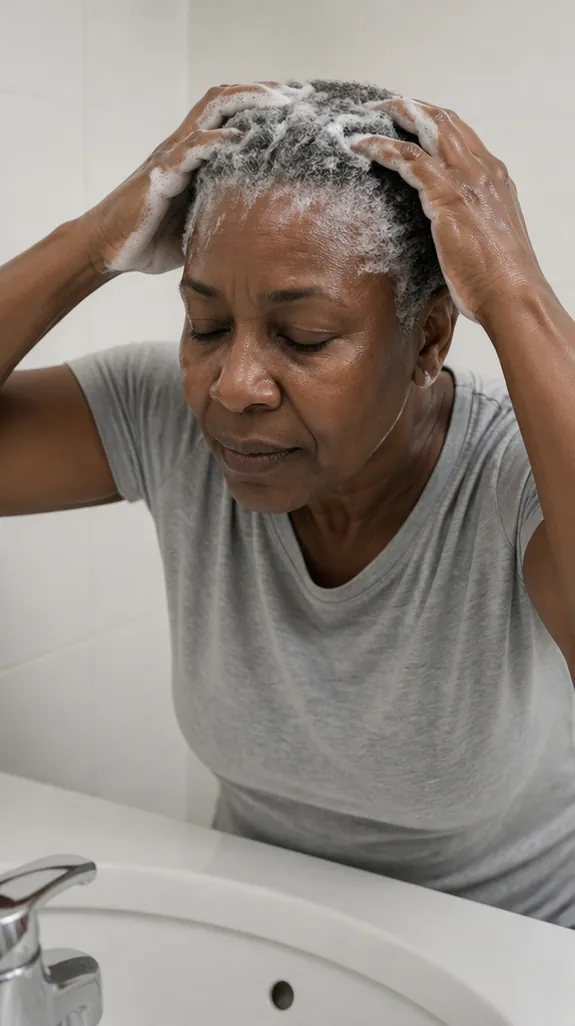
Hard water, chlorine and styling products leave a film that shows up as yellow or dull patches on light hair. A clarifying shampoo once a month strips that buildup away and brings back the true color.
If your water is hard, a shower filter that removes chlorine and minerals makes a visible difference on light hair. Follow every clarifying wash with conditioner, because these shampoos can leave hair feeling rough, especially on wiry gray strands.
16. Protect Gray From Heat and Sun
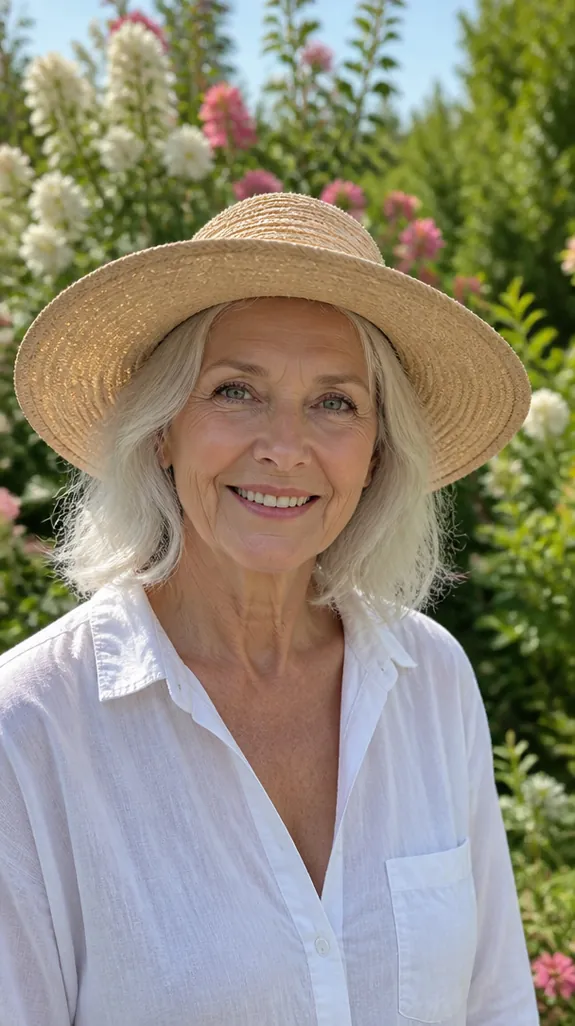
Hot tools and strong sun can turn gray hair yellow, and that kind of yellowing is hard to reverse. Lower the temperature on your flat iron and curling iron, and use a heat protectant every time.
Outdoors, a hat or a hair product with UV protection keeps the strands from fading to a straw color. Gray hair has lost its pigment, so it needs more protection than your colored hair did.
17. Condition for the New Texture
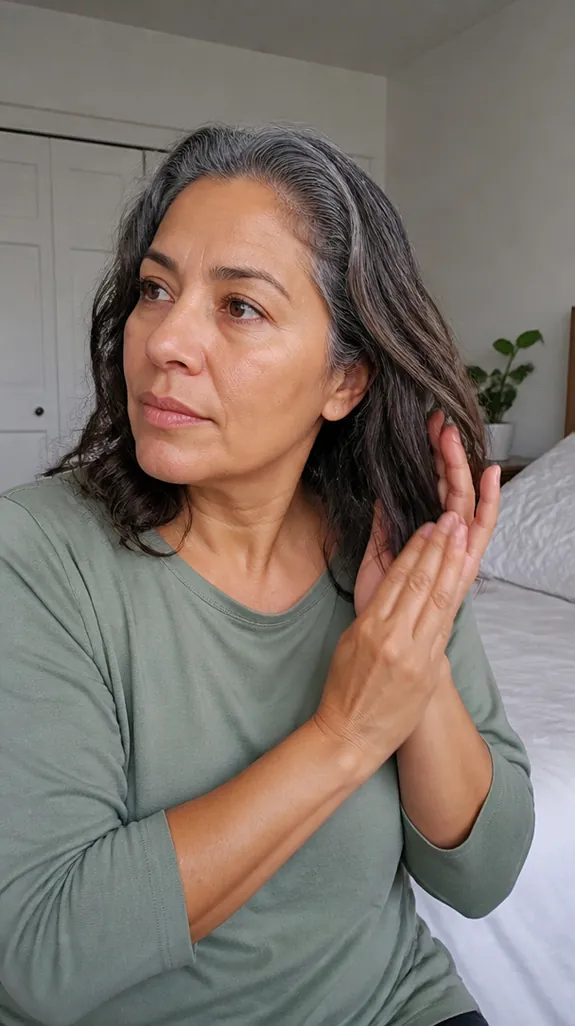
Many women notice their gray feels wirier or drier than the hair they had before. A richer conditioner, plus a weekly mask, tames that texture and helps it lie flat. A leave-in conditioner on damp hair adds a second layer of moisture to the driest ends.
Smooth a drop of light oil over the ends after styling to calm flyaways. If your gray is curly or coily, this guide to natural gray hair for Black women over 50 covers moisture in more depth.
18. Update Your Makeup and Clothing Colors

Gray hair changes how colors look next to your face. Shades that worked with brown or blonde hair can look heavy, while brighter lipsticks and cool or jewel-tone clothing often look better. Skin can also seem paler next to silver, so a little warmth in your makeup helps.
Try a rosier blush, a slightly darker brow pencil to frame your eyes, and tops in blue, plum or emerald. Swap one or two pieces at a time and see what works with the new color before buying more.
19. Track Your Progress With Photos
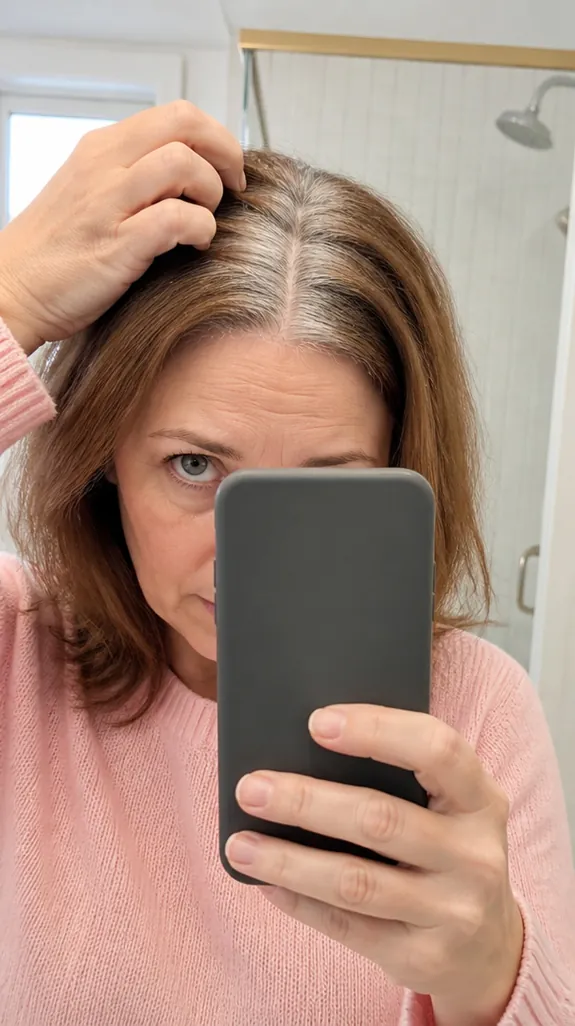
Taking a photo in the same spot every month shows how far you’ve come, which helps on days when the line looks worse than it is. The middle months, when the line sits a few inches from the scalp, are usually the hardest to live with.
Note what you tried each month, such as a new part, a gloss or a trim. Over time, those notes show which changes actually made a difference. For a picture of where you’re heading, browse these salt-and-pepper hair ideas and short styles for gray hair.
Mistakes That Make the Transition Harder
Dyeing over the roots one more time out of frustration resets the clock by months, so settle on a plan before the regrowth gets long. Dark box dye is the hardest to grow out, since it deepens the contrast with every application.
Using purple shampoo every day, skipping conditioner and judging the color under bathroom lighting can all make gray look worse than it is. Check it in daylight by a window before you decide anything.
Frequently Asked Questions
How long does it take to transition to gray hair?
Hair grows about half an inch a month, so a pixie can be fully gray in a few months. Shoulder-length hair can take 18 months or more without a big cut.
Can you go gray without growing it out?
Not entirely, but highlights, lowlights and a salon color remover can shrink the contrast so the change looks gradual. A pixie or a bixie removes most of the dye in a single visit.
Should you use highlights or lowlights to go gray?
Highlights suit lighter hair and hair that’s already mostly gray at the front. Lowlights suit darker hair that’s less than about half gray.
Why is my gray hair turning yellow?
Sun, heat styling, hard water and product buildup are the usual causes. Purple shampoo once a week, a monthly clarifying wash and a heat protectant all help.
Where to Start
Choose a short cut if you want the dye gone quickly, salon blending if you want the change to stay subtle, or trims and accessories if you’d rather wait it out. Plenty of women mix them, such as a shorter cut with a few lowlights.
Give any method a few months before you judge it. New gray often looks patchy at first and evens out as more of it grows in. Photos from month one and month six usually show more progress than the mirror does day to day.







One Comment