
How to Grow Out a Pixie Cut Without the Awkward Stages
Somewhere around the fourth month, a lot of women growing out a pixie look in the mirror and think about booking the clippers again. The sides flip out, the back creeps down the neck, and nothing sits the way it used to. That stretch is normal, and a plan makes it shorter and far easier to live with.
This guide on how to grow out a pixie cut walks through each stage month by month, with what to tell your stylist, how to style the in-between lengths and how to keep new growth healthy. You’ll also find a timeline chart and a quick reference table to save for your next appointment.
How Long It Takes to Grow Out a Pixie
Scalp hair grows about one centimeter a month, just under half an inch, according to Cleveland Clinic. That adds up to roughly five or six inches a year. Many women notice their hair grows a little slower and finer after 50, as each hair spends less time in its growth phase, so plan on the longer end of every estimate.
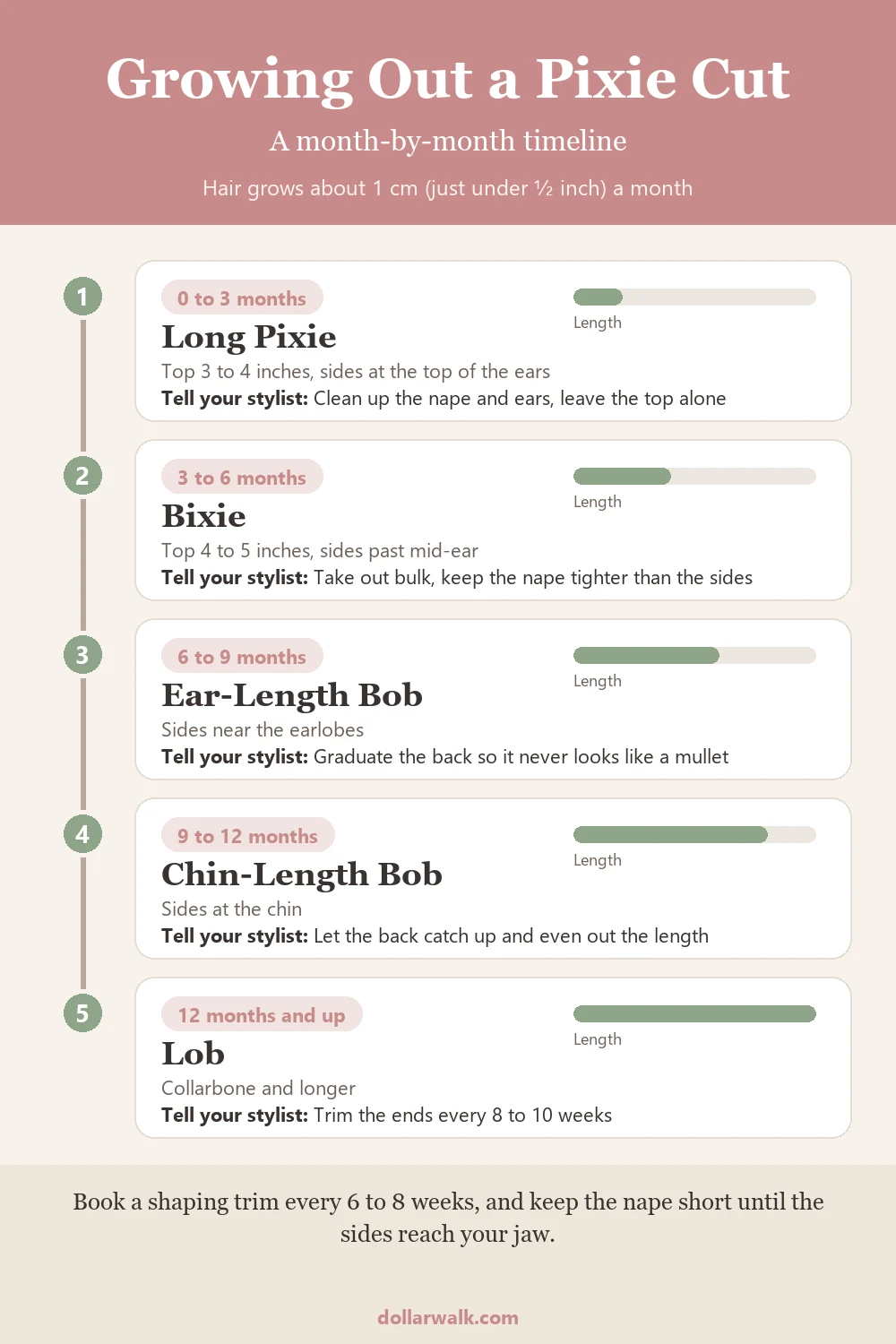
In practice, getting from a short pixie to a chin-length bob takes about nine months to a year, and reaching the collarbone takes closer to eighteen months. Shaping trims take off a little along the way, but they’re what keep each stage looking like a real haircut.
| Stage | Months | Length | What to tell your stylist |
|---|---|---|---|
| Long pixie | 0 to 3 | Top 3 to 4 inches, sides at the top of the ears | Clean up the nape and around the ears, leave the top alone |
| Bixie | 3 to 6 | Top 4 to 5 inches, sides past mid-ear | Take out bulk and keep the back shorter than the sides |
| Ear-length bob | 6 to 9 | Sides near the earlobes | Graduate the back so it never looks like a mullet |
| Chin-length bob | 9 to 12 | Sides at the chin | Let the back catch up and even out the length |
| Lob | 12 and up | Collarbone and longer | Trim the ends every 8 to 10 weeks |
Timing depends on how fast your hair grows and how short your pixie started, so treat the months as a guide rather than a deadline.
1. Choose Your Goal Length Before You Start
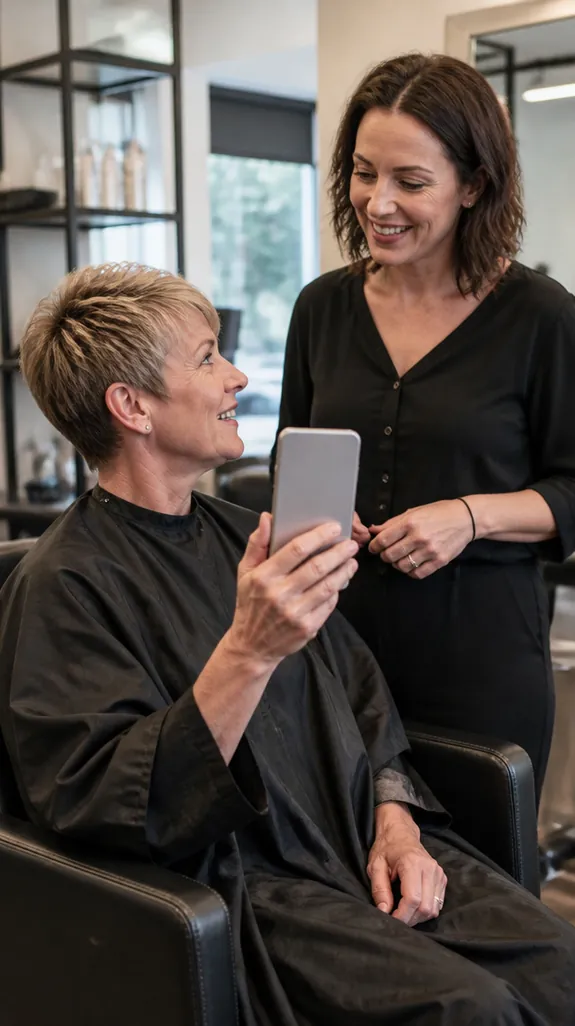
Knowing where you’re headed helps your stylist plan every cut along the way. A layered shag grows out differently from a one-length bob, and a stylist who knows the end shape can leave length in the right places from the first appointment.
Bring a photo of the final style you want, even if it’s a year away. Book the same stylist for the whole grow-out if you can, since they’ll remember what they left long last time and why.
2. Keep Your Trim Appointments
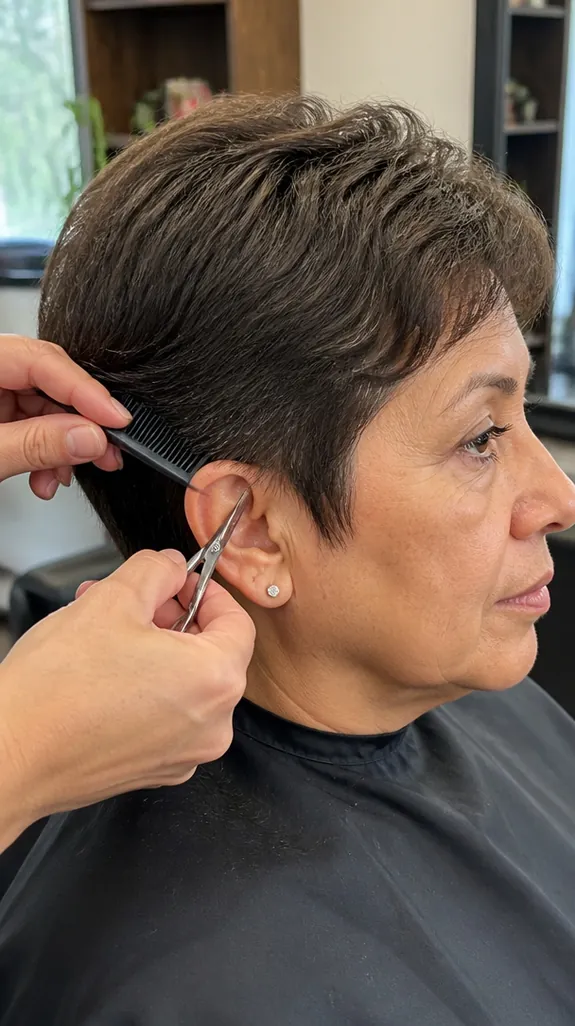
It sounds backward, but regular trims get you to longer hair sooner, because they prevent the messy stages that send people back to short hair. Plan on a visit every six to eight weeks.
Each trim should shape the cut rather than take length off the top. Tell your stylist at the start of the visit that you’re growing your hair out and only want the back and the area around the ears cleaned up.
3. Trim the Back Before Anything Else
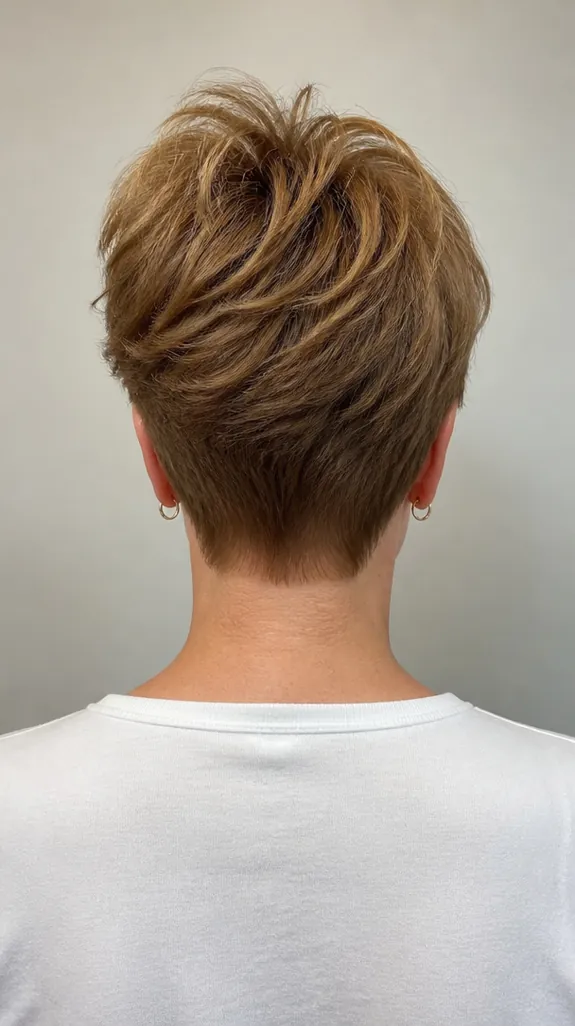
If the back grows at the same pace as everything else, it soon hangs below the sides and turns into a mullet. Keeping the nape short while the top and sides catch up is the single most useful rule of a pixie grow-out.
Have the back tapered short at each appointment until the sides reach your jaw. Your stylist can also remove bulk with thinning shears, so the shape doesn’t puff out into a helmet.
4. Months 0 to 3: Wear It as a Long Pixie

In the first few months, the top gets long enough to sweep to one side while the sides start covering the tops of your ears. Treat this as a long pixie rather than a grow-out, and push the top forward or to the side with a little paste.
Keep the hair around your ears trimmed so it doesn’t stick out, and tuck it back when it starts to bother you. These pixie cuts for older women include longer shapes that match this stage.
5. Months 3 to 6: Shape It Into a Bixie
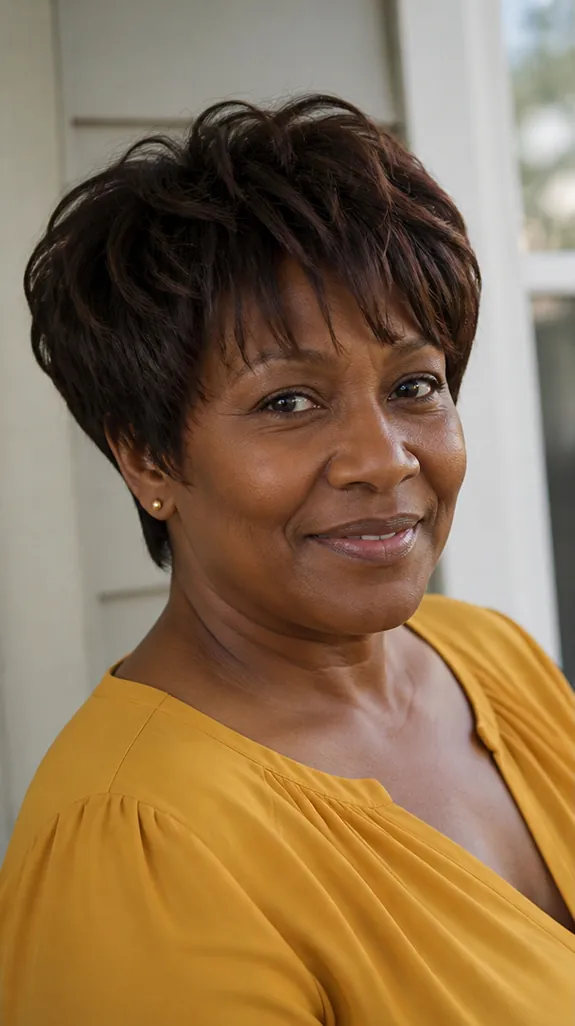
By month four or five, you have enough length for a bixie, the in-between cut with shaggy layers on top and a longer nape. It’s also the stage most likely to look like a helmet, so it’s worth booking a proper shaping.
Your stylist can add texture with point cutting and keep the nape tighter than the sides. Rough-dry your hair with your fingers and finish with a texture spray. These bixie haircuts for women over 50 show the shape to aim for.
6. Months 6 to 9: Get Through the Ear-Length Stage

This is the stretch most women call awkward. The sides reach the earlobes and flip out, and the back still looks shorter than it should. A graduated bob, shorter at the back and longer at the front, turns that length into a deliberate haircut.
Use a flat iron or a round brush to bend the ends under, or lean into the flip with a little wax. Tucking one side behind your ear also makes this length look planned.
7. Months 9 to 12: Settle Into a Chin-Length Bob

Once your hair reaches your chin at the sides, the back can grow to match. Your stylist evens out the length at this point, and you’re left with a classic bob that needs very little styling.
Many women stop here, because a chin-length bob suits most face shapes and dries quickly. If you want to keep going, these bob haircuts for women over 50 show lengths to try next.
8. Use Bangs to Bridge the Gap

Bangs give the eye a finished point to land on while the rest of your hair grows. Side-swept or curtain bangs work best, because they blend into longer layers later and don’t need a trim every few weeks.
Have them cut from the longer top section of your pixie, so you don’t lose length anywhere else. This guide to curtain bangs on short hair has more shapes to choose from.
9. Reach for Clips and Headbands
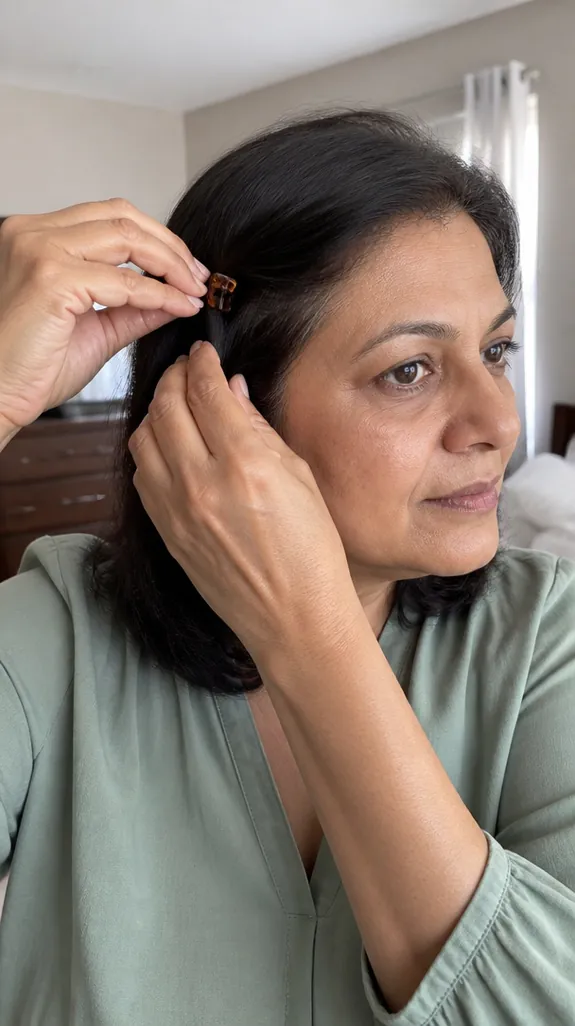
On days when the sides won’t behave, small clips, slim headbands and bobby pins hold pieces back and make the length look styled. Pin the sides behind your ears or twist the front section back for a quick, tidy finish.
Keep everything loose. Dermatologists note that hairstyles that pull can lead to hair loss over time, so choose soft-grip clips and change where you place them from day to day. Take them out before bed, too, since sleeping on a clip presses on the same spot for hours.
10. Switch Your Part and Your Products

A new part changes how every length falls. A deep side part adds height and hides uneven pieces, while a center part looks best once you reach the bob stage. Try parting on the side where your hair grows longest, so the fuller side falls forward.
Products matter more than they did with a pixie. A light texture spray or mousse helps short layers blend, and a smoothing cream calms flyaways on in-between lengths. Heavy pomades that suited the pixie tend to weigh longer pieces down.
11. Style the Flips Instead of Fighting Them
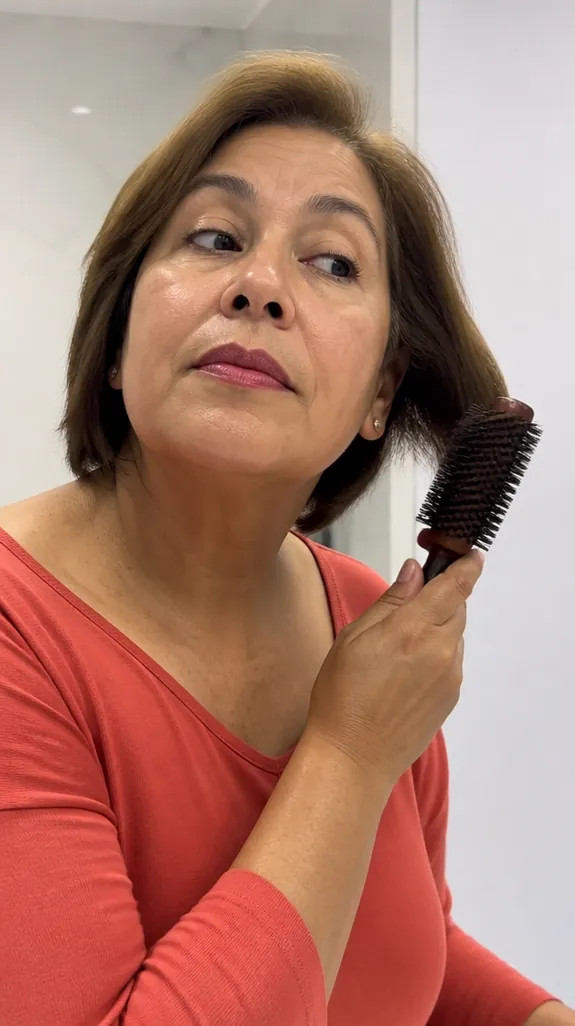
Pieces that flip out at the ears or neck show up in nearly every grow-out. Working with the flip, by bending it further with a round brush, looks more modern than forcing it flat.
A small flat iron run quickly over the ends gives you control on days you want a smoother finish. Hold each section for a couple of seconds and let it cool before you touch it, so the bend lasts. At this length, five minutes of styling is usually enough.
12. Protect the Length You’re Growing
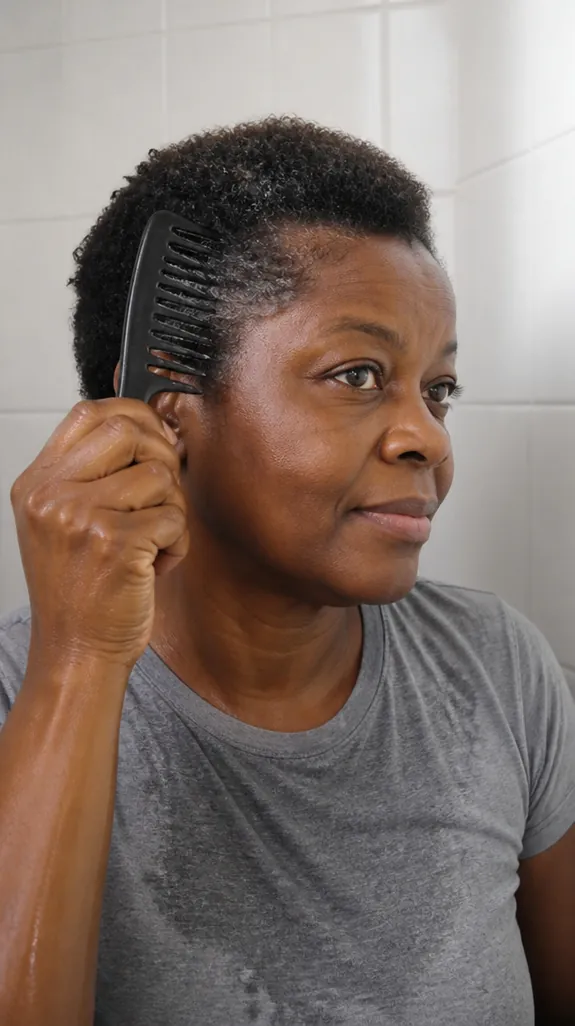
Breakage undoes months of growth, so be gentle with your ends. The American Academy of Dermatology suggests using the lowest heat setting on hot tools, combing gently with a wide-tooth comb, and wrapping wet hair in a towel instead of rubbing it.
A heat protectant adds another layer of defense, and a leave-in conditioner smoothed over the ends helps them hold up as they grow. If your gray is growing in at the same time, these ways to transition to gray hair help you plan both changes together.
A Simple Styling Kit for the Grow-Out
You don’t need much, but the tools that suited a pixie won’t all work on longer pieces. These cover nearly every stage.
- A small round brush for bending ends under or out
- A mini flat iron with half-inch to one-inch plates
- A light texture spray or mousse to blend short layers
- A smoothing cream for flyaways
- A heat protectant for every blow-dry
- Soft-grip clips and a slim headband
- A wide-tooth comb for wet hair
Grow-Out Tips by Hair Type
Fine or Thinning Hair
Fine hair can look sparse at the in-between lengths, so keep the layers light and the ends blunt rather than heavily thinned. Volumizing mousse at the roots and a blow-dry with your head tipped forward add body, and a slightly shorter bob often looks fuller than a longer one.
Thick Hair
Thick hair tends to puff out at the sides during the bixie and ear-length stages. Have your stylist take weight out from underneath at each visit, and use a smoothing cream so the shape stays close to your head. Point cutting or a razor gives the ends a lighter edge.
Curly and Coily Hair
Curls shrink as they dry, so curly hair often looks shorter than it measures and can take longer to reach each stage. Choose a stylist who cuts curls dry, request a rounded shape rather than a stacked one, and define with a curl cream. Defined curls hide uneven lengths better than straight hair does.
Gray Hair
Gray hair is often wirier and drier, so in-between lengths can stick out more. A richer conditioner and a light smoothing cream help it lie flat, and a purple shampoo once a week keeps the color bright while it grows.
Mistakes That Slow a Pixie Grow-Out
Skipping trims for months is the most common one, since it lets the back turn into a mullet and makes the whole cut look unplanned. Cutting everything off again during the ear-length stage is the other, because the hardest weeks are usually the shortest ones.
Heavy products, daily high heat and tight elastics also hold you back. They weigh short layers down or snap the ends you’ve worked to keep. Choose fabric-covered elastics and set hot tools to medium or lower.
Frequently Asked Questions
How long does it take to grow out a pixie cut?
About nine months to a year to reach a chin-length bob, and around eighteen months to reach the collarbone, depending on how fast your hair grows.
Should you trim your hair while growing out a pixie?
Yes. A shaping trim every six to eight weeks keeps the back shorter than the sides, which avoids the mullet stage, and removes bulk so the shape doesn’t puff out.
How do you avoid a mullet when growing out a pixie?
Keep the nape and the area behind the ears trimmed short until the sides reach your jaw. After that, let the back grow to match.
Does hair grow slower after 50?
Many women notice slower, finer growth with age, as each hair spends less time in its growth phase. The change is gradual, so allow a little extra time at each stage.
Sticking With It
Choose your goal length, book a trim every six to eight weeks, and keep the nape short until the bob stage. Bangs, clips and a new part cover most of the awkward days in between.
Save the timeline chart and bring it to your appointments, so you and your stylist are planning the same next step. If you fall for one of the in-between lengths, you can stop there, and several of them appear in these low-maintenance haircuts for women over 50.