21 Bixie Haircuts for Thick Hair Over 50
Thick hair has a habit of turning a short cut into a helmet within weeks of leaving the salon. A bixie, part pixie and part bob, avoids that when your stylist takes the extra weight out, and it leaves longer pieces on top that you can push forward, back or to the side.
These 21 bixie haircuts for thick hair over 50 cover undercuts, shags, curls, silver and smooth finishes. Each one explains why it handles dense hair well, how to style it at home and how often it needs a trim. If your hair is on the finer side, these bixie cuts for fine hair are a closer match.
Why Thick Hair Needs a Different Kind of Bixie
On fine hair, a bixie depends on texture spray to look full. Thick hair has the opposite problem, and without weight removal the cut puffs out at the sides and turns round by the second month. A good stylist has several ways to fix that before you leave the chair.
- Internal layers cut underneath to remove bulk
- An undercut at the nape or behind the ears
- Point cutting or a razor to thin the ends
- Thinning shears used through the middle of the hair, away from the root
- A longer top with closer sides, so the volume sits up instead of out
1. Bixie With Internal Layers
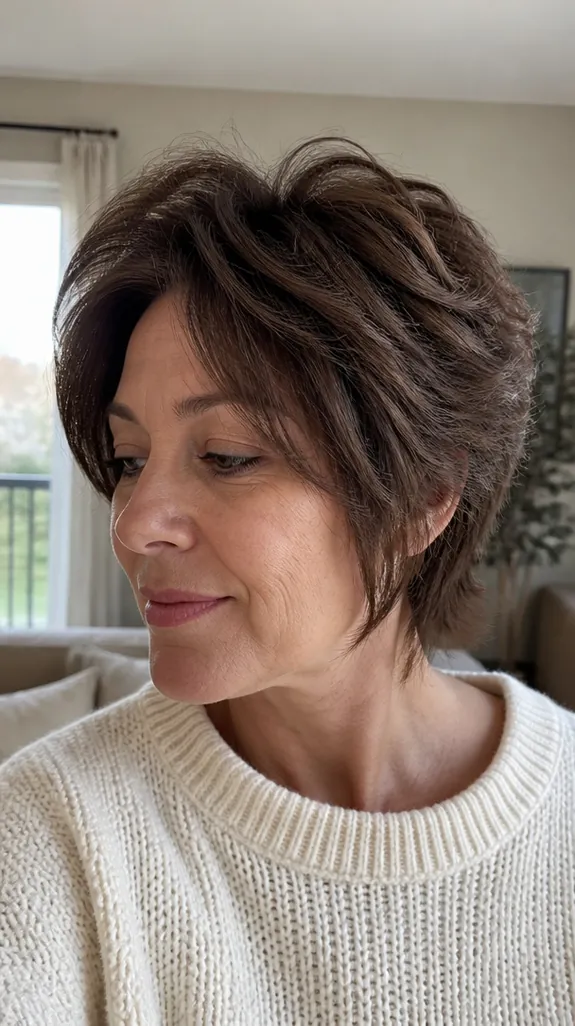
Internal layering is the cut that makes a bixie possible on very thick hair. Your stylist removes length from hidden sections underneath, so the top lies flatter and the shape stays close to the head rather than spreading at the sides.
From the outside it still looks like a classic bixie, with shaggy pieces on top and a longer nape. Plan on a cleanup every six to eight weeks, because dense hair rebuilds bulk quickly. A pea-sized amount of smoothing cream on dry hair holds the layers in place.
2. Undercut Bixie
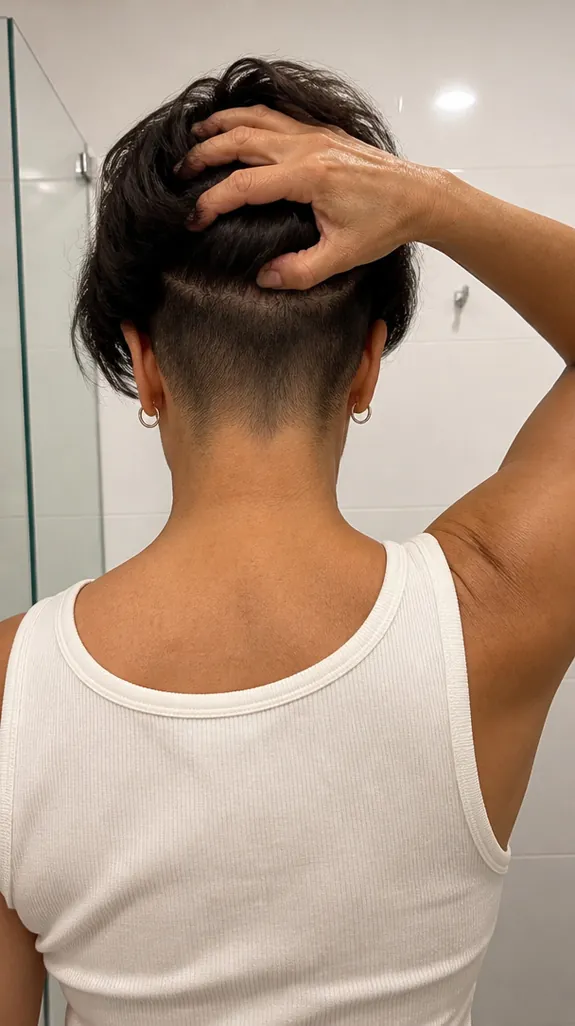
An undercut takes weight out exactly where thick hair causes the most trouble. The stylist clips the hair at the nape, or behind the ears, very short with clippers, and the longer bixie layers fall over the top and hide it.
Nobody sees the undercut unless you lift your hair, yet the cut feels lighter right away and dries in half the time. A number two or three guard works for most women. For more short options, these bixie haircuts for women over 50 include lighter textures too.
3. Shaggy Bixie

A shaggy bixie uses choppy layers from crown to nape, so thick hair breaks into separate pieces instead of moving as one heavy block. The finish looks relaxed and a little undone, so it never looks stiff.
Point cutting, where the stylist snips into the ends vertically, gives the layers their uneven edge. Rough-dry it with your fingers, then twist a few pieces on top with texture paste. Heavy creams flatten a shag, so keep them for the ends.
4. Bixie With Curtain Bangs
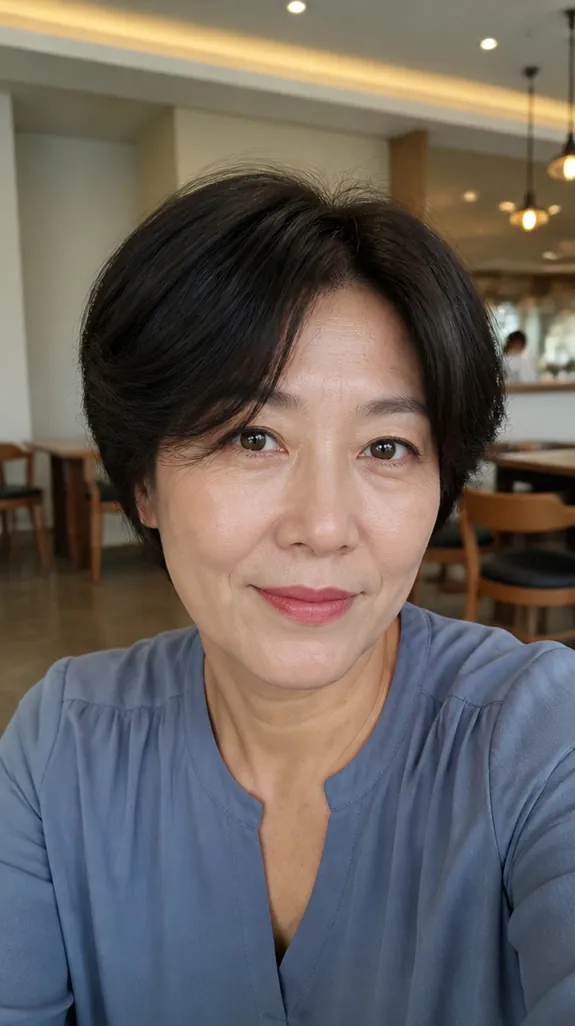
Curtain bangs split down the middle and sweep toward each cheek, which opens up the face and gives thick hair a lighter front. They grow out without an awkward stage, so you can stretch the time between trims.
Keep the bangs at cheekbone length and have them thinned slightly so they don’t sit in a heavy line. Blow-dry them with a small round brush, rolling each side away from your face. For more versions, see this guide to curtain bangs on short hair.
5. Tousled Bixie With Side-Swept Bangs

Side-swept bangs angle across the forehead and add a diagonal line that works on most face shapes, including round and square ones. With this much hair, the bangs hold their sweep all day with very little product.
Blow-dry the bangs to one side with a flat brush, then rough up the top with your fingers and a little wax. After a week of practice it takes about ten minutes. If your face is round, these haircuts for round faces over 50 show more side-swept shapes.
6. Smooth Tapered Bixie
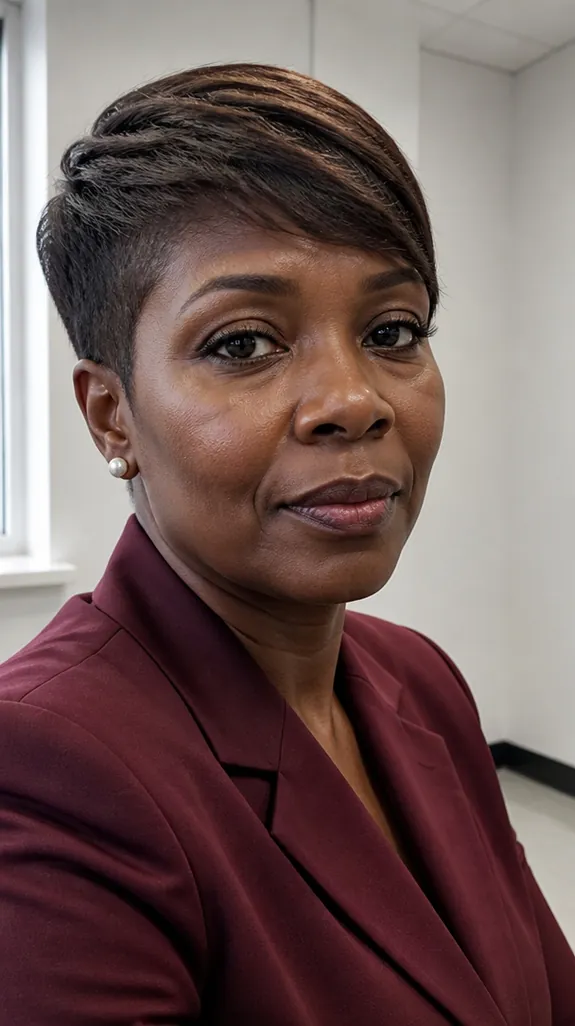
Some women with a lot of hair want a polished finish, and a tapered bixie gives them one. The sides and nape are cut close and blended, while the top stays an inch or two longer and lies flat.
Run a flat iron quickly over the top section to calm any frizz, then finish with a drop of shine serum. This shape looks right at work or a dinner out, and it needs less product than most of the cuts on this list.
7. Wavy Bixie

Natural waves give a bixie movement without much styling, and thick wavy hair holds its shape for days. The trick is cutting the waves dry, or close to dry, so the stylist can see where each one falls.
Scrunch a light mousse into damp hair and let it air-dry, or use a diffuser on low heat. Brushing dry waves turns them into frizz, so use your fingers instead. On the second day, mist with water and scrunch again.
8. Curly Bixie
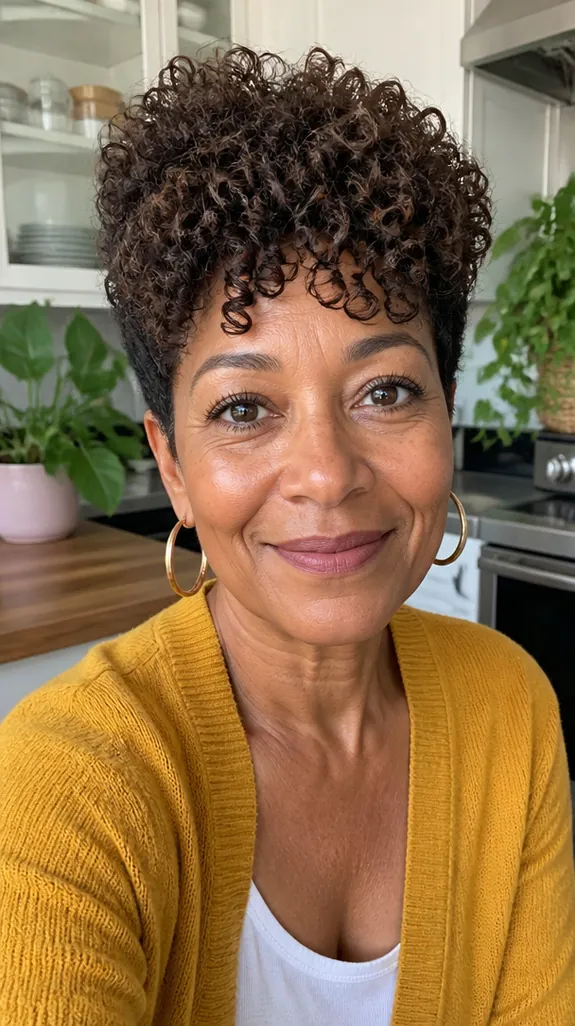
Thick curly hair can grow wider than it is long in a short cut, so a curly bixie needs more length on top and closer sides. That shape lets the curls stack up rather than out.
Look for a stylist who cuts curls dry, one curl at a time. Rake a curl cream through wet hair and diffuse without touching it until it’s fully dry. These bixie cuts for curly hair include tighter and looser curl patterns.
9. Silver Bixie

Gray hair often grows in coarser and wirier than your original color, and a silver bixie puts that texture to good use. The layers catch the light, and the short length keeps gray looking crisp instead of dull.
Use a purple shampoo once a week to cancel any yellow tone, then finish with a lightweight shine spray. Keep the nape tidy, since uneven edges show more on gray than on darker shades. Here are more short styles for gray hair if you want other lengths.
10. Salt-and-Pepper Bixie

A mix of dark and gray strands adds natural dimension to a bixie, especially on full hair where both colors show through the layers. Many women find the blend easier to wear than full gray while they grow out dye.
Choppy layers on top let the lighter strands peek through, so the color looks planned. A clear gloss at the salon adds shine without changing the shade. These salt-and-pepper hair ideas over 50 show more ways to wear mixed gray.
11. Razor-Cut Bixie

A razor slices the ends at an angle instead of cutting them straight across. On dense hair, that thins the tips and leaves a feathery edge that moves more than a scissor cut. It also lifts some of the weight off the nape.
Razor cutting works best on straight or slightly wavy hair, because it can make tight curls frizz. Style it with a dab of matte paste warmed between your palms first. Book a trim every six weeks to keep the ends sharp.
12. Stacked Bixie With a Short Nape
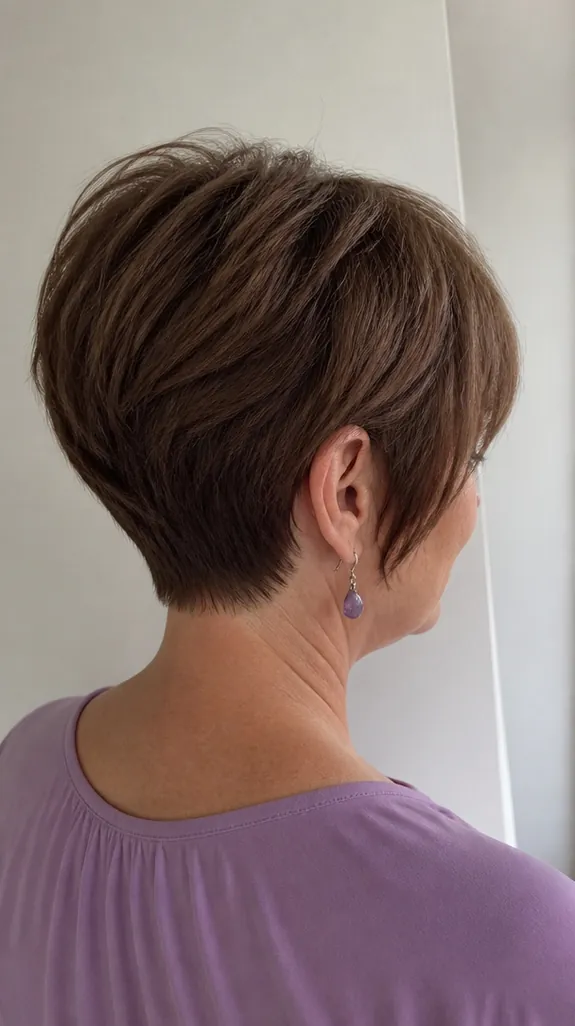
Stacking cuts the back into short, graduated layers that build lift at the crown, while the nape stays close to the neck. Heavy hair supports the stack on its own, without hairspray, and the back curves out slightly over the neck for a rounded profile.
The front stays at bixie length, around the cheekbones. Blow-dry the back up with a round brush and leave the front loose. If you like showing your neck and earrings, this is the cut on the list that does it best.
13. Asymmetrical Bixie

Cutting one side longer than the other adds an edge and makes a full head of hair look lighter, because the eye follows the angle instead of the volume. The longer side usually lands near the jaw, one to two inches past the short side, enough to notice without looking lopsided.
Part deeply on the short side and let the long side fall forward. A flat iron on the longer section keeps the angle clear. Straight hair shows the uneven line best, so this one is harder to wear with curls.
14. Long Bixie at Jaw Length

A long bixie keeps the front pieces near the jaw, so it sits closer to a bob while keeping the layered crown. It’s a good first step if you’re nervous about going short after years of longer hair.
At this length, dense hair needs internal weight removal to avoid a triangle shape. Tuck one side behind your ear on busy days, or blow it smooth with a round brush when you want more polish.
15. Bixie With a Wispy Fringe
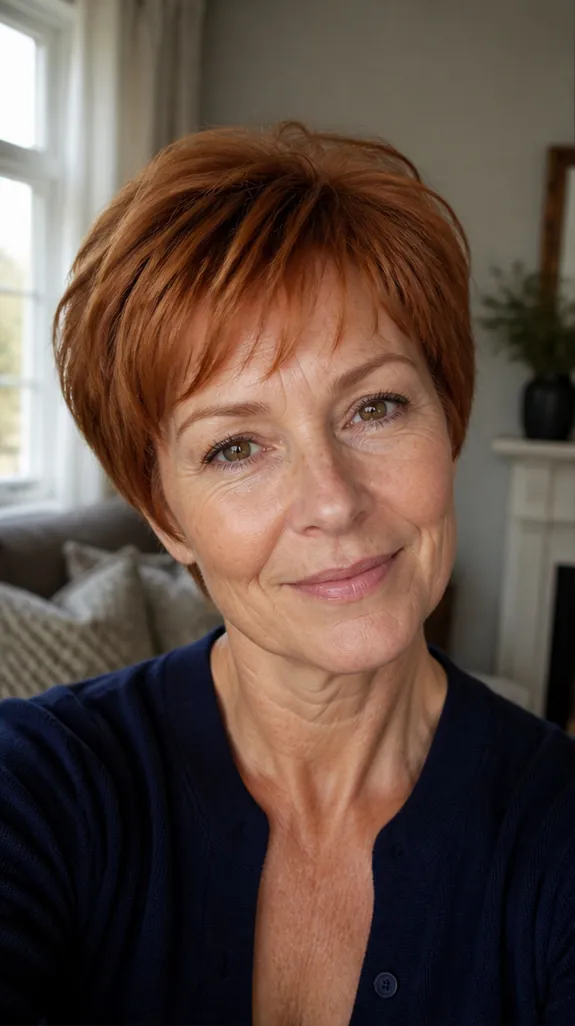
A wispy fringe is cut thin and slightly uneven, so a little forehead shows through it. With a dense crown behind it, that lighter front stops the cut from looking top-heavy, and it covers forehead lines without the weight of a solid bang.
Your stylist will thin the fringe with shears or point cut it. Blow-dry it forward with your fingers and break it apart with a touch of wax. A fringe on this much hair fills in fast, so trim this one every three to four weeks.
16. Bixie With Dimensional Color

Fine highlights or lowlights woven through a thick bixie break up a solid block of color, so the hair looks lighter and the layers stand out. Placed near the face, they also brighten your skin.
Choose shades one or two levels from your base so the regrowth line stays faint. Babylights at the part and hairline give the most lift for the least upkeep. Plan a toner every six to eight weeks.
17. Silk-Pressed Bixie for Coarse Hair
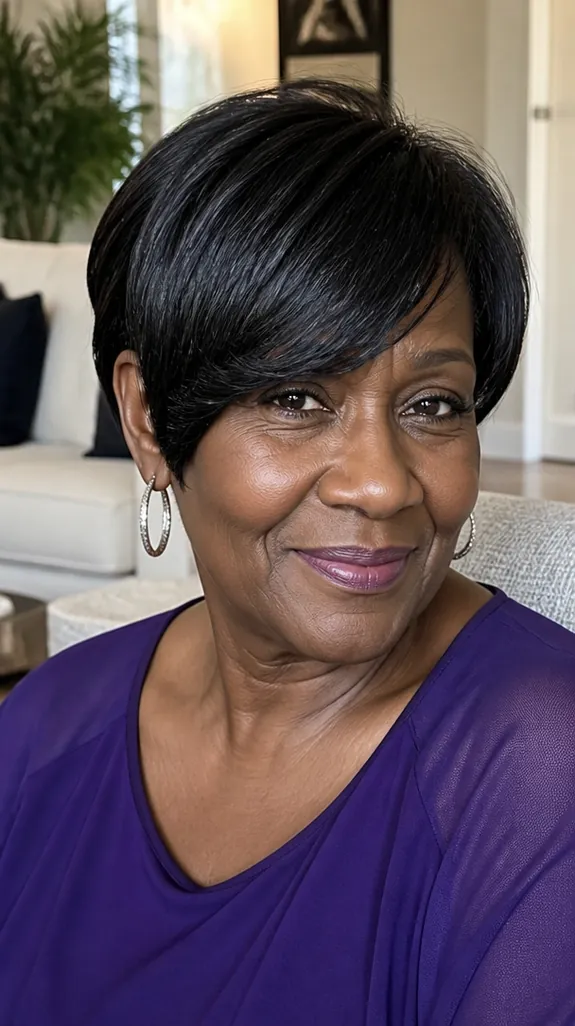
Coarse, dense hair often does best in a bixie that’s silk pressed first and then cut to shape. The pressed finish shows off the layers and holds the volume close to the head. Have the cut done after the press, so the stylist works with your true length.
Wrap your hair at night with a satin scarf to hold the press for several days. Use a heat protectant every time you flat iron, and a light oil on the ends instead of heavy grease. A trim every six weeks stops the nape from looking shaggy.
18. Bixie That Works With Glasses

Glasses add a strong line to the face, and heavy bangs can crowd them. A bixie with shorter sides and bangs swept above the frames leaves your eyes clear. Dense hair also hides the arms of the glasses from the side, so the frames look tidy.
Keep the hair around the ears trimmed so the arms of the glasses sit comfortably. Pair bold frames with more texture on top, and thin frames with a smoother finish. These hairstyles for women over 50 who wear glasses cover more pairings.
19. Messy Bixie With Volume at the Crown

All that natural volume means a messy bixie only needs a little direction. The crown sits slightly higher, and the pieces fall in different directions by design. Because the mess is planned, it still looks like a haircut rather than bedhead, even with almost no product.
Flip your head over and rough-dry it, then pull a few sections up with texture spray. The whole routine takes about five minutes, and the cut often looks better on the second day. Skip it if you prefer a polished look for work.
20. Bixie With Tucked Sides

Leaving the side pieces just long enough to tuck behind the ears gives a bixie two looks in one cut. Tucked, it’s neat and shows off earrings. Loose, it frames the cheeks. Small studs or drops work better here than big hoops, which catch on the tucked hair.
Heavy side pieces tend to pop out from behind the ear, so have the stylist thin the side sections a little. A small amount of pomade at the tuck point holds it. This version grows out well if you decide to go longer later.
21. Wash-and-Go Bixie

A wash-and-go bixie is cut to fall into shape as it air-dries, which helps on busy mornings and if you’d rather skip the blow-dryer. Dense hair holds that shape without help, and skipping daily heat is kinder to gray and color-treated strands.
Tell your stylist how you plan to wear it so they cut for your natural texture and part. Towel-dry, add a leave-in conditioner and let it dry on its own. If you later want shorter still, these pixie cuts for older women are the next step down.
What to Tell Your Stylist
Bring two or three photos of bixies on hair like yours, because a cut that looks airy on fine hair will grow wider on thick hair. Point out the parts you like, such as the bangs, the nape length or the texture on top.
Mention how long you spend on your hair each morning and if you use a blow-dryer. Say plainly that you want weight taken out, and agree on how short the nape should go before the clippers come out. Book the next appointment before you leave, since a thick bixie loses its shape around week six.
Frequently Asked Questions
Is a bixie good for thick hair?
Yes, as long as the stylist removes weight with internal layers, an undercut or thinning. Without that step, thick hair looks bulky in almost any short cut.
How often should you trim a bixie on thick hair?
Every five to seven weeks. Thick hair builds volume at the sides and nape quickly, and the shape starts to look round after about six weeks.
What is the difference between a pixie and a bixie?
A pixie is short all over. A bixie keeps longer layers on top and at the front, closer to a bob, so it has more movement and more ways to style it.
Can you get a bixie with thick curly hair?
Yes. Keep the sides close and the top longer, and find a stylist who cuts curls dry so the shape follows your curl pattern.
Picking the Right Bixie for You
Thick hair gives a bixie plenty of body, so your choice comes down to how much weight you remove and how you like to wear it. An undercut or internal layers help most if bulk is your main complaint, while a razor or point-cut finish adds movement.
Save a few photos from this list, take them to your appointment, and keep up with trims. Expect the first cut to run a little longer than usual, because taking weight out of thick hair takes time. After that, a well-cut bixie can go several days between washes and still hold its shape.